


281 - 300 of 894 results
-
-
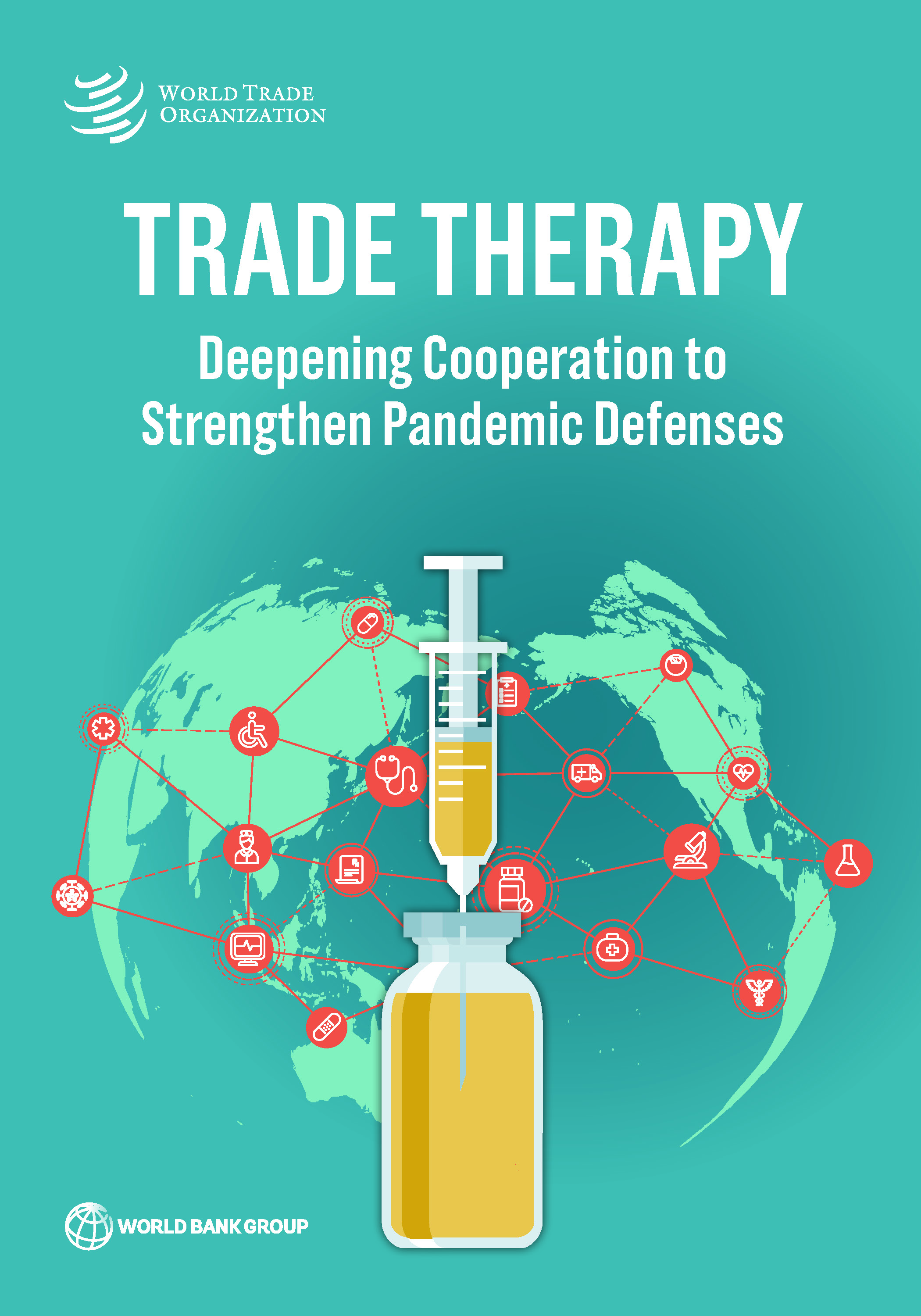
Trade therapy
More LessThe COVID-19 (coronavirus) pandemic has exposed the upsides and downsides of international trade in medical goods and services. Open trade can increase access to medical services and goods—and the critical inputs needed to manufacture them—improve quality and variety, and reduce costs. However, excessive concentration of production, restrictive trade policies, supply chain disruptions, and regulatory divergence can jeopardize the ability of public health systems to respond to pandemics and other health crises. Trade Therapy: Deepening Cooperation to Strengthen Pandemic Defenses, coordinated by Nadia Rocha and Michele Ruta at the World Bank and Marc Bacchetta and Joscelyn Magdeleine at the World Trade Organization, provides new data on trade in medical goods and services and medical value chains, surveys the evolving policy landscape before and during the pandemic, and proposes an action plan to improve trade policies and deepen international cooperation to deal with future pandemics. As the COVID-19 pandemic lingers, the focus of policy action is on the response, which includes actions aimed at removing bottlenecks and providing government support to promote equitable access to vaccines. As the emergency subsides, the focus should shift to prevention and preparedness. Steps to close information gaps—building on the Multilateral Leaders Task Force on COVID-19, the ACT-Accelerator, and the open markets, for example—by negotiating tariff reductions on medical goods and greater market access in services should take priority. Also important are measures to improve the efficiency of markets, which include harmonizing regulation through mutual recognition or equivalence of standards and creating international standards for essential medical goods, inputs, and production processes. Agreement on a crisis rulebook to be deployed during an emergency—including clear and agreed limits on export policy flexibility and shared rules on intellectual property flexibilities—would provide a more solid policy foundation to address future challenges.
-
-
-
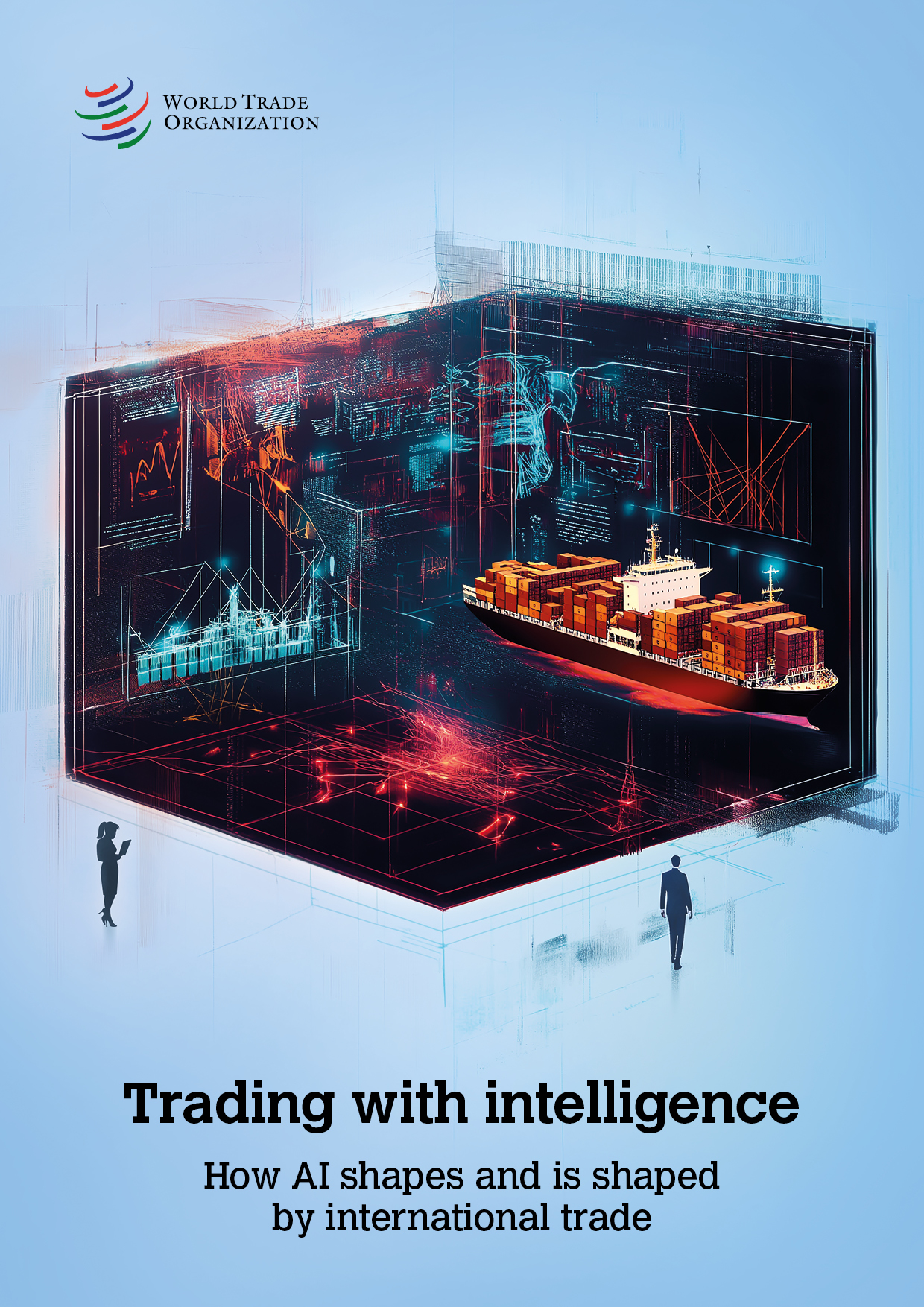
Trading with intelligence
More LessArtificial intelligence (AI) is transforming the way we live, work, produce and trade. As it further develops, AI is expected to unlock unprecedented economic and societal opportunities. However, it is also a source of significant risks and challenges. This report examines the intersection of AI and international trade. It discusses how AI may shape the future of international trade by reducing trade costs, improving productivity and expanding economies' comparative advantages. The report reviews some key trade policy considerations, in particular the urgent need to address the growing AI divide between economies and between large and small firms, as well as data governance and intellectual property issues. It examines how to guarantee the trustworthiness of AI without hindering trade. The report also provides an overview of domestic, regional and international government initiatives to promote and regulate AI, and highlights the resulting risk of regulatory fragmentation. Finally, the report discusses the critical role of the WTO in facilitating AI-related trade, ensuring trustworthy AI and addressing emerging trade tensions, noting that the rapid evolution of AI is prompting questions about the implications of AI for international trade rules.
-
-
-
Un enfoque integrado de la salud, el comercio y la propiedad intelectual para hacer frente a la pandemia de COVID-19
More LessLa pandemia de enfermedad por coronavirus de 2019 (COVID-19) ha generado una crisis mundial de salud pública extraordinaria. Ha creado una necesidad acuciante de intensificar la cooperación a nivel mundial, y, desde un principio, ha planteado cuestiones que conciernen a la vez a las políticas de salud pública, a las políticas comerciales y al marco y la gestión de la innovación, incluidas las cuestiones relacionadas con los derechos de propiedad intelectual. La segunda edición de la publicación conjunta de la OMS, la OMPI y la OMC titulada Promover el acceso a las tecnologías y la innovación en medicina: intersecciones entre la salud pública, la propiedad intelectual y el comercio, publicada en 2020, incluía un suplemento especial en que se presentaban los desafíos planteados por la pandemia de COVID-19 en relación con los marcos de política integrados de salud, comercio y propiedad intelectual descritos en el estudio. En la presente actualización se revisa la información contenida en la última versión, publicada en octubre de 2021, a la luz de los acontecimientos más recientes al 17 de mayo de 2023.
-
-
-
Une approche intégrée de la santé, du commerce et de la PI pour faire face à la pandémie de COVID-19
More LessLa pandémie de maladie à coronavirus 2019 (COVID 19) constitue une crise de santé publique mondiale extraordinaire. Elle a rendu nécessaire l'intensification de la coopération au niveau planétaire. Dès le début, elle a soulevé des questions à l'intersection entre la politique de santé publique, la politique commerciale ainsi que le cadre et la gestion de l'innovation, y compris pour ce qui est des droits de propriété intellectuelle. La deuxième édition de l'étude conjointe de l'OMS, de l'OMPI et de l'OMC intitulée "Promouvoir l'accès aux technologies médicales et l'innovation: Intersections entre la santé publique et la propriété intellectuelle et le commerce", publiée en 2020, contenait un encart spécial présentant les défis posés par la pandémie de COVID 19 par rapport au cadre intégré de politiques en matière de santé, de commerce et de PI établi dans l'étude. Cette mise à jour révise les renseignements figurant dans la dernière version, lancée en octobre 2021, à la lumière de la situation au 17 mai 2023.
-
-
-
Working together for better climate action
More LessThe report of the Joint Task Force on Climate Action, Carbon Pricing, and Policy Spillovers, with participation by the IMF, OECD, UNCTAD, World Bank, and WTO, makes four main contributions. First, it reflects on a common understanding of carbon pricing metrics which inform on the incentives to decarbonize and on cross-country variation in carbon prices, a key determinant of international spillover effects and competitiveness concerns. Second, the report analyzes the appropriate mixes of climate change mitigation policies, emphasizing the pivotal role of carbon pricing as the only policy implementing the polluter pays principle while generating revenues. Third, it analyzes how international organizations can support the coordination of policies to maximize positive and limit negative cross-border spillovers from climate change mitigation policies. Finally, it discusses how such coordination can help to scale up climate action by closing the transparency gap, the implementation gap, and the ambition gap.
-
-
-
World Tariff Profiles 2022
More LessWorld Tariff Profiles 2022 provides comprehensive information on the tariffs and non-tariff measures imposed by over 170 countries and customs territories. The publication starts with a breakdown of the tariffs imposed by these economies. Tariff data are presented in comparative tables and in one-page profiles for each economy. A summary table on selected indicators on the imports and exports profile for these economies is also presented. Statistics on non‑tariff measures by country and by product group complement the data on tariffs. Under the special topics part, there are two technical papers. The first one analyses the preferential rules of origin in international trade and the second one focuses on non-tariff measures on “green” and “brown” energy products. The publication is jointly prepared by the World Trade Organization, the United Nations Conference on Trade and Development (UNCTAD) and the International Trade Centre (ITC).
-
-
-
World Tariff Profiles 2023
More LessWorld Tariff Profiles 2023 provides comprehensive information on the tariffs and non-tariff measures imposed by over 170 countries and customs territories. The publication starts with a breakdown of the tariffs imposed by these economies. Tariff data are presented in comparative tables and in one-page profiles for each economy. A summary table on selected indicators on the imports and exports profile for these economies is also presented. Statistics on non tariff measures by country and by product group complement the data on tariffs. Under the special topics part, there are two technical papers. The first one analyses the evolution of market access over 16 years of World Tariff Profiles and the second one focuses on Product classification for WTO trade statistics and policy analysis - Multilateral Trade Negotiations (MTN) Categories. The publication is jointly prepared by the World Trade Organization, the United Nations Conference on Trade and Development (UNCTAD) and the International Trade Centre (ITC).
-
-
-
World Tariff Profiles 2024
More LessWorld Tariff Profiles 2024 provides comprehensive information on the tariffs and non-tariff measures imposed by over 170 countries and customs territories. The publication starts with a breakdown of the tariffs imposed by these economies. Tariff data are presented in comparative tables and in one-page profiles for each economy. A summary table on selected indicators on the imports and exports profile for these economies is also presented. Statistics on non tariff measures by economy and by product group complement the data on tariffs. This special topic deals with “Tariffs on critical minerals in the electric vehicle value chain”. The publication is jointly prepared by the World Trade Organization, the UN Trade and Development (UNCTAD) and the International Trade Centre (ITC).
-
-
-
World Tariff Profiles 2025
More LessWorld Tariff Profiles 2025 provides comprehensive information on the tariffs and non-tariff measures imposed by over 170 countries and customs territories. The publication starts with a breakdown of the tariffs imposed by these economies. Tariff data are presented in comparative tables and in one-page profiles for each economy. A summary table on selected indicators on the imports and exports profile for these economies is also presented. Statistics on non tariff measures by economy and by product group complement the data on tariffs. The special topic deals with “Global trade on most-favoured-nation terms”. The publication is jointly prepared by the World Trade Organization, the UN Trade and Development (UNCTAD) and the International Trade Centre (ITC).
-
-
-
World Trade Report 2021
More LessThe COVID-19 pandemic and the prospect of increasingly frequent and more intense natural and man-made disasters raise important questions about the resilience of the global economy to such shocks. The World Trade Report 2021 explores the basic, binary assumption driving much of the current debate about economic resilience, namely the inherent trade-off between global trade interdependence and national economic security, and suggests that this can be a false dilemma. Due to its interconnected nature, international trade can increase an economy’s exposure to risks and contribute to the transmission of shockwaves. At the same time, it can bolster economic resilience, particularly when backed by domestic policies and effective global cooperation. As a driver of economic growth, trade can generate the resources and knowledge needed to prepare for crises. It can also help countries recover by facilitating the provision of goods and services needed to cope with a crisis. Policies aimed at increasing economic resilience by re-shoring production and unwinding trade integration ultimately reduce economic resilience. Conversely, trade diversification can contribute to economic resilience by allowing countries to be less dependent on a limited number of importers, exporters and sectors. The World Trade Report 2021 shows that a more open, inclusive and predictable trade environment is needed to promote diversification and contribute to economic resilience. The WTO already plays a key role in making economies more resilient by promoting lower trade barriers and greater transparency in trade policies. Further international cooperation at the WTO can strengthen the mutual supportiveness of trade openness and economic resilience so that the world is better prepared to deal with future crises.
-
-
-
World Trade Report 2022
More LessClimate change is having a profound impact on people’s lives across the world. Mitigating and adapting to climate change will require major economic investment and coordinated action to transition to a sustainable, low-carbon economy. The World Trade Report 2022 explores the complex interlinkages between climate change, international trade, and climate and trade policies. Although international trade generates greenhouse gas emissions which contribute to climate-related natural disasters, it can also play an essential role in helping countries reduce emissions by increasing the availability and affordability of environmental goods, services and technologies. International trade can also play a key role in helping countries adapt to the impacts of climate change and build future resilience. The World Trade Report 2022 shows how international trade and trade rules can contribute to addressing climate change. Ensuring trade and climate change policies are mutually supportive requires global coordination and transparency about government measures. The WTO already plays an important role in helping countries tackle climate change by maintaining a predictable trading environment underpinned by WTO rules that allow for international trade in critical goods and services needed to cope with the consequences of climate change and to reduce emissions. Further international cooperation at the WTO could strengthen the mutual supportiveness of trade and climate change policies so that the world is better equipped to transition to a low-carbon economy.
-
-
-
World Trade Report 2023
More LessThe establishment of the multilateral trading system over seven decades ago was based on the understanding that interdependence and cooperation contribute to peace and shared prosperity. More recently, however, new challenges, such as geopolitical tensions, rising inequalities and climate change, have led to fears that globalization exposes countries to excessive risks. Such fears have increased pressures to unwind trading relationships and turn to unilateral policies through a process of fragmentation. This year’s World Trade Report examines the benefits of integration into world trade as well as the risks of fragmentation. It shows that trade has proved to be a source of security and peace, a driver of poverty reduction, and a critical tool for addressing climate change. The Report argues that, to make our economies more secure, inclusive and sustainable, re-globalization – or integrating more people, economies and pressing issues into global trade and strengthening multilateral cooperation – is a much more effective solution to global challenges than fragmentation. Global problems need global solutions, meaning that today’s world needs more cooperation, not less. A reinvigorated multilateral trading system overseen by the WTO has an important role to play in this process.
-
-
-
World Trade Report 2024
More LessOver the past 30 years, the world has witnessed a period of unprecedented income convergence, as the wide gap in income levels between economies has narrowed. Economic growth has improved living conditions and prospects for many people around the world. However, not all individuals, regions and economies have benefited equally from the changes brought about by more open trade. The World Trade Report 2024 explores the complex interlinkages between trade and inclusiveness across and within economies. Openness to international trade can drive economic growth, but many low- and middle-income economies struggle to diversify or to integrate into world trade. Although trade supports numerous jobs and provides access to affordable goods and services, some individuals can face challenges in adapting to new economic conditions following trade openness. However, trade protectionism neither protects the overall economy, nor promotes inclusiveness within economies. Diversifying global value chains, reducing trade costs through digitalization, and transitioning to a low-carbon economy can create new opportunities for low- and middle-income economies. Addressing remaining barriers to trade and investment, facilitating the implementation of existing WTO agreements, and ensuring that the WTO is fit for new challenges are crucial to support inclusiveness across and within economies. Furthermore, trade policies need to be complemented by domestic measures, such as labour, education and competition policies, so that the gains from trade can flow to workers and consumers, and so that those individuals can move to benefit from those gains. WTO cooperation with other international organizations can magnify combined action on inclusiveness across and within economies.
-
-
-
World Trade Report 2025
More LessArtificial intelligence (AI) has the potential to lead to a new era of growth. By transforming how goods and services are produced, exchanged and consumed, AI can bring about substantial changes in the global economy. Yet the future trajectory of AI remains uncertain, raising critical questions about trade and inclusive growth. The World Trade Report 2025 explores the complex and fast-evolving relationship between AI and international trade and how this relationship can shape inclusive growth. AI offers new opportunities to reduce trade costs, boost productivity and expand access to global markets. In addition, trade can help to render AI more accessible by spreading knowledge, fostering innovation and promoting participation in AI value chains. However, unequal access across the world to digital infrastructure, appropriate skills and capabilities could increase the digital divide. Also, the impact of AI on the labour market presents additional challenges. Whether AI-enabled trade translates into broad-based, inclusive growth will depend on the design and implementation of trade and trade-related policies. WTO rules on trade in goods, services, data, intellectual property and public procurement can shape the availability, affordability and diffusion of AI. Complementary policies regulating competition, data infrastructure, energy, education and government support can also help to determine whether and how economies benefit from AI-enabled trade. The WTO can play a central role in ensuring that AI supports more inclusive trade-led growth by administering WTO rules, by fostering dialogue, transparency and capacity-building, and by deepening collaboration on AI and digital trade with other international organizations.
-
-
-
World Trade Statistical Review 2022
More Less“World Trade Statistical Review” looks into the latest trends in global trade, with in-depth analysis of what is being traded and who the key players are. Analytical chapters are complemented by over 65 tables providing a detailed breakdown of the goods and services being traded and the leading exporters/importers.
-
-
-
World Trade Statistical Review 2023
More Less“World Trade Statistical Review” looks into the latest trends in global trade, with in-depth analysis of what is being traded and who the key players are. Analytical chapters are complemented by over 65 tables providing a detailed breakdown of the goods and services being traded and the leading exporters/importers.
-
-
-
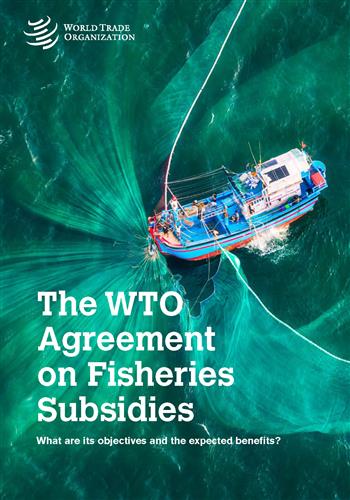
WTO Agreement on Fisheries Subsidies
More LessThe WTO Agreement on Fisheries Subsidies, which entered into force in September 2025, establishes binding, multilateral rules for curbing harmful subsidies, a key factor in the widespread depletion of the world’s fish stocks. This brochure looks at why the Agreement is important, which subsidies are prohibited, and WTO members’ transparency obligations under the Agreement. It also covers the expected benefits of the Agreement, from protecting the livelihoods of fishing communities around the world to supporting a more sustainable future for our shared oceans.
-
-
-
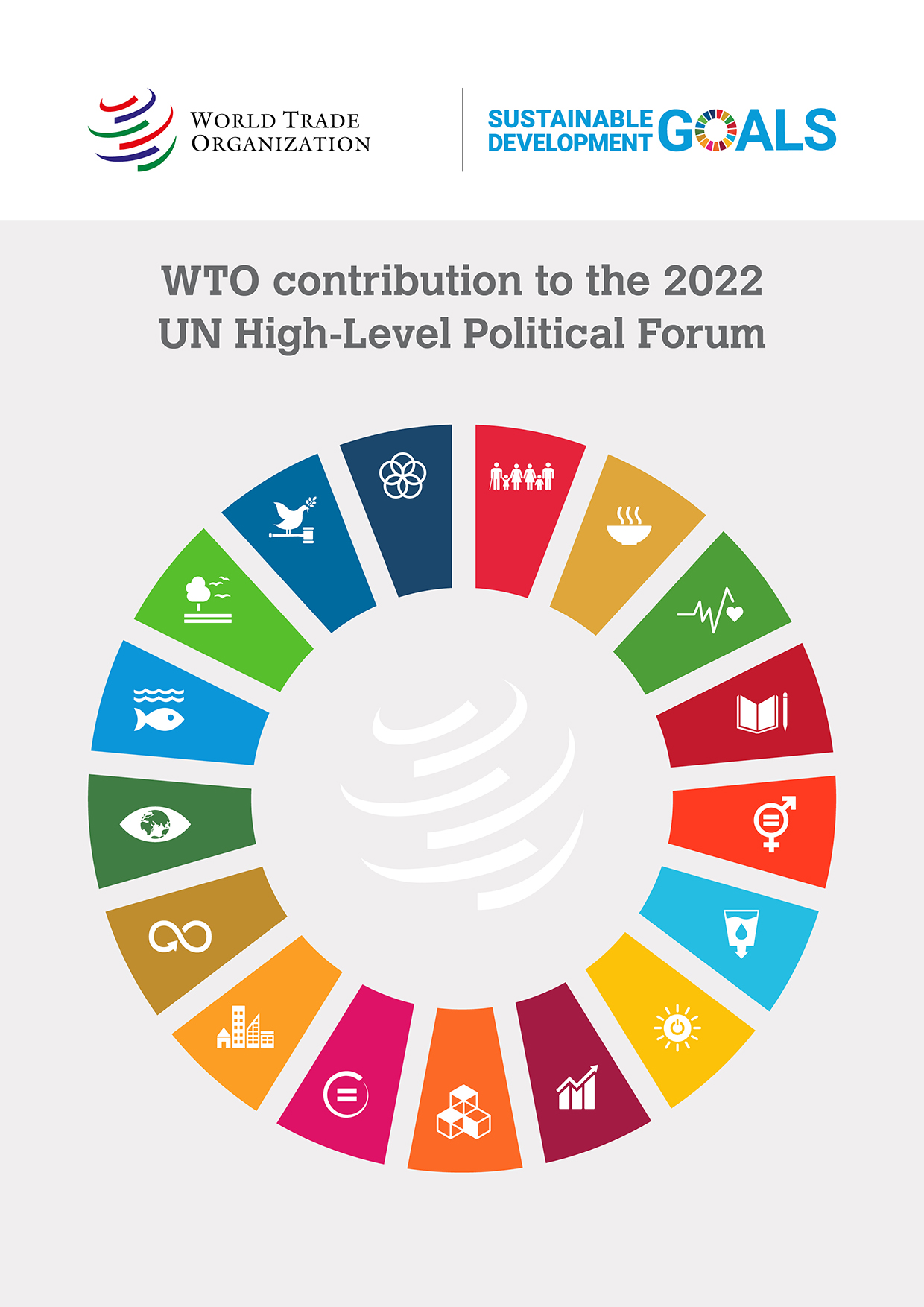
WTO contribution to the 2022 UN High-Level Political Forum
More LessThe WTO is playing an important role in the achievement of the UN's Agenda 2030 for Sustainable Development and collaborates closely with the UN's Department for Economic and Social Affairs in monitoring progress in attaining the Sustainable Development Goals (SDGs). Since 2016, the WTO has submitted annual reports to the UN's High-level Political Forum (HLPF) on WTO efforts to achieve trade-specific targets in the SDGs. In its 2022 report, the WTO provides a comprehensive overview of the relationship between trade and SDGs 4 (“quality education”), 5 (“gender equality”), 14 (“life below water”), 15 (“life on land”) and 17 (“partnerships for the Goals”), as well as the WTO’s role in contributing to the realisation of these five goals.
-
-
-
WTO Dispute Settlement: One-Page Case Summaries 1995–2022
More LessThis publication provides handy one-page summaries of the key findings of every dispute panel report issued up to the end of 2022 and the relevant Appellate Body reports issued over this period. Each one-page summary comprises the core facts, the key findings contained in the reports and any other matters of particular significance. Two indexes list the disputes by WTO agreement and by WTO member responding to the complaint.
-
-
-
WTO in Brief
More LessIn brief, the World Trade Organization (WTO) is the only international organization dealing with the global rules of trade. Its main function is to ensure that trade flows as smoothly, predictably and freely as possible.
-