


WTO
WTO21 - 40 of 944 results
-
-
Acuerdo sobre Obstáculos Técnicos al Comercio
Diez resultados clave de 2023
More LessEl Acuerdo sobre Obstáculos Técnicos al Comercio tiene por objeto velar por que los reglamentos, las normas y los procedimientos de prueba y certificación aplicados por los Miembros de la OMC no creen obstáculos innecesarios al comercio. El Comité de Obstáculos Técnicos al Comercio de la OMC recopila anualmente datos sobre la aplicación del Acuerdo OTC. La información que figura en este folleto se basa en el examen de 2023. La Organización Mundial del Comercio es el organismo internacional que se ocupa de las normas mundiales del comercio entre las naciones. Su función principal es velar por que el comercio se desarrolle de la manera más fluida, previsible y libre posible, en condiciones de igualdad para todos sus Miembros.
-
-
-
Acuerdo sobre Obstáculos Técnicos al Comercio
10 resultados clave de 2022
More LessAcuerdo sobre Obstáculos Técnicos al Comercio El Acuerdo sobre Obstáculos Técnicos al Comercio tiene por objeto velar por que los reglamentos, las normas y los procedimientos de prueba y certificación aplicados por los Miembros de la OMC no creen obstáculos innecesarios al comercio. Examen anual del Acuerdo OTC El Comité de Obstáculos Técnicos al Comercio de la OMC recopila anualmente datos sobre la aplicación del Acuerdo OTC. La información que figura en este folleto se basa en el examen de 2022.
-
-
-
Acuerdo sobre la aplicación de medidas sanitarias y fitosanitarias
10 resultados clave de 2020
More LessEn un nuevo folleto presentado el 27 de julio se destaca el firme compromiso de los Miembros de la OMC en todos los niveles de desarrollo con la transparencia y la prevención de diferencias comerciales. La información contenida en el folleto se basa en el examen de 2020 de la aplicación por los Miembros del Acuerdo sobre la Aplicación de Medidas Sanitarias y Fitosanitarias (el “Acuerdo MSF”).
-
-
-

Adaptación a la era del comercio digital
Desafíos y oportunidades
More LessEl informe Adaptación a la era del comercio digital: desafíos y oportunidades analiza cómo la rápida adopción de tecnologías digitales podría ayudar a los países en desarrollo a aumentar su participación en el comercio mundial. También examina la manera en que las políticas nacionales y la cooperación internacional pueden contribuir a crear un futuro más próspero e inclusivo para esos países. Esta publicación marca la conclusión de la segunda fase del Programa de Cátedras OMC (PCO). En ella se recogen las contribuciones de los titulares de las Cátedras OMC (fases I y II), los miembros del Consejo Consultivo, el equipo del PCO de la OMC y otros funcionarios de la Secretaría de la Organización. El PCO es una parte importante de las iniciativas de la OMC destinadas a crear capacidad comercial y colaborar con las instituciones académicas de los países en desarrollo.
-
-
-
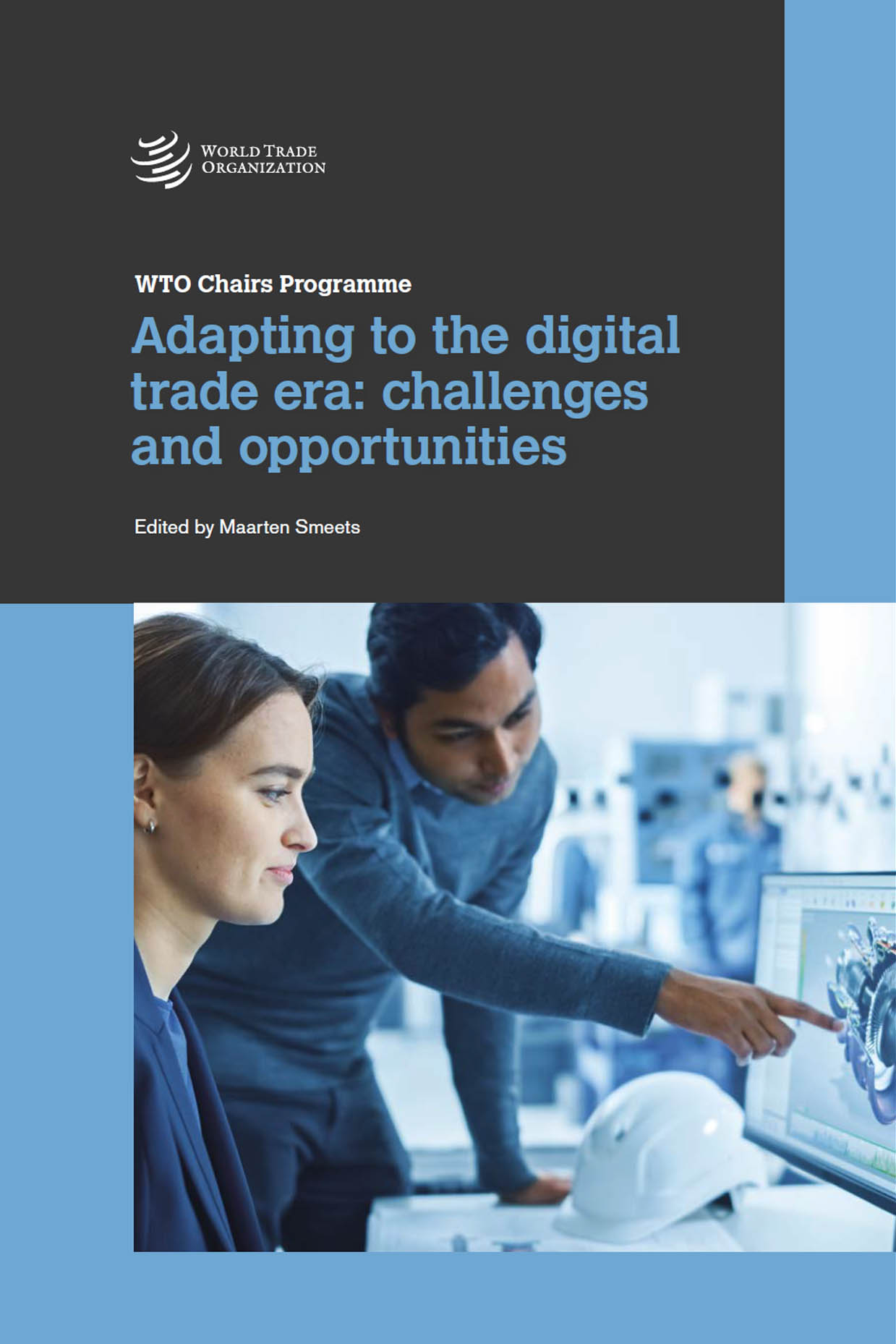
Adapting to the Digital Trade Era
Challenges and Opportunities
More LessAdapting to the digital trade era: challenges and opportunities looks at how the rapid adoption of digital technologies could help developing countries increase their participation in world trade. It also reviews the role that domestic policies and international co-operation can play in creating a more prosperous and inclusive future for these countries. This publication marks the conclusion of the second phase of the WTO Chairs Programme (WCP). It brings together contributions from the WCP Chairholders of Phases I and II, Advisory Board members, the WCP team at the WTO and other WTO Secretariat staff. The WCP is an important part of the WTO's efforts to build trade capacity and to work jointly with academic institutions in developing countries.
-
-
-
African Perspectives on Trade and the WTO
Domestic Reforms, Structural Transformation and Global Economic Integration
More LessTwenty-first century Africa is in a process of economic transformation, but challenges remain in areas such as structural reform, governance, commodity pricing and geopolitics. This book looks into key questions facing the continent, such as how Africa can achieve deeper integration into the rules-based multilateral trading system and the global economy. It provides a range of perspectives on the future of the multilateral trading system and Africa's participation in global trade and underlines the supportive roles that can be played by multilateral and regional institutions during such a rapid and uncertain transition. This volume is based on contributions to the Fourth China Round Table on WTO Accessions and the Multilateral Trading System, which took place just before the WTO's Tenth Ministerial Conference in Nairobi in December 2015.
-
-
-
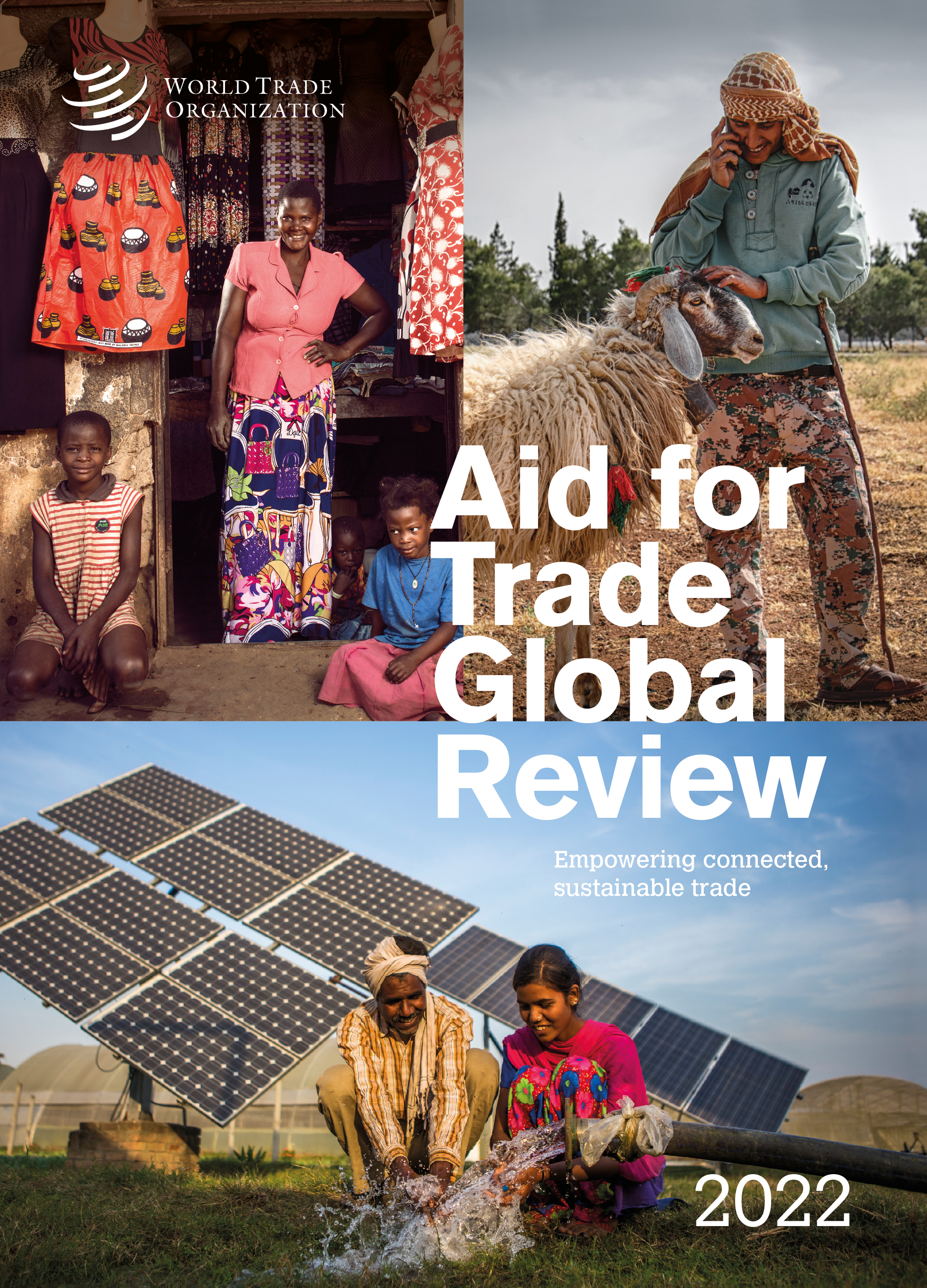
Aid for Trade Global Review 2022
More LessAid for Trade seeks to enable developing countries, and in particular least-developed countries (LDCs), to use trade as a means of fostering economic growth, sustainable development and poverty reduction. It promotes the integration of developing countries, especially LDCs, into the multilateral trading system and aims to galvanize support to build supply-side capacity and trade-related infrastructure in these countries to improve trade performance. This publication draws on the responses provided by participants to the questionnaire of the 2022 OECD–WTO Aid for Trade monitoring and evaluation (M&E) exercise, which underpins the WTO’s 2022 Global Review of Aid for Trade. This publication presents an analysis of the M&E questionnaire responses and describes priority areas and issues for the Aid for Trade Initiative for 2022 and the coming years.
-
-
-
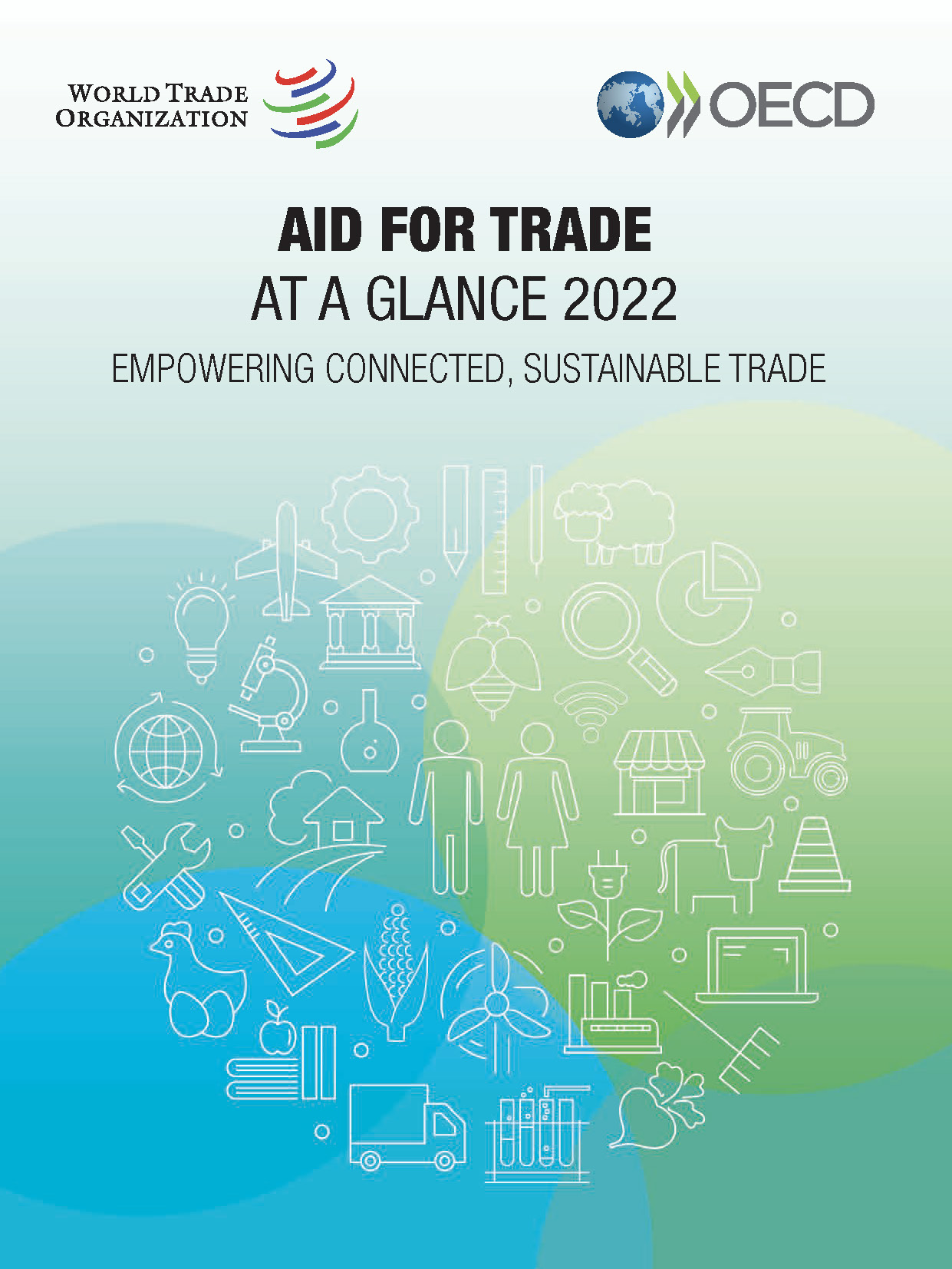
Aid for Trade at a Glance 2022
Empowering Connected, Sustainable Trade
More LessThis report analyses the evolution of Aid for Trade flows in a context marked by crises of unprecedented magnitude, with significant impacts on trade and investment. Under the theme “Empowering Connected, Sustainable Trade”, it shows that Aid for Trade was an important tool in the fight against the COVID-19 pandemic, and can help address emerging challenges, such as the environmental and digital transitions while ensuring that no one is left behind. Recent data indicate that a shift is under way to put sustainability, including green transition and women’s empowerment, at the heart of Aid for Trade, and point to its potential to support an inclusive and sustainable recovery.
-
-
-
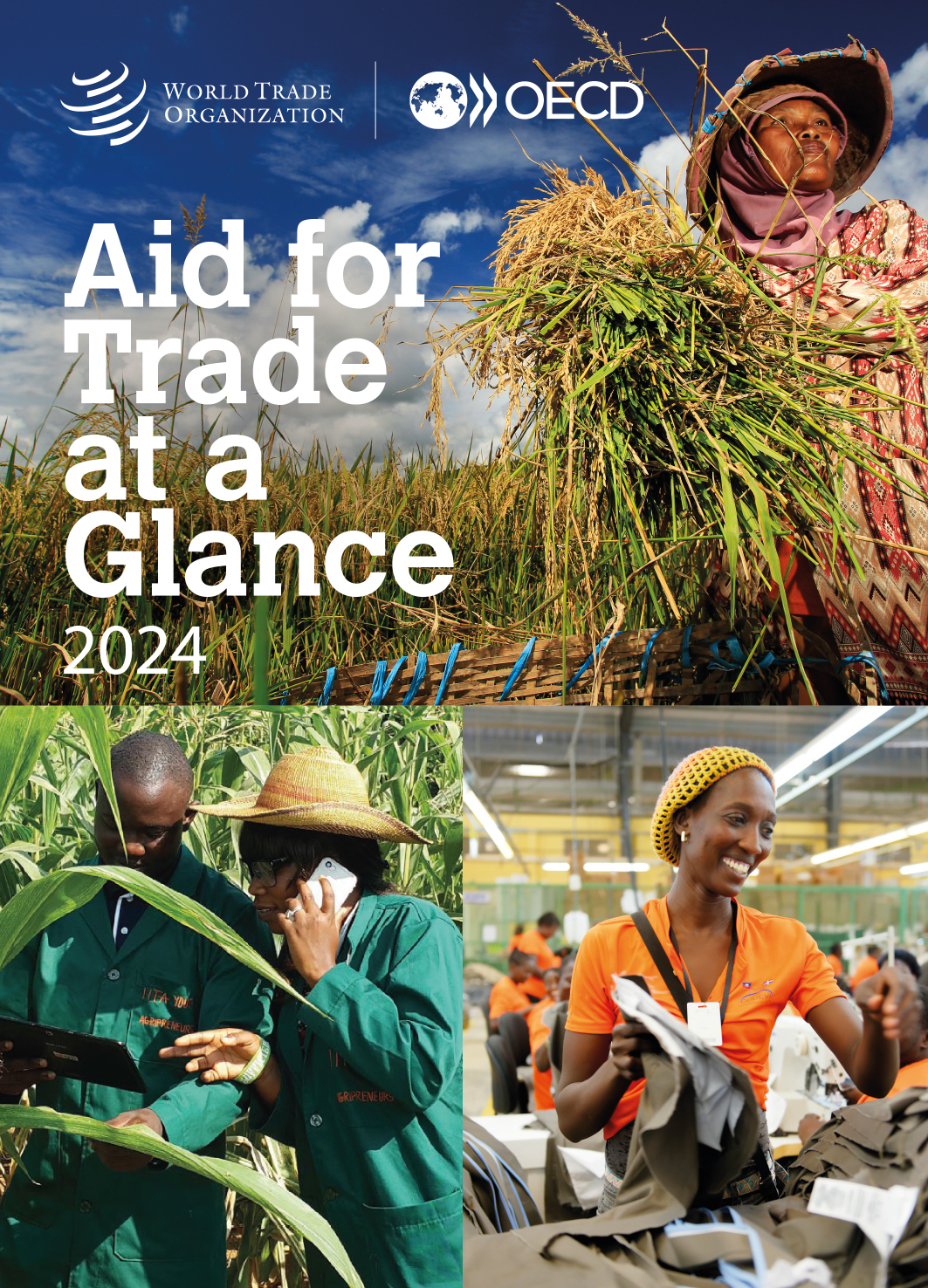
Aid for Trade at a Glance 2024
More LessAid for Trade seeks to enable developing economies, and in particular least-developed countries (LDCs), to use trade as a means of fostering economic growth, sustainable development and poverty reduction. It promotes the integration of developing economies, especially LDCs, into the multilateral trading system and aims to galvanize support to build supply-side capacity and trade-related infrastructure in these economies to improve trade performance. This publication draws on the responses provided by participants to the questionnaire of the 2024 joint OECD–WTO Aid for Trade monitoring and evaluation (M&E) exercise, which underpins the 2024 Global Review of Aid for Trade. It presents an analysis of the M&E questionnaire responses and provides information on Aid for Trade financing flows up to the year 2022. Drawing on the responses to the survey, it describes priority areas for the Aid for Trade Initiative for 2024 and the coming years.
-
-
-
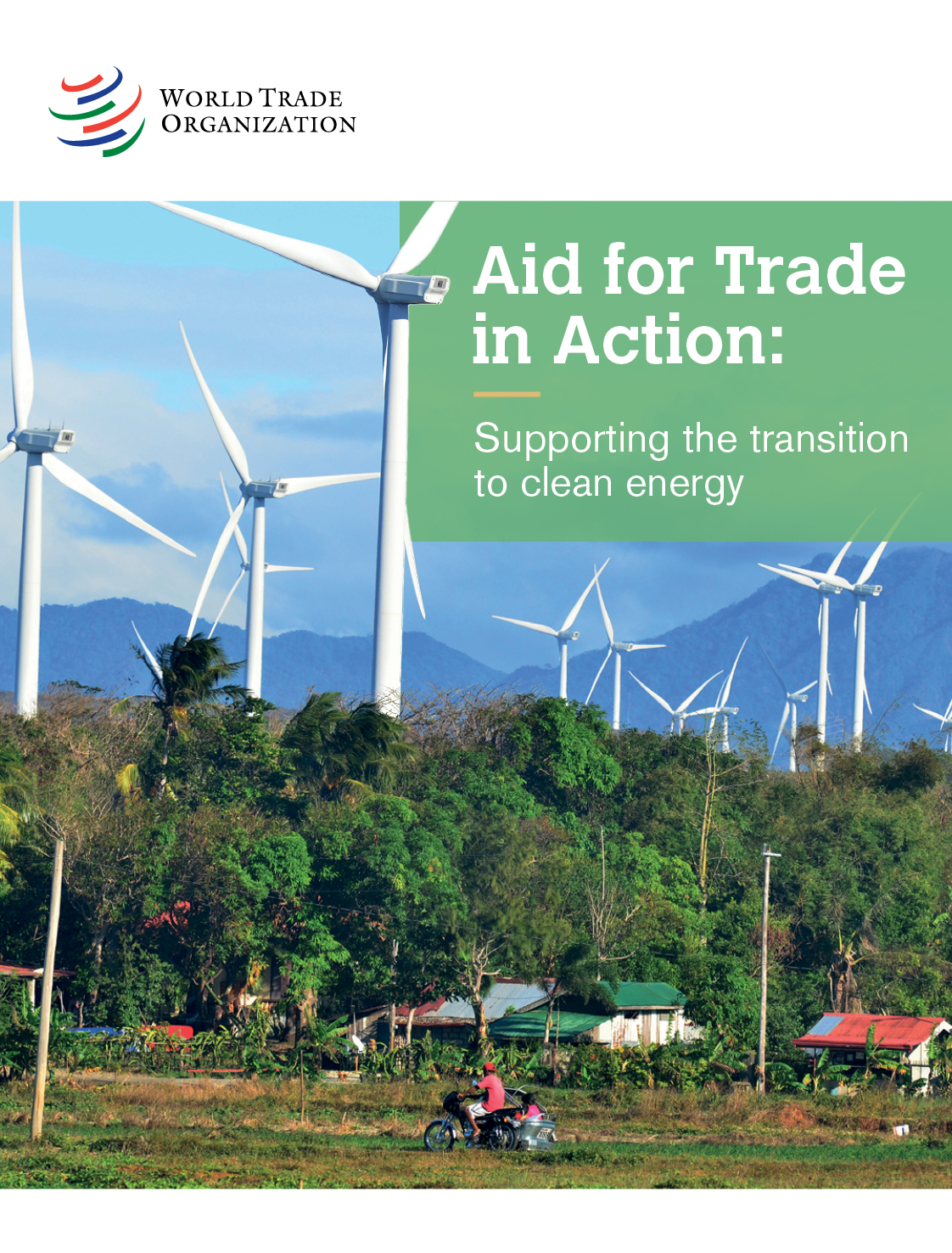
Aid for trade in Action
More LessThe transition to clean energy offers opportunities for developing economies and least-developed countries (LDCs) to exploit the export potential of this transition and to accelerate their growth prospects. The WTO-led Aid for Trade initiative provides significant support to these economies to help them develop their energy sectors and transition to clean energy. However, sustained support is required to ensure that firms benefit from the trade opportunities that will emerge as a result of the clean energy transition. This report highlights the role that Aid for Trade can play in mobilizing financial resources to deliver targeted assistance and to help developing economies unlock export opportunities created by clean energy. It also underlines the role of development partners in helping firms integrate into clean energy value chains by investing in the production of clean energy technologies, such as green hydrogen and solar power.
-
-
-
Air Transport and the GATS
1995-2000 in Review
More LessThis special compilation describes air transport services from a regulatory and economic point of view, with a special focus on market access questions. Each volume contains original material and up-to-date insights, written on the basis of close cooperation with industry professionals. In preparation for the second air transport review mandated by the GATS Annex on Air Transport Services, the Secretariat has gathered in the present booklet the documentation produced in 2000-1 for the first review.
-
-
-
Air Transport and the GATS
2000-2005 in Review Volume 1 Auxiliary services
More LessThis special compilation describes air transport services from a regulatory and economic point of view, with a special focus on market access questions. Each volume contains original material and up-to-date insights, written on the basis of close cooperation with industry professionals. It contains the documentation prepared by the WTO Secretariat for the WTO Membership in the framework of a quinquennal review process of the air transport sector. It deals with services "auxiliary" to air transport, namely maintenance repair and overhaul, airlines' ticket distribution, franchising, leasing, ground handling ,airport management and air navigation services.
-
-
-
An Advanced Guide to Trade Policy Analysis: The Structural Gravity Model
More LessAn Advanced Guide to Trade Policy Analysis is a follow up to A Practical Guide to Trade Policy Analysis. The Advanced Guide provides the most recent tools for analysis of trade policy using structural gravity models. Written by experts who have contributed to the development of theoretical and empirical methods in the academic gravity literature and who have rich practical experience in the field, this publication explains how to conduct partial equilibrium estimations as well as general equilibrium analysis with structural gravity models and contains practical guidance on how to apply these tools to concrete policy questions.
-
-
-
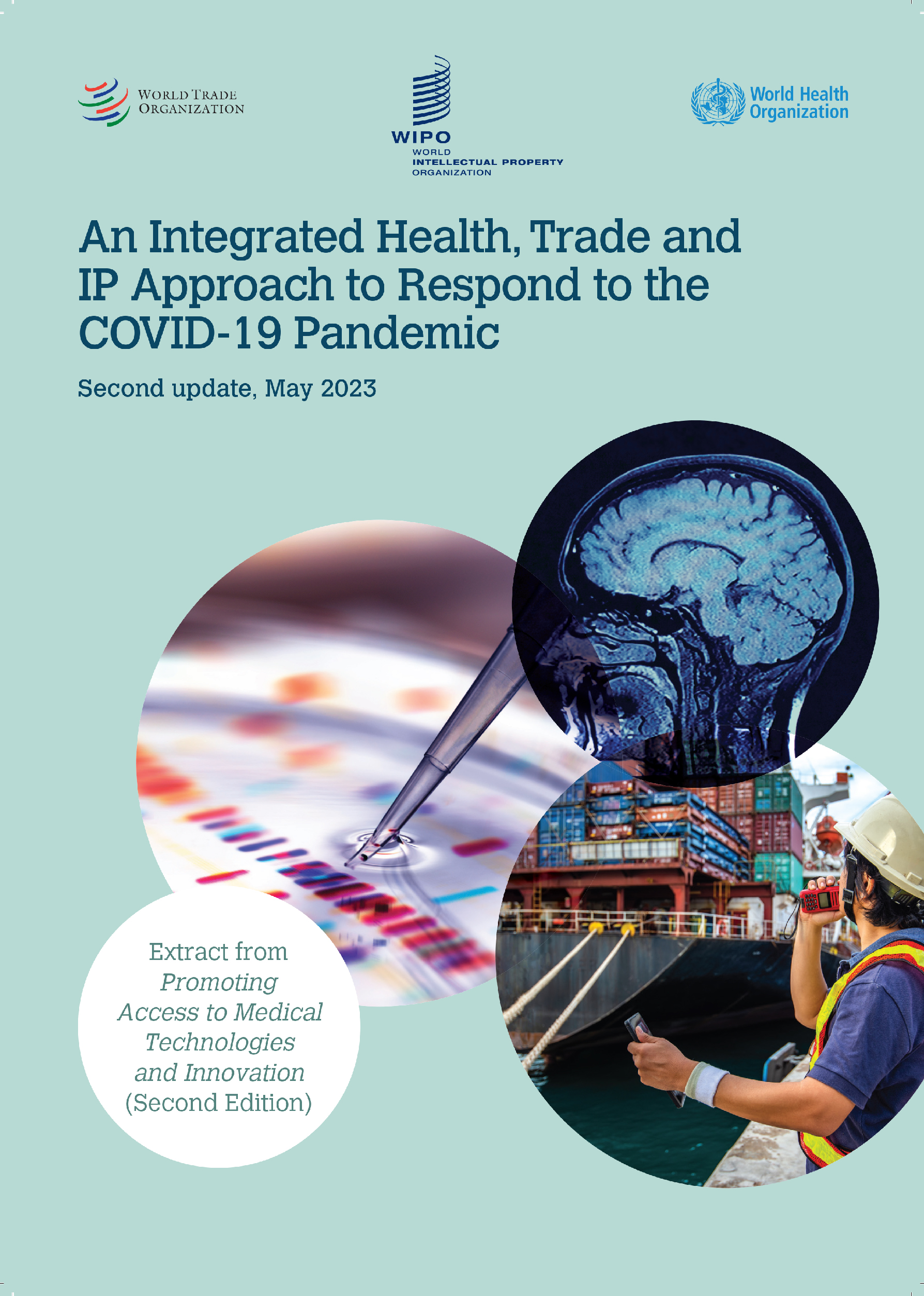
An Integrated Health, Trade and IP Approach to Respond to the COVID-19 Pandemic
An updated extract from Promoting Access to Medical Technologies and Innovation
More LessThe coronavirus disease 2019 (COVID-19) pandemic constitutes an extraordinary global public health crisis. It has created a pressing need for intensified global cooperation. The pandemic has from its outset raised issues at the crossroads of public health policy, trade policy and the framework for and management of innovation, including those relating to intellectual property rights. The second edition of the joint WHO, WIPO and WTO publication “Promoting Access to Medical Technologies and Innovation: Intersections between public health, intellectual property and trade”, published in 2020, included a special insert mapping the challenges posed by the COVID-19 pandemic in relation to the integrated health, trade and IP policy framework set out in the study. This update revises the information contained in the last version launched in October 2021 in the light of more recent developments as of 17 May 2023.
-
-
-

Annual Report
More LessThe "Annual Report" summarises the WTO's activities and provides detailed information on the organization's structure, staff and budget.
-
-
-
Annual Report 2022
More LessThe WTO Annual Report 2022 provides a comprehensive account of the WTO's activities in 2021 and early 2022. It also covers the 12th Ministerial Conference (MC12), originally scheduled for end-2021 but postponed until June 2022. The Report opens with a message from Director-General Ngozi Okonjo-Iweala and an overview of the past year, followed by in-depth accounts of the WTO’s main areas of activity in 2021 and early 2022, including spotlights highlighting the impact of COVID-19 on world trade and the 2021 Public Forum
-
-
-
Annual Report 2023
More LessThe WTO Annual Report 2023 provides a comprehensive account of the WTO’s activities in 2022 and the early part of 2023. At the start of the report, Director-General Ngozi Okonjo-Iweala reflects on the current challenges facing world trade and the role of the WTO in helping the world address these challenges.
-
-
-
Annual Report 2024
More LessThis report covers WTO activities in 2023 and the early part of 2024. At the start of the report, Director-General Ngozi Okonjo-Iweala reflects on the current challenges facing world trade and the role of the WTO in helping the world address these challenges. The report also covers the 13th WTO Ministerial Conference, which took place from 26 February to 2 March 2024.
-
-
-
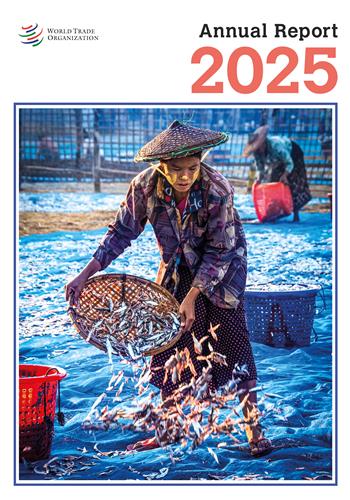
Annual report 2025
More LessThis report covers WTO activities in 2024 and the early part of 2025. At the start of the report, Director-General Ngozi Okonjo-Iweala reflects on the current challenges facing world trade and the role of the WTO. The report also covers the 13th WTO Ministerial Conference, which took place from 26 February to 1 March 2024.
-
-
-
Appellate Body annual report for 2003
More LessAnnual reports on the work of the Appellate Body and its Secretariat have been issued since 2003. These reports contain information about the composition of the Appellate Body, the appeals filed and the Appellate Body reports circulated during the period covered, as well as technical assistance and other developments. The annual reports also provide up-to-date information on a range of topics relating to appellate proceedings, including the subject matter of disputes and procedural issues raised in appeals, as well as statistics on the WTO agreements addressed, the percentage of panel reports appealed, and the participation of WTO Members in appeals. It also contains key speeches delivered by AB Members during the covered period.
-