


WTO
WTO421 - 440 of 944 results
-
-
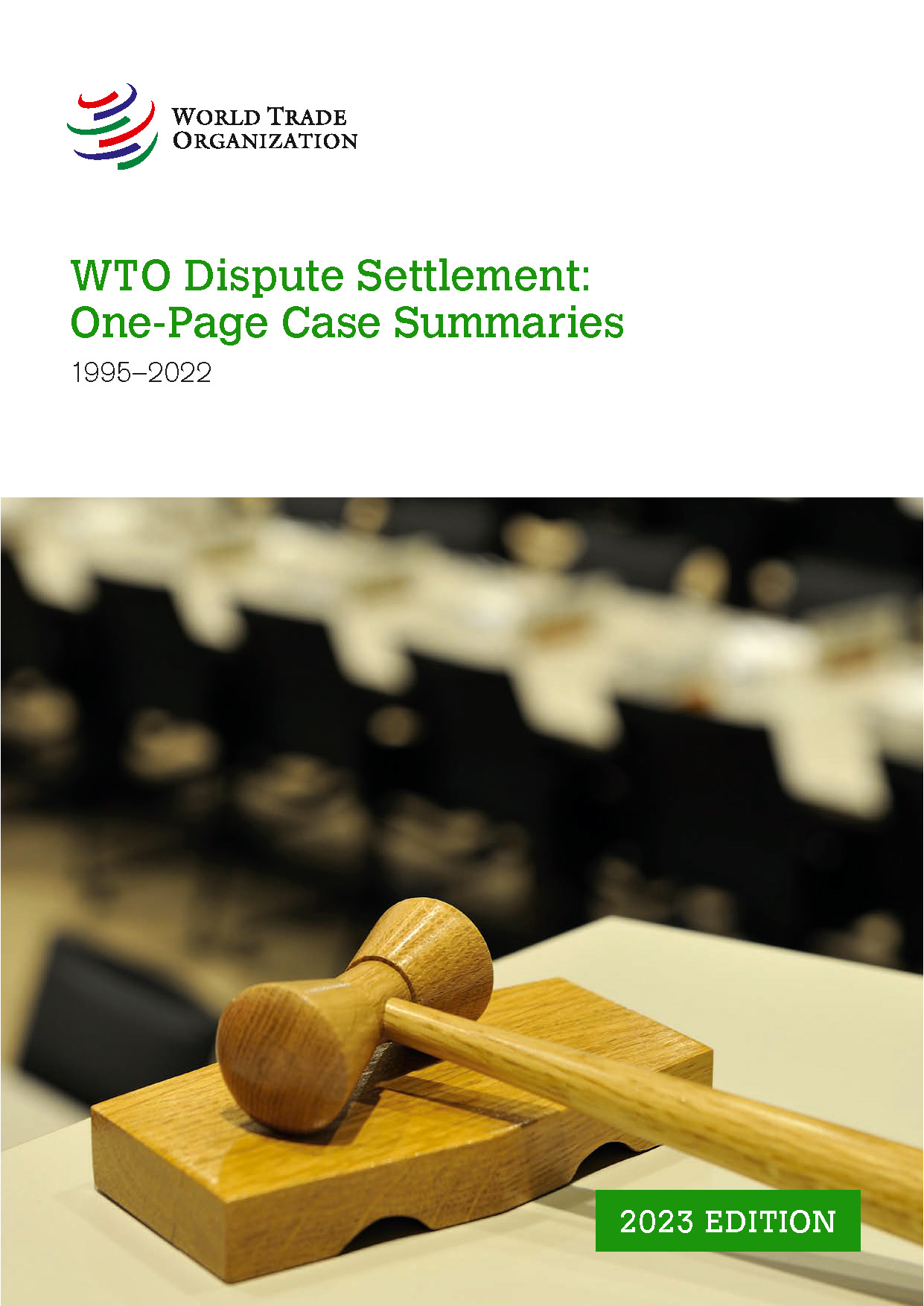
WTO Dispute Settlement: One-Page Case Summaries 1995–2022
2023 edition
More LessThis publication provides handy one-page summaries of the key findings of every dispute panel report issued up to the end of 2022 and the relevant Appellate Body reports issued over this period. Each one-page summary comprises the core facts, the key findings contained in the reports and any other matters of particular significance. Two indexes list the disputes by WTO agreement and by WTO member responding to the complaint.
-
-
-
WTO Domestic Regulation and Services Trade
More LessDomestic regulation of services sectors has a significant impact on services trade liberalization, which is why General Agreement on Trade in Services (GATS) disciplines are negotiated in the WTO. With the help of analyses and case-studies from academics, regulators and trade experts, this book explores the scope and limits of WTO legal principles to promote domestic regulatory reform. Case-studies discuss country-specific challenges and experiences of regulating important service sectors, such as finance, telecommunications, distribution, legal, education, health, postal and logistics services, as well as the role of regulatory impact assessments. The findings will interest trade officials, policy-makers, regulators, think tanks and businesses concerned with the implications of domestic regulation on access to services markets, and with the opportunities for formulating trade disciplines in this area. It is also a useful resource for academics and students researching regulatory approaches and practices in services sectors.
-
-
-
WTO Ministerial Conferences
Key Outcomes
More LessKey outcomes from WTO Ministerial Conferences since the organization was established in 1995.
-
-
-
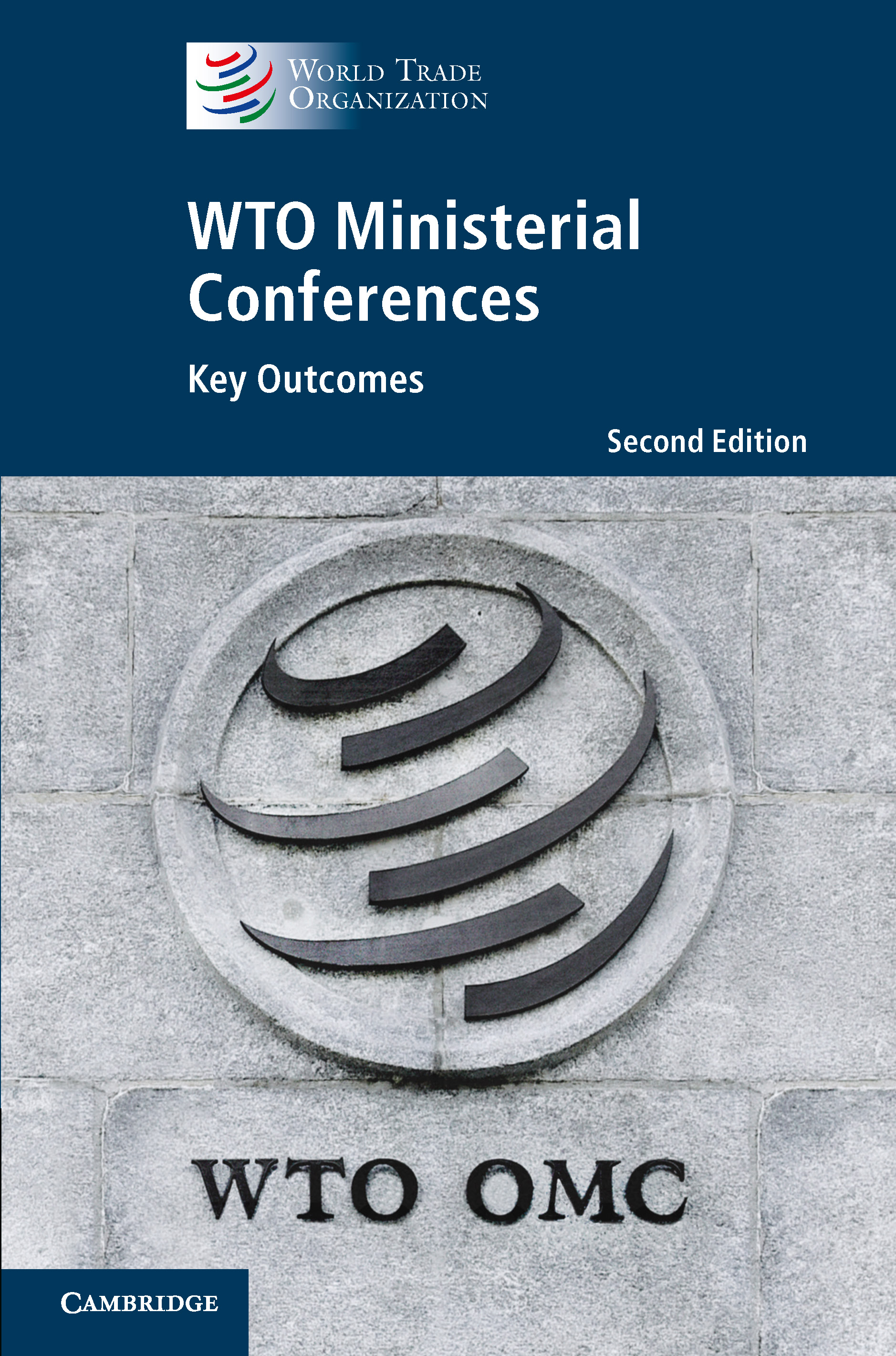
WTO Ministerial Conferences
Key Outcomes - Second Edition
More LessWTO Ministerial Conferences: Key Outcomes contains all the key outcomes from WTO Ministerial Conferences since the organization was established in 1995. Covering twelve Ministerial Conferences held between 1996 and 2022, the key outcomes include Ministerial Decisions and Declarations as well as Chairpersons’ statements. This publication also reproduces relevant Ministerial outcomes of the Uruguay Round adopted in connection with the establishment of the WTO. This publication complements The WTO Agreements, published by Cambridge University Press and the WTO, which contains the Marrakesh Agreement Establishing the WTO and its Annexes.
-
-
-

WTO Ministerial conferences - MC13
Key outcomes - MC13
More LessThe supplement concerning the 13th Ministerial Conference for the publication “WTO Ministerial Conferences, key outcomes”
-
-
-
WTO Public Forum 2011
Seeking Answers to Global trade Challenges
More LessThe sessions held during the 2011 Public Forum triggered a frank and open debate on the principal global challenges for the multilateral trading system. The Forum also sought to identify practical and effective solutions and ways forward to enable the WTO to adapt and respond effectively to our fast-changing world. A chapter is devoted to each of the sessions held during the three-day programme.
-
-
-
WTO Public Forum 2012
Is multilateralism in crisis?
More LessThe 2012 WTO Public Forum posed the question: “Is multilateralism in crisis?”, providing an opportunity for participants from a variety of backgrounds to discuss this question across the three-day event. The themes of the Forum included formulating new approaches to multilateral trade opening in areas such as trade facilitation, addressing 21st-century issues and identifying areas in need of new regulations, and examining the role of non-state actors in strengthening the multilateral trading system. This publication contains summaries of all of the sessions held and reports on the results of the WTO Youth Ambassador Programme and Ideas Workshops.
-
-
-

WTO Working Papers
More LessWTO working papers usually represent research in progress. Such research may be conducted in the preparation of WTO Secretariat reports, studies or other material for WTO members. The papers are circulated for comment because the WTO considers critical review of professional research to be extremely important.
-
-
-
WTO contribution to the 2022 UN High-Level Political Forum
More LessThe WTO is playing an important role in the achievement of the UN's Agenda 2030 for Sustainable Development and collaborates closely with the UN's Department for Economic and Social Affairs in monitoring progress in attaining the Sustainable Development Goals (SDGs). Since 2016, the WTO has submitted annual reports to the UN's High-level Political Forum (HLPF) on WTO efforts to achieve trade-specific targets in the SDGs. In its 2022 report, the WTO provides a comprehensive overview of the relationship between trade and SDGs 4 (“quality education”), 5 (“gender equality”), 14 (“life below water”), 15 (“life on land”) and 17 (“partnerships for the Goals”), as well as the WTO’s role in contributing to the realisation of these five goals.
-
-
-
WTO in Brief
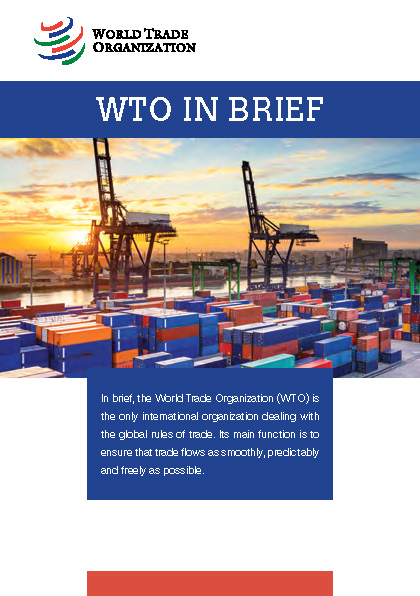
More LessIn brief, the World Trade Organization (WTO) is the only international organization dealing with the global rules of trade. Its main function is to ensure that trade flows as smoothly, predictably and freely as possible.
-
-
-
WTO in Brief
2023
More LessIn brief, the World Trade Organization (WTO) is the only international organization dealing with the global rules of trade. Its main function is to ensure that trade flows as smoothly, predictably and freely as possible.
-
-
-
WTO/WCO Study Report on Disruptive Technologies
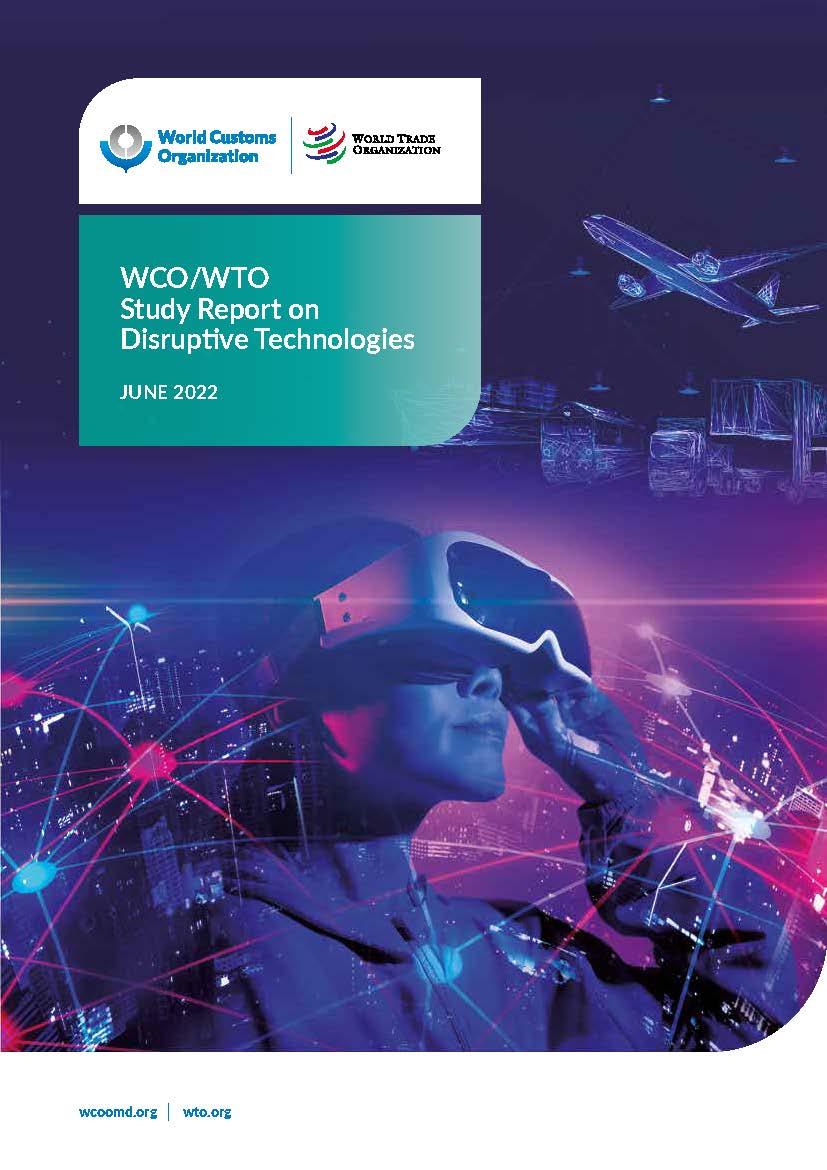
More LessSo-called disruptive technologies, such as blockchain, the Internet of Things, artificial intelligence and machine learning, have the potential to transform border management and the conduct of international trade. This publication explores how these advanced technologies can be used to improve the efficiency of Customs processes and to ease the flow of goods across borders.
-
-
-
WTO’s Contribution to Attaining UN Sustainable Development Goals
2023 update to the High-Level Political Forum
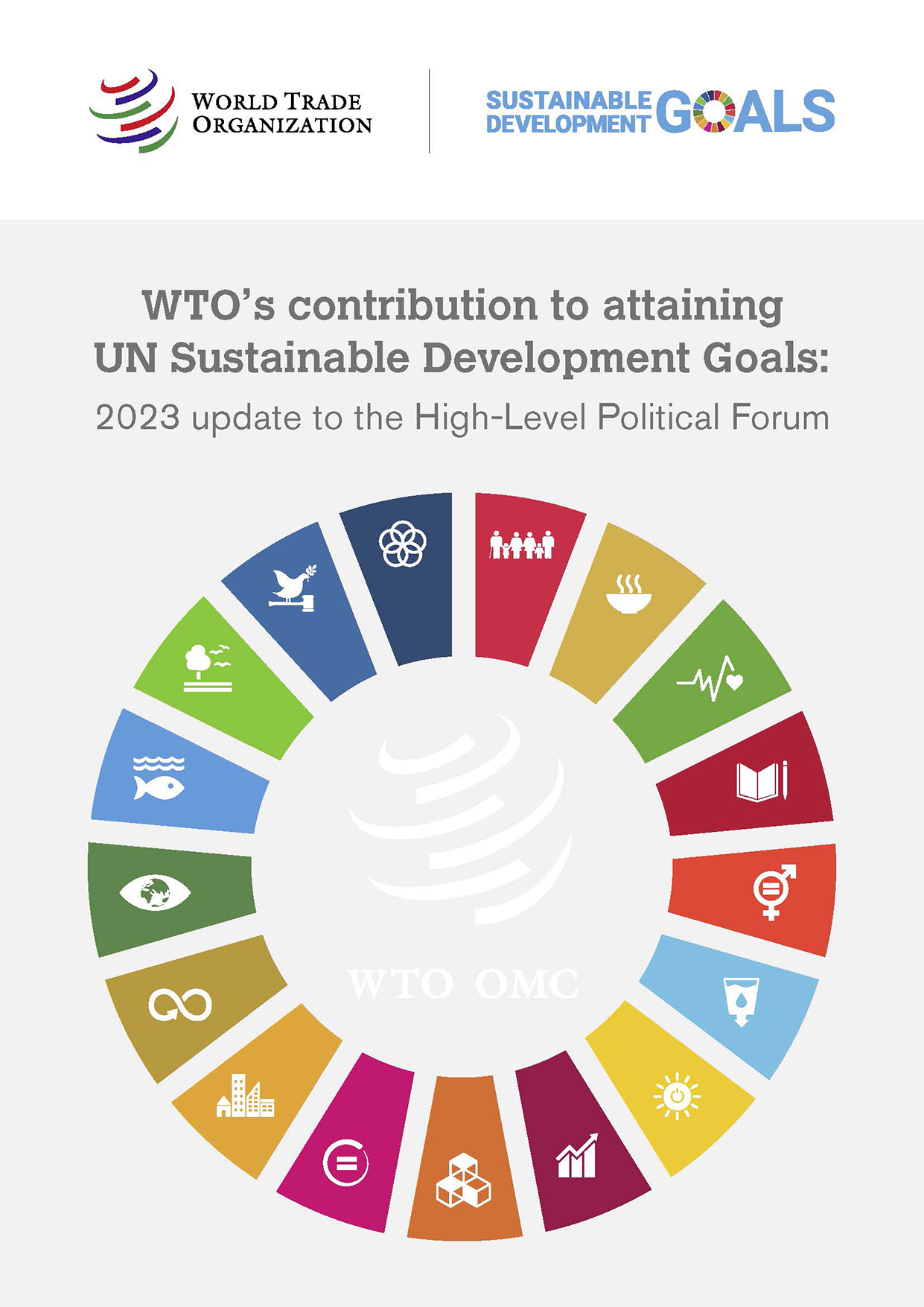
More LessThis report, which was submitted to the UN High-level Political Forum on Sustainable Development in 2023, highlights the role of trade in helping countries recover from the COVID-19 pandemic and meet the United Nations’ Sustainable Development Goals (SDGs). It also underlines the WTO’s contribution to improving livelihoods and making trade work for people.
-
-
-
Women and Trade
The Role of Trade in Promoting Gender Equality
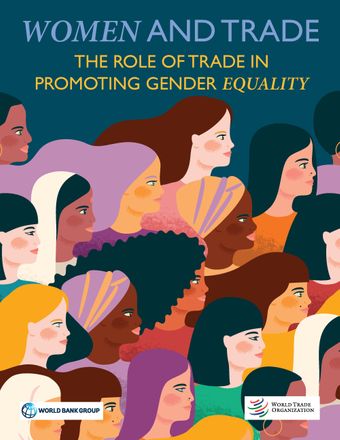
More LessTrade can dramatically improve women’s lives, creating new jobs, enhancing consumer choices, and increasing women’s bargaining power in society. It can also lead to job losses and a concentration of work in low-skilled employment. Given the complexity and specificity of the relationship between trade and gender, it is essential to assess the potential impact of trade policy on both women and men and to develop appropriate, evidence-based policies to ensure that trade helps to enhance opportunities for all. Research on gender equality and trade has been constrained by limited data and a lack of understanding of the connections among the economic roles that women play as workers, consumers, and decision makers. Building on new analyses and new sex-disaggregated data, Women and Trade: The Role of Trade in Promoting Gender Equality aims to advance the understanding of the relationship between trade and gender equality and to identify a series of opportunities through which trade can improve the lives of women.
-
-
-
Working together for better climate action
Carbon pricing, policy spillovers, and global climate goals
More LessThe report of the Joint Task Force on Climate Action, Carbon Pricing, and Policy Spillovers, with participation by the IMF, OECD, UNCTAD, World Bank, and WTO, makes four main contributions. First, it reflects on a common understanding of carbon pricing metrics which inform on the incentives to decarbonize and on cross-country variation in carbon prices, a key determinant of international spillover effects and competitiveness concerns. Second, the report analyzes the appropriate mixes of climate change mitigation policies, emphasizing the pivotal role of carbon pricing as the only policy implementing the polluter pays principle while generating revenues. Third, it analyzes how international organizations can support the coordination of policies to maximize positive and limit negative cross-border spillovers from climate change mitigation policies. Finally, it discusses how such coordination can help to scale up climate action by closing the transparency gap, the implementation gap, and the ambition gap.
-
-
-
World Tariff Profiles
More Less"World Tariff Profiles" provides a unique collection of data on tariffs imposed by WTO members and other economies. It is jointly published by the WTO, the International Trade Centre (ITC) and the UN Conference on Trade and Development (UNCTAD)
-
-
-
World Tariff Profiles 2022
More LessWorld Tariff Profiles 2022 provides comprehensive information on the tariffs and non-tariff measures imposed by over 170 countries and customs territories. The publication starts with a breakdown of the tariffs imposed by these economies. Tariff data are presented in comparative tables and in one-page profiles for each economy. A summary table on selected indicators on the imports and exports profile for these economies is also presented. Statistics on non‑tariff measures by country and by product group complement the data on tariffs. Under the special topics part, there are two technical papers. The first one analyses the preferential rules of origin in international trade and the second one focuses on non-tariff measures on “green” and “brown” energy products. The publication is jointly prepared by the World Trade Organization, the United Nations Conference on Trade and Development (UNCTAD) and the International Trade Centre (ITC).
-
-
-
World Tariff Profiles 2023
More LessWorld Tariff Profiles 2023 provides comprehensive information on the tariffs and non-tariff measures imposed by over 170 countries and customs territories. The publication starts with a breakdown of the tariffs imposed by these economies. Tariff data are presented in comparative tables and in one-page profiles for each economy. A summary table on selected indicators on the imports and exports profile for these economies is also presented. Statistics on non tariff measures by country and by product group complement the data on tariffs. Under the special topics part, there are two technical papers. The first one analyses the evolution of market access over 16 years of World Tariff Profiles and the second one focuses on Product classification for WTO trade statistics and policy analysis - Multilateral Trade Negotiations (MTN) Categories. The publication is jointly prepared by the World Trade Organization, the United Nations Conference on Trade and Development (UNCTAD) and the International Trade Centre (ITC).
-
-
-
World Tariff Profiles 2024
More LessWorld Tariff Profiles 2024 provides comprehensive information on the tariffs and non-tariff measures imposed by over 170 countries and customs territories. The publication starts with a breakdown of the tariffs imposed by these economies. Tariff data are presented in comparative tables and in one-page profiles for each economy. A summary table on selected indicators on the imports and exports profile for these economies is also presented. Statistics on non tariff measures by economy and by product group complement the data on tariffs. This special topic deals with “Tariffs on critical minerals in the electric vehicle value chain”. The publication is jointly prepared by the World Trade Organization, the UN Trade and Development (UNCTAD) and the International Trade Centre (ITC).
-
-
-
World Tariff Profiles 2025
More LessWorld Tariff Profiles 2025 provides comprehensive information on the tariffs and non-tariff measures imposed by over 170 countries and customs territories. The publication starts with a breakdown of the tariffs imposed by these economies. Tariff data are presented in comparative tables and in one-page profiles for each economy. A summary table on selected indicators on the imports and exports profile for these economies is also presented. Statistics on non tariff measures by economy and by product group complement the data on tariffs. The special topic deals with “Global trade on most-favoured-nation terms”. The publication is jointly prepared by the World Trade Organization, the UN Trade and Development (UNCTAD) and the International Trade Centre (ITC).
-