


WTO
WTO281 - 300 of 944 results
-
-
Subsidies, Trade, and International Cooperation
More LessDealing constructively with subsidies in global commerce is central to G20 leaders’ goal of reforming and strengthening the multilateral trading system. The growing use of distortive subsidies alters trade and investment flows, detracts from the value of tariff bindings and other market access commitments, and undercuts public support for open trade. This publication finds that governments need to cooperate more on subsidies. It seeks to highlight the potential benefits of closer cooperation and considers some areas where this might be pursued constructively.
-
-
-
Subvenciones, comercio y cooperación internacional
More LessTratar las subvenciones del comercio mundial de manera constructiva es un elemento central del objetivo de los líderes del G20 de reformar y reforzar el sistema multilateral de comercio. La utilización cada vez mayor de subvenciones causantes de distorsión altera los flujos comerciales y de inversión, menoscaba el valor de las consolidaciones arancelarias y otros compromisos de acceso a los mercados y erosiona el apoyo público al libre comercio. Según se señala en esta publicación, es necesario que los Gobiernos cooperen más en materia de subvenciones. En ella se pretende poner de relieve las posibles ventajas de una colaboración más estrecha y examinar algunas esferas en las que podría forjarse dicha colaboración de manera constructiva.
-
-
-
Subventions, commerce et coopération internationale
More LessIl est essentiel de traiter de manière constructive les subventions dans le commerce mondial pour atteindre l'objectif des dirigeants du G-20 qui consiste à réformer et à renforcer le système commercial multilatéral. Le recours croissant à des subventions ayant un effet de distorsion modifie les courants d'échanges et d'investissements, affaiblit la valeur des consolidations tarifaires et des autres engagements en matière d'accès aux marchés, et ébranle le soutien du public en faveur du libre-échange. Cette publication indique en conclusion que les gouvernements doivent coopérer davantage en ce qui concerne les subventions. Elle vise à mettre en évidence les avantages que pourrait présenter une coopération plus étroite et examine certains domaines dans lesquels cette coopération pourrait être poursuivie de manière constructive.
-
-
-
Supply Chain Perspectives and Issues
A Literature Review
More LessGlobal value chains (GVCs) have become ubiquitous. The literature that attempts to understand and explain GVCs is vast, multidisciplinary and no less complex than the phenomenon itself. This volume is an ambitious attempt at a fairly comprehensive review of literature on the subject.
-
-
-
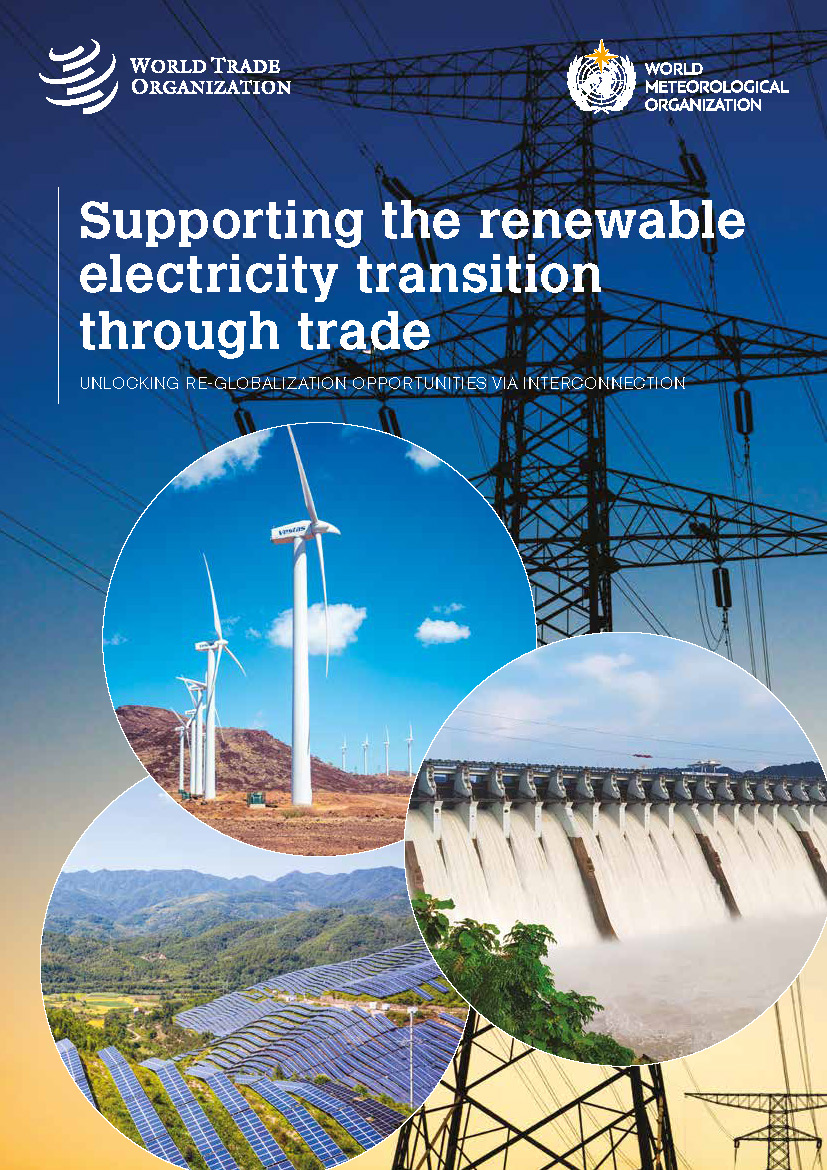
Supporting the renewable electricity transition through trade
Unlocking re-globalization opportunities via interconnection
More LessNatural energy sources, such as solar, wind and water, are abundant, but they are not evenly distributed worldwide. The transmission of power across borders can help address imbalances between electricity supply and demand from renewable sources, contributing to security of supply. Security of energy supply is a core concern for countries around the world, especially in the context of the transition to renewable energy, which lies at the heart of efforts to mitigate the effects of climate change. However, only 2.8% of electricity generated is traded across borders. As the share of weather-dependent renewable power generation increases in the global energy mix, the World Meteorological Organization has a critical role to play in upgrading climate services to support decision-making in the energy sector. Trade also has a role to play to help balance power grids through interconnection with overland and undersea electricity cables. Such cables open up the possibility of bringing new suppliers with significant natural solar, wind and water endowments into energy trade. However, interconnection cables are complex and costly infrastructure, with projects taking 10-15 years to complete. This report discusses how to speed up interconnection projects. Actions identified include ensuring better access to sustainable trade finance and climate finance. Also important is improving the predictability and transparency of regulatory approval processes for these projects. WTO rules may also help to address bottlenecks in the supply chains of goods and services needed for grid and interconnection expansion. Trading renewable energy across borders could help economies meet their decarbonization commitments and reduce the overall cost of the global transition to low-carbon energy.
-
-
-

Série des Accords de l'OMC
More LessLes Accords de l'OMC sont le fondement juridique du système commercial international utilisé par la majorité des nations commerçantes du monde. selected Agreements.
-
-
-

S’adapter à l’ère du commerce numérique
Défis et possibilités
More LessS’adapter à l’ère du commerce numérique : défis et possibilités examine comment l’adoption rapide des technologies numériques pourrait aider les pays en développement à accroître leur participation au commerce mondial. Il analyse également le rôle que les politiques nationales et la coopération internationale peuvent jouer dans la création d’un avenir plus prospère et plus inclusif pour ces pays. Cette publication marque la conclusion de la deuxième phase du Programme de chaires de l’OMC (PCO). Elle rassemble des contributions de titulaires de chaires du PCO, de membres du Conseil consultatif, de l’équipe PCO à l’OMC et d’autres fonctionnaires du Secrétariat. Le PCO joue un rôle important dans les efforts déployés par l’OMC pour renforcer les capacités commerciales et travailler conjointement avec les institutions universitaires des pays en développement.
-
-
-
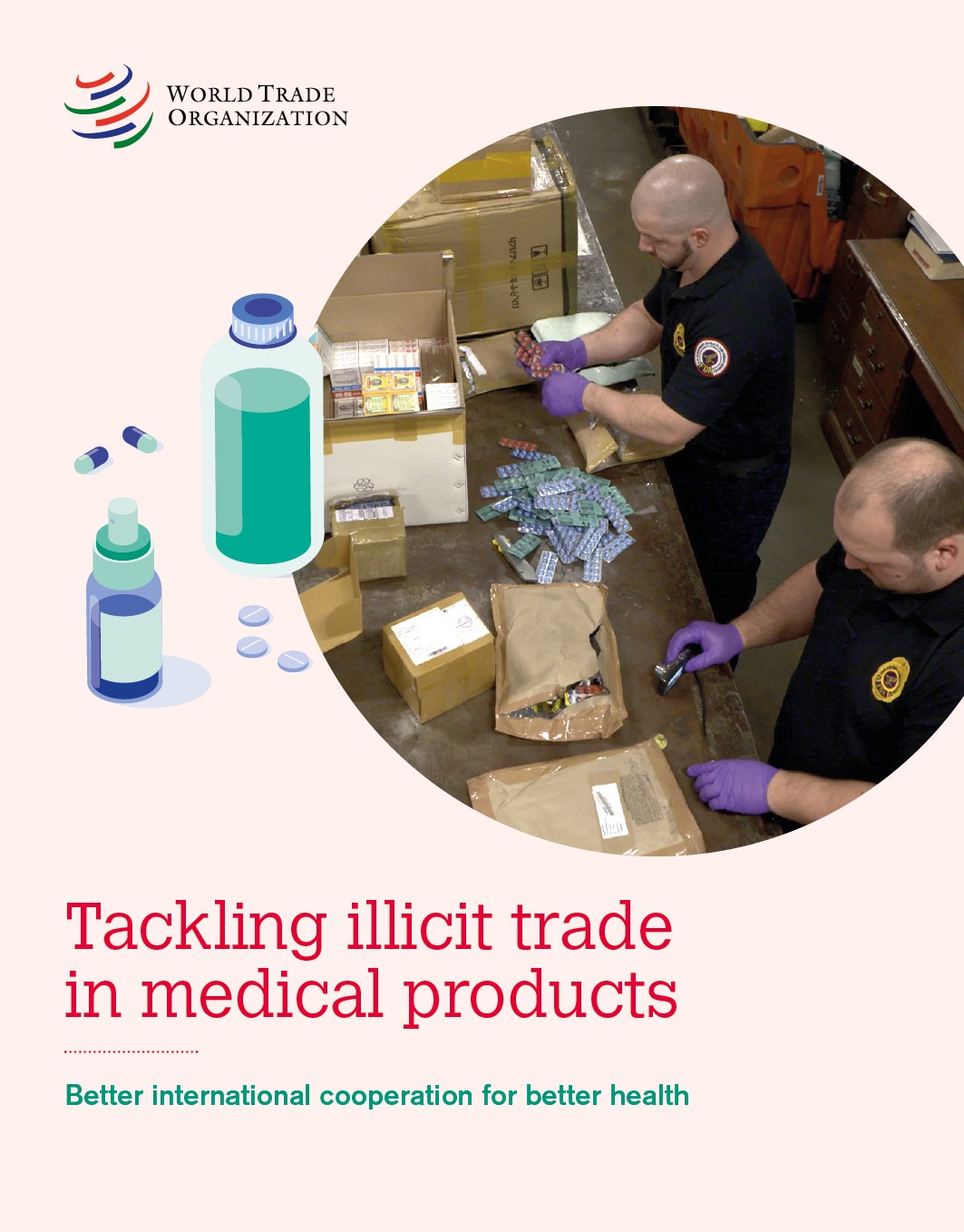
Tackling illicit trade in medical products
Better international cooperation for better health
More LessWTO rules support efforts to address the threat of illicit trade in medical products by promoting transparency and predictability and setting the foundation for strengthened border and regulatory controls and enhanced cooperation. This publication explores WTO tools and activities that can help WTO members develop and strengthen their trade policy responses to combat illicit trade in medical products.
-
-
-

Tariff Negotiations and Renegotiations under the GATT and the WTO
More LessThe procedures and practices to implement the provisions relating to tariff negotiations and renegotiations have evolved considerably since the GATT was established in 1947. The provisions themselves have undergone some changes in the last fifty-four years. Professor Hoda reviews the evolution of these provisions and of the procedures adopted and practices followed by the contracting parties to GATT 1947 and the Members of the WTO. He goes on to offer some conclusions and recommendations. This book will be of particular interest to negotiators including Geneva based delegations, members of government trade ministries, economists, and all academics who specialise in trade policy.
-
-
-
Tariff Negotiations and Renegotiations under the GATT and the WTO
Procedures and Practices, 2nd Edition
More LessOver the past seven decades, since the General Agreement on Tariffs and Trade (GATT) was established in 1947, there has been a phenomenal increase in international trade in goods, largely due to sustained efforts by the world’s main trading nations to reduce and eliminate tariff barriers in a multilaterally orchestrated manner. This publication reviews how the procedures and practices relating to tariff negotiations and renegotiations have evolved over this time. In particular, this new edition recounts how negotiations to expand the duty-free coverage of the Information Technology Agreement were concluded and provides an account of tariff renegotiations regarding successive enlargements of the European Union. It also covers tariff negotiations for the accession of a number of new members to the WTO, such as China and Russia. This book will be of particular interest to negotiators, members of government, trade ministries, economists and academics specialized in trade policy.
-
-
-
Tariff Profiles
More LessThe Tariff Profiles provide information on the market access situation of members, observers and other selected economies.
-
-
-
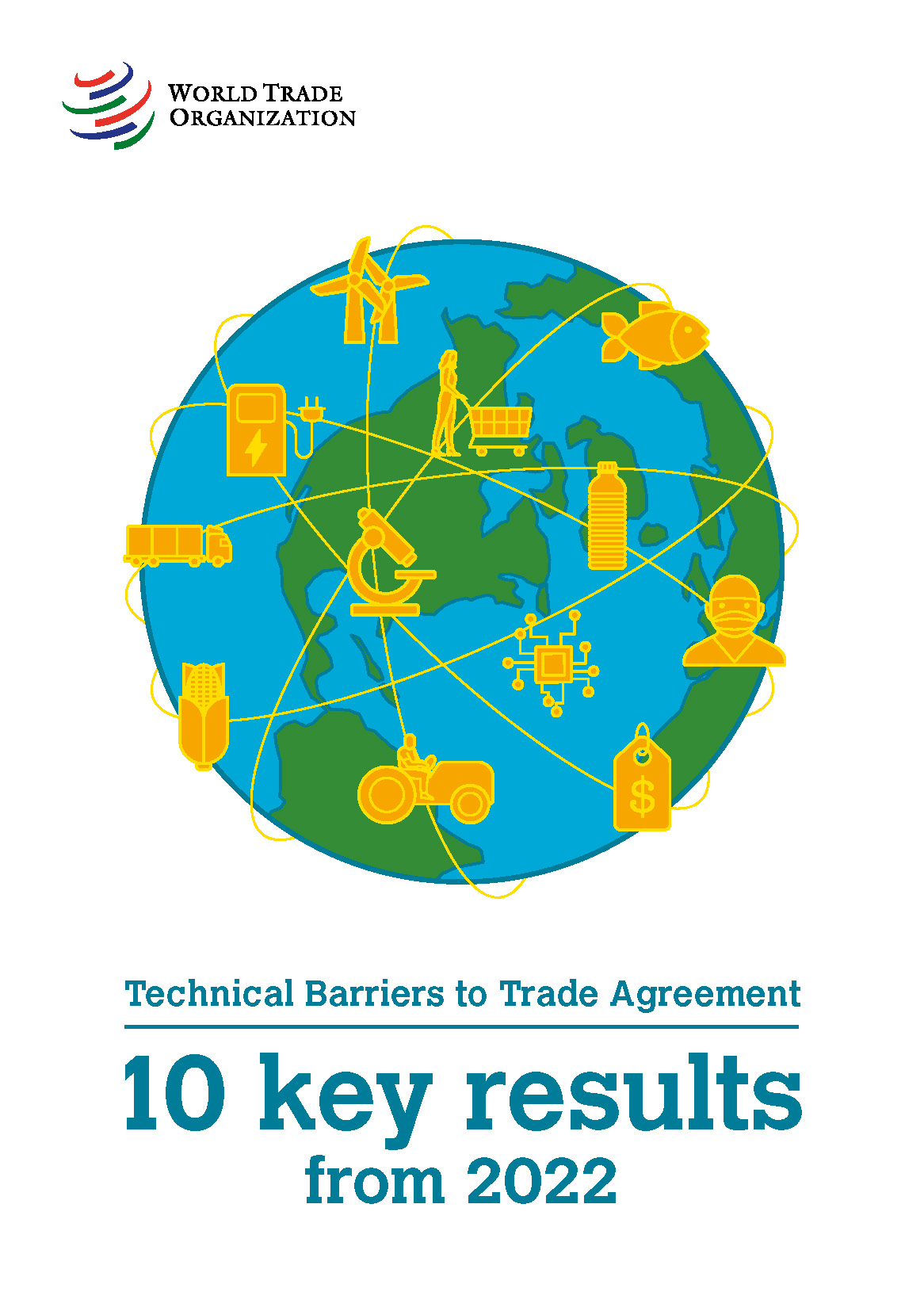
Technical Barriers to Trade Agreement
10 key results from 2022
More LessTechnical Barriers to Trade Agreement The Technical Barriers to Trade Agreement aims to ensure that regulations, standards, testing and certification procedures followed by WTO members do not create unnecessary obstacles to trade. Annual Review of TBT Agreement The WTO Committee on Technical Barriers to Trade collects data on an annual basis on the implementation of the TBT Agreement. The information in this brochure is based on the 2022 review.
-
-
-

Technical Barriers to Trade Agreement
10 key results from 2023
More LessThe Technical Barriers to Trade Agreement aims to ensure that regulations, standards, testing and certification procedures followed by WTO members do not create unnecessary obstacles to trade. Annual Review of TBT Agreement The WTO Committee on Technical Barriers to Trade collects data on an annual basis on the implementation of the TBT Agreement. The information in this brochure is based on the 2023 review. About the WTO The World Trade Organization is the international body dealing with the global rules of trade between nations. Its main function is to ensure that trade flows as smoothly, predictably and freely as possible, with a level playing field for all its members.
-
-
-
Terapia para el comercio
Intensificar la cooperación para reforzar la capacidad de luchar contra las pandemias
More LessLa pandemia de COVID-19 ha expuesto las ventajas e inconvenientes que supone el comercio internacional de bienes y servicios médicos. El comercio abierto puede aumentar el acceso a los servicios y bienes médicos –y los insumos esenciales necesarios para fabricarlos– mejorar la calidad y la variedad y reducir los costos. Sin embargo, una concentración excesiva de la producción, la adopción de políticas comerciales restrictivas, las perturbaciones de la cadena de suministro y las diferencias en materia de reglamentación pueden poner en peligro la capacidad de los sistemas de salud pública para responder a las pandemias y a otras crisis sanitarias. Trade Therapy: Deepening Cooperation to Strengthen Pandemic Defenses, un trabajo coordinado por Nadia Rocha y Michele Ruta, del Banco Mundial, y Marc Bacchetta y Joscelyn Magdeleine, de la Organización Mundial del Comercio, ofrece nuevos datos sobre el comercio de bienes y servicios médicos y las cadenas de valor de los productos médicos, analiza la evolución del panorama de las políticas antes y durante la pandemia y propone un plan de acción para mejorar las políticas comerciales e intensifi car la cooperación para hacer frente a futuras pandemias. Ante la persistencia de la pandemia de COVID-19, las medidas de política se centran en la respuesta, que incluye medidas encaminadas a eliminar los estrangulamientos y proporcionar ayuda pública para promover un acceso equitativo a las vacunas. Según va remitiendo la emergencia, el centro de atención debería desplazarse a la prevención y la preparación. Debe darse prioridad a la adopción de medidas para colmar las lagunas de información, sobre la base de la labor del Grupo de Trabajo Multilateral de Líderes contra la COVID-19, el Acelerador ACT y la apertura de los mercados, por ejemplo, mediante la negociación de reducciones arancelarias para los bienes médicos y el mayor acceso a los mercados para los servicios. También son importantes las medidas destinadas a aumentar la efi ciencia de los mercados, entre ellas, la armonización de las normas a través del reconocimiento mutuo o la equivalencia normativa y la elaboración de normas internacionales aplicables a los bienes, insumos y procesos de producción médicos de carácter esencial. Un acuerdo sobre un conjunto de normas para situaciones de crisis que pueda utilizarse en caso de emergencia, y que incluya límites claros y convenidos sobre la fl exibilidad de la política de exportación, así como normas compartidas sobre fl exibilidades en materia de propiedad intelectual, proporcionaría una base normativa más sólida para hacer frente a los desafíos futuros.
-
-
-
Textiles and clothing in Asian graduating LDCs
Challenges and options
More LessThe textiles and clothing sector has been a key driver of export growth in least-developed countries (LDCs) that are on the path of graduation, especially from Asia. Graduation from LDC status would imply loss of LDC trade preferences. This report, a product of inter-agency collaboration, examines impacts of graduation for Asian graduating LDCs; it looks at market access scenario after graduation, the nature of their participation in global value chains and business insights, including at the firm level. The report also offers a forward-looking perspective to ensure a smooth transition from LDC status. It sheds light on possible strategies to maintain market access after graduation and to support industrial upgrade and economic diversification. In addition, the report points to other factors affecting export potential of textiles and clothing, including increased attention to environmental and social standards. LDC-focused development assistance could play an important role in supporting these countries with bolstering the overall competitiveness of their textiles and clothing sector.
-
-
-
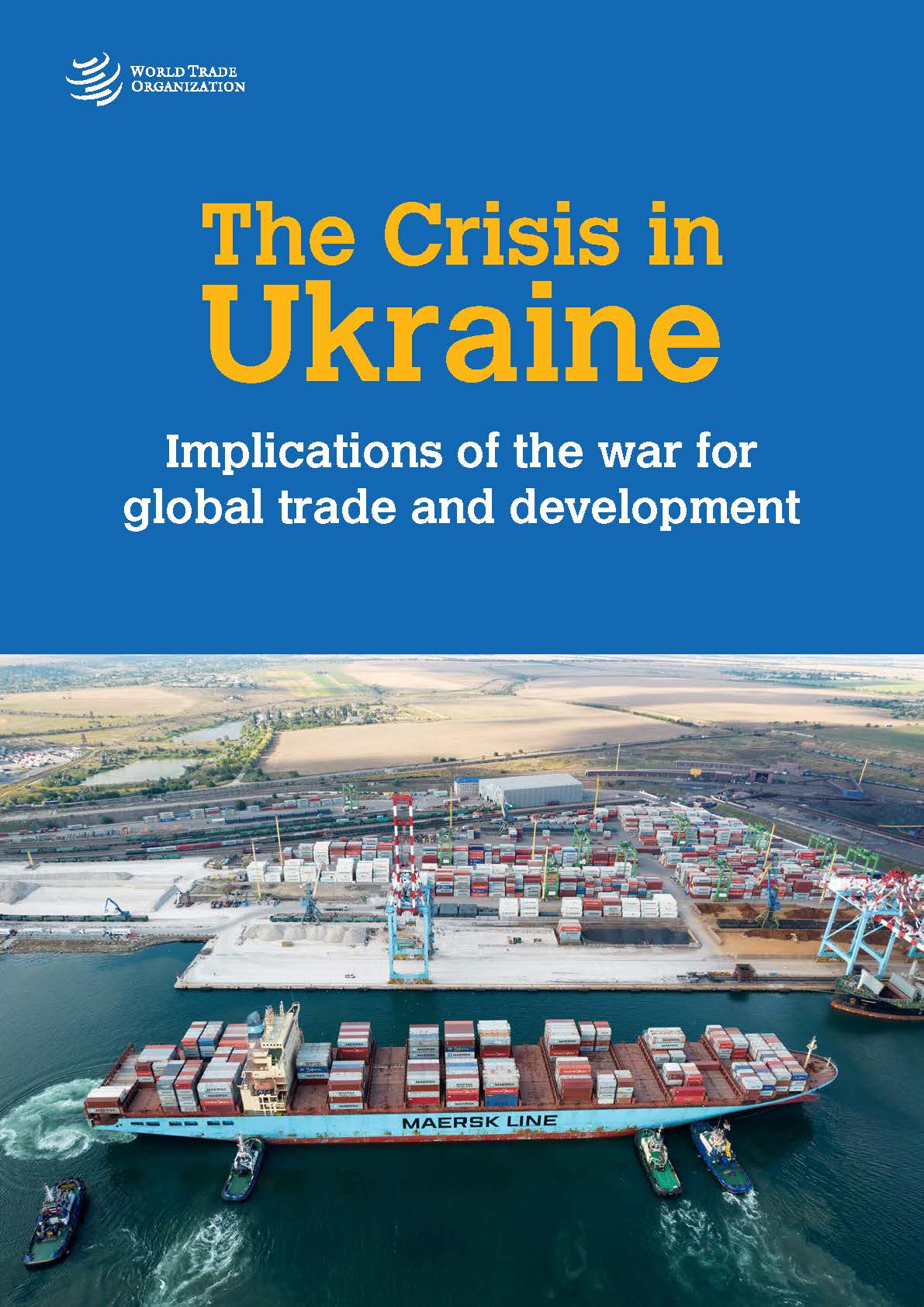
The Crisis in Ukraine
Implications of the war for global trade and development
More LessThis note examines the implications of the crisis in Ukraine for global trade and development. It highlights the importance of the supplies of food, energy and certain industrial inputs from Russia and Ukraine, and explores how the war is causing severe risks to food and energy security as well as exacerbating supply chain difficulties. Simulations from the WTO Global Trade Model indicate that global GDP and trade growth could be reduced by up to 1.3 and 2.2 percentage points, respectively, with effects concentrated in Europe and Africa. This note further shows that if the war were to cause a disintegration of the global economy into separate blocs, the income losses would be severe, especially for emerging and developing economies. This highlights the importance of the rules-based multilateral trading system, not least because the WTO provides functions that can help to cushion the impact of the crisis.
-
-
-
The First Ten Years of the WTO
More LessThis book was commissioned by the World Trade Organization (WTO) as a factual account of the first decade of its existence. It aims to cover the principal activities of the WTO as the successor to GATT and the steps taken to establish a global trading system. Peter Gallagher, the author, is an independent trade analyst and consultant, who records what might be regarded as the WTO's main achievements as well as describing the controversies that have arisen in its first ten years. A useful reference book for policy makers, journalists, members of trade delegations and for everyone who requires a detailed understanding of the workings of the WTO.
-
-
-
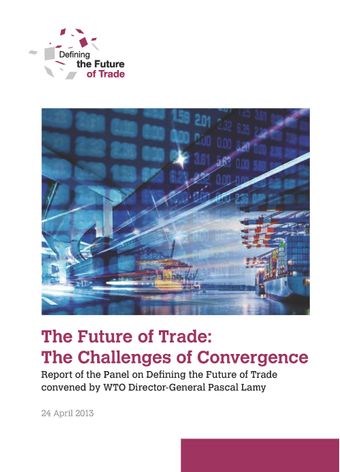
The Future of Trade: The Challenges of Convergence
Report of the Panel on Defining the Future of Trade convened by WTO Director-General Pascal Lamy
More LessThe Panel on Defining the Future of Trade was established in 2012 to examine and analyse challenges to global trade opening in the 21st century. The Report looks at trade patterns and what it means to open global trade in the 21st century, bearing in mind the role of trade in contributing to sustainable development, growth, jobs and poverty alleviation
-
-
-
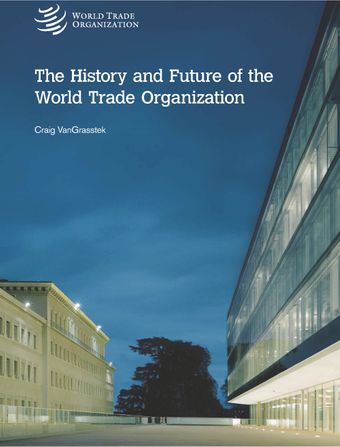
The History and Future of the World Trade Organization
More LessThe History and Future of the World Trade Organization is a comprehensive account of the economic, political and legal issues surrounding the creation of the WTO and its evolution. Fully illustrated with colour and black-and-white photos dating back to the early days of trade negotiations, the publication reviews the WTO's achievements as well as the challenges faced by the organization, and identifies the key questions that WTO members need to address in the future.
-
-
-
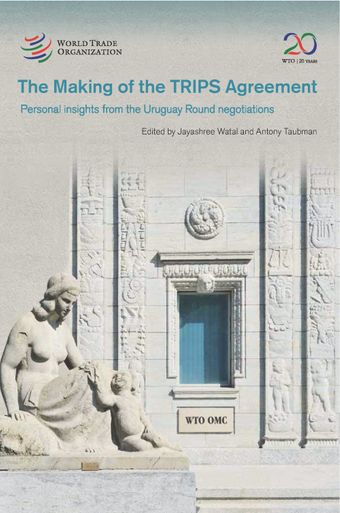
The Making of the TRIPS Agreement
Personal Insights from the Uruguay Round Negotiations
More LessA comprehensive account of the establishment of the World Trade Organization, focusing on those who shaped its creation as well as those who have influenced its evolution. The book examines trade negotiations, the WTO’s dispute settlement role, the presence of coalitions and groupings within the WTO, the process of joining the organization and many other topics, including what lies ahead for the organization.
-