


WTO
WTO121 - 140 of 944 results
-
-
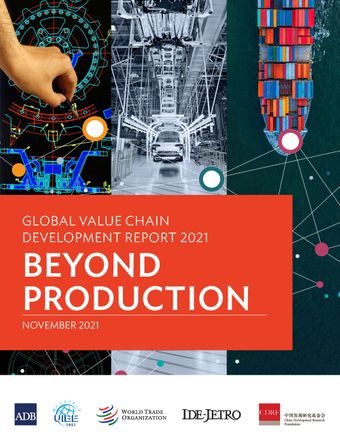
Global Value Chain Development Report
Beyond Production
More LessA radical shift is underway in global value chains as they increasingly move beyond traditional manufacturing processes to services and other intangible assets. Digitization is a leading factor in this transformation, which is being accelerated by the coronavirus disease (COVID-19) pandemic. The Global Value Chain Development Report 2021, the third of a biennial series, explores this shift Beyond Production. This report shows how the rise of services value chains offers a new path to development and how protectionism and geopolitical tensions, environmental risks, and pandemics are undermining the stability of global value chains and forcing their reorganization geographically.
-
-
-
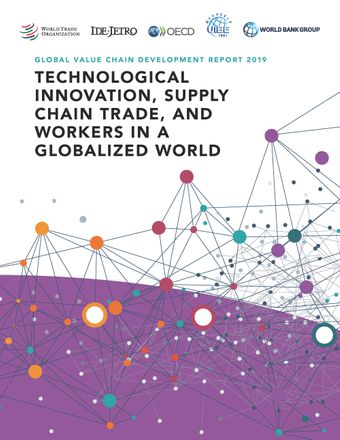
Global Value Chain Development Report 2019
Technological Innovation, Supply Chain Trade, and Workers in a Globalized World
More LessThis report takes stock of the evolution of global value chains (GVCs) in light of technological developments, such as robotics, big data and the Internet of Things. It discusses how these technologies are reshaping GVCs and examines the effect of these changes on labor markets in developed and developing economies and on supply chain management. The report discusses how technological developments are creating new opportunities for the participation of small and medium-sized enterprises in global value chains and reviews issues related to GVC measurement. The report is a follow-up to the first Global Value Chain Development Report, which revealed the changing nature of international trade when analyzed in terms of value chains and value-added trade.
-
-
-
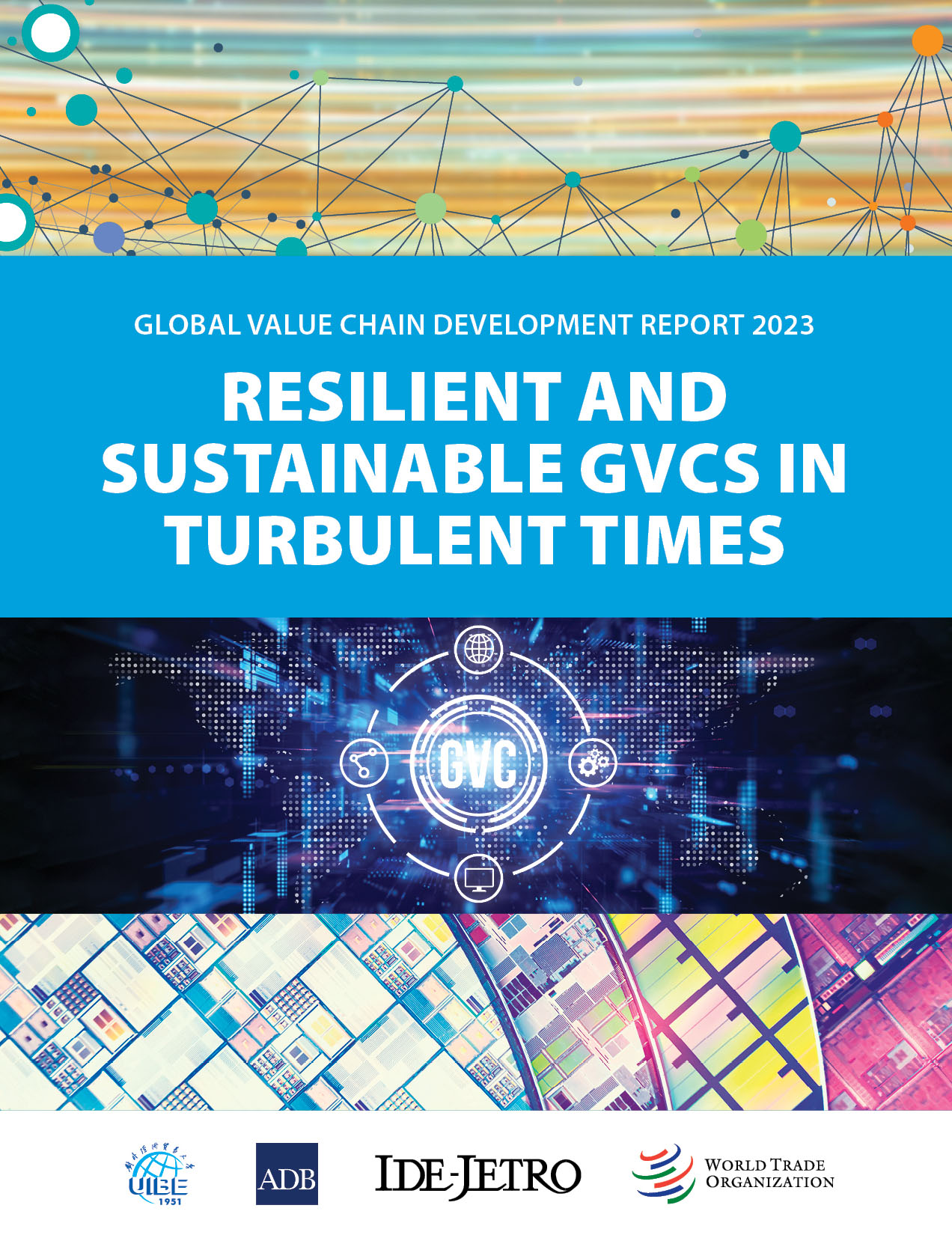
Global Value Chain Development Report 2023
Resilient and Sustainable Global Value Chains in Turbulent Times
More LessThe Global Value Chain Development Report 2023, the fourth in this biennial series, is released at a critical juncture in the evolution of Global Value Chains (GVCs). In response to the diverse shocks of recent years, this report explores approaches to build resilient and sustainable GVCs. It provides an overview of the most recent trends in GVCs, assesses the effects of the trade tensions and the COVID-19 pandemic on GVCs, and illustrates particular changes of energy and semiconductor supply chains. It also analyzes the challenges of climate change to GVCs and proposes a framework of greening value chains and policy options for enhancing inclusive development through GVC participation.
-
-
-
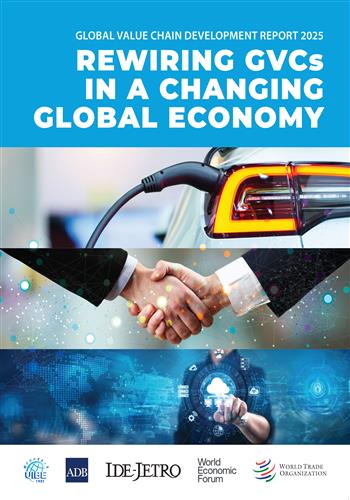
Global Value Chain Development Report 2025
Rewiring GVCs in a changing global economy
More LessThe Global Value Chain Development Report 2025, the fifth in this biennial series, looks at how global value chains (GVCs) are being rewired by technological change, the green transition and shifting geopolitical conditions. With the focus of policy-makers and business moving from efficiency gains to resilience, the report examines how production, trade and investment are reconfiguring across regions and what this implies for productivity and inclusive development. The report provides an overview of recent trends in GVCs and documents the emergence of new regional hubs and firm networks. Special attention is given to changing patterns of GVC participation in Latin America, the Caribbean and Africa to explore how these regions may grasp the opportunities the ongoing shifts provide. The report also analyses how digitalization and services are reshaping value creation and pays particular attention to the reorganization of automobile and electric vehicle supply chains. The report concludes by illustrating how recent transformations are leading to novel governance approaches, including industrial policies and targeted trade deals that address border issues such as carbon mitigation, critical minerals supply, and digital trade. Co-published by the University of International Business and Economics, Asian Development Bank, Institute of Developing Economies–Japan External Trade Organization, World Economic Forum and the WTO in 2025.
-
-
-
Global Value Chains in a Changing World
More LessA collection of papers by some of the world’s leading specialists on global value chains (GVCs). It examines how GVCs have evolved and the challenges they face in a rapidly changing world. The approach is multidisciplinary, with contributions from economists, political scientists, supply chain management specialists, practitioners and policymakers.
-
-
-
Globalization and informal jobs in developing countries
A Joint Study of the International Labour Office and the Secretariat of the World Trade Organization
More LessThis study focuses on the relationship between trade and the growth of the informal economy in developing countries. Based on existing academic literature, complemented with new empirical research by the ILO and the WTO, the study discusses how trade reform affects different aspects of the informal economy. It also examines how high rates of informal employment diminish the scope for developing countries to translate trade openness into sustainable long-term growth.
-
-
-
Good regulatory practices to facilitate trade in services
More LessServices are currently the largest and most dynamic sector of many economies, underpinning growth, productivity and employment. Yet, the costs of trading services remain significantly higher than those for goods, largely due to regulatory and governance differences across economies. Furthermore, opaque and inefficient authorization procedures for service providers can limit participation in services trade, particularly for developing economies. To address these challenges, over 70 WTO members adopted new Disciplines on Services Domestic Regulation, which entered into force in 2024. These disciplines aim to embed good regulatory practices (GRPs) into services policies and facilitate services trade by fostering transparency, predictability and efficiency in regulatory frameworks. This publication examines how GRPs can reduce trade costs, enhance economic performance and support financial inclusion. It outlines 14 core GRPs for improving transparency and efficiency in authorization and licensing processes, with the aim of promoting international regulatory cooperation. Four case studies, focusing on Costa Rica, Indonesia, the Philippines and Thailand, illustrate how reforms anchored in clear legal frameworks can reduce compliance costs, enforce quality standards and reduce processing times. The publication also introduces the Diagnostic and Reform Planning Tool, a new instrument developed to assist policymakers and regulators in mapping their domestic regulatory frameworks against the 14 GRPs set out in this publication.
-
-
-
Governments, Non-State Actors and Trade Policy-Making
More LessOne of the most pressing issues confronting the multilateral trade system is the challenge posed by the rapid proliferation of preferential trade agreements. Plenty has been written about why governments might choose to negotiate preferentially or multilaterally, but until now it has been written almost exclusively from the perspective of governments. We know very little about how non-state actors view this issue of ‘forum choice', nor how they position themselves to influence choices by governments about whether to emphasize PTAs or the WTO. This book addresses that issue squarely through case studies of trade policy-making and forum choice in eight developing countries: Chile, Colombia, Mexico, South Africa, Kenya, Jordan, Indonesia and Thailand. The case studies are based on original research by the authors, including interviews with state and non-state actors involved in the trade policy-making process in the eight countries of this study.
-
-
-
Guide to the Uruguay Round Agreements
More LessThe Uruguay Round, one of the longest and most complex economic negotiations ever undertaken, was completed successfully in December 1993. Its results are embodied in nearly 30 legal agreements and a large number of supplementary decisions, as well as a large number of highly detailed separate undertakings in which each country specifies the levels of trade restrictions, which it promises not to exceed, for thousands of different products or services.
-
-
-
Handbook on Measuring Digital Trade
More LessWhat is “digital trade” and how can it be measured and monitored to support policymakers in navigating the digital transformation of international commerce? Digital technologies have made it increasingly feasible for buyers and sellers to place and receive orders on a global scale. They also enable the instantaneous remote delivery of services directly into businesses and homes, including internationally. By focusing on these two criteria – digital ordering and digital delivery across borders – the Handbook on Measuring Digital Trade sets out a conceptual and measurement framework for digital trade that aligns with the broader standards for macroeconomic statistics. This second edition of the Handbook is the outcome of a partnership between the International Monetary Fund (IMF), the Organisation for Economic Co-operation and Development (OECD), the United Nations Conference on Trade and Development (UNCTAD) and the World Trade Organization (WTO), resulting in a comprehensive agreed approach. This Handbook aims to help statistical compilers to address policymakers’ needs for statistical evidence on digital trade. It includes extensive compilation guidance, drawing upon substantive inputs and case studies from both developed and developing economies and covering a variety of survey and non-survey sources. A reporting template is also proposed to support compilers in the production and dissemination of digital trade statistics. This Handbook thereby establishes a valuable shared foundation for understanding and measuring digital trade in a way that is internationally comparable. Furthermore, it provides a crucial resource for an active programme of technical assistance and statistical capacity-building, through which the four co-authoring partner organizations can support statistical compilers as they seek to measure, monitor and respond to the challenges of digital trade.
-
-
-
Harnessing Services Trade for Sustainable Growth
More LessThe services sector has been the main source of economic growth in recent decades. Logistics, finance and information technologies are essential to the functioning of modern economies while business services, healthcare and entertainment are among the world’s fastest growing sectors. This publication – co-published by the WTO and the World Bank – underlines the contribution that trade and investment in services can make to economic growth and development. It highlights, in particular, the importance of re-energizing international cooperation on services trade and encourages reflection on how best to mobilize assistance for developing and least-developed economies in implementing services sector reforms so that they can reap the gains from expanded trade and investment in services.
-
-
-
Illicit trade in food and food fraud
More LessInternational trade in food has helped to reduce global poverty and hunger. However, illicit trade in food and food fraud undermine the global food system and endanger public health. This publication looks into the challenges of combating illicit practices, such as smuggling and counterfeiting. Contributors examine the topic from a variety of perspectives, discussing how best to address illegal food trade and the role the WTO could play.
-
-
-
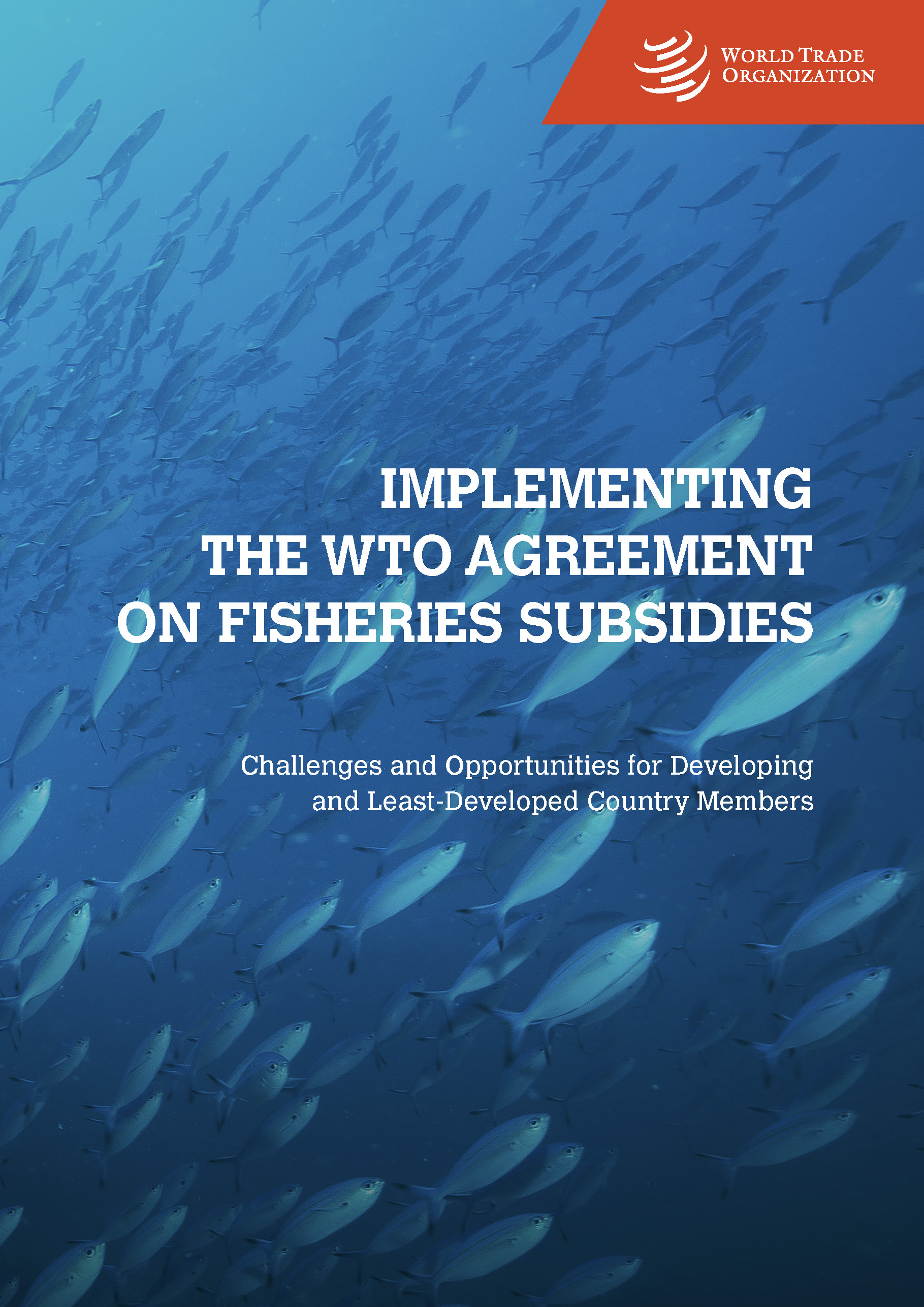
Implementing the WTO agreement on fisheries subsidies
Challenges and opportunities for developing and least-developed country members
More LessThe WTO Agreement on Fisheries Subsidies, adopted at the 12th Ministerial Conference, marks a major step forward for ocean sustainability by prohibiting harmful fisheries subsidies, which are a key factor in the widespread depredation of the world’s fish stocks. Implementing the new disciplines will present challenges for many developing country members, especially least-developed countries. The objective of this report is to examine existing bilateral and multilateral assistance in support of sustainable fisheries, including how this may help countries meet obligations under the new Agreement.
-
-
-

Informe Anual
More Less"El informe anual" de la organización a sus Miembros y al público sobre cuestiones institucionales, con inclusión de descripciones de sus principales actividades e información sobre su presupuesto y personal.
-
-
-
Informe Sobre el Comercio Mundial
More LessLa principal publicación de investigación de la OMC en materia de política comercial mundial, contiene temas especiales, análisis y novedades.
-
-
-
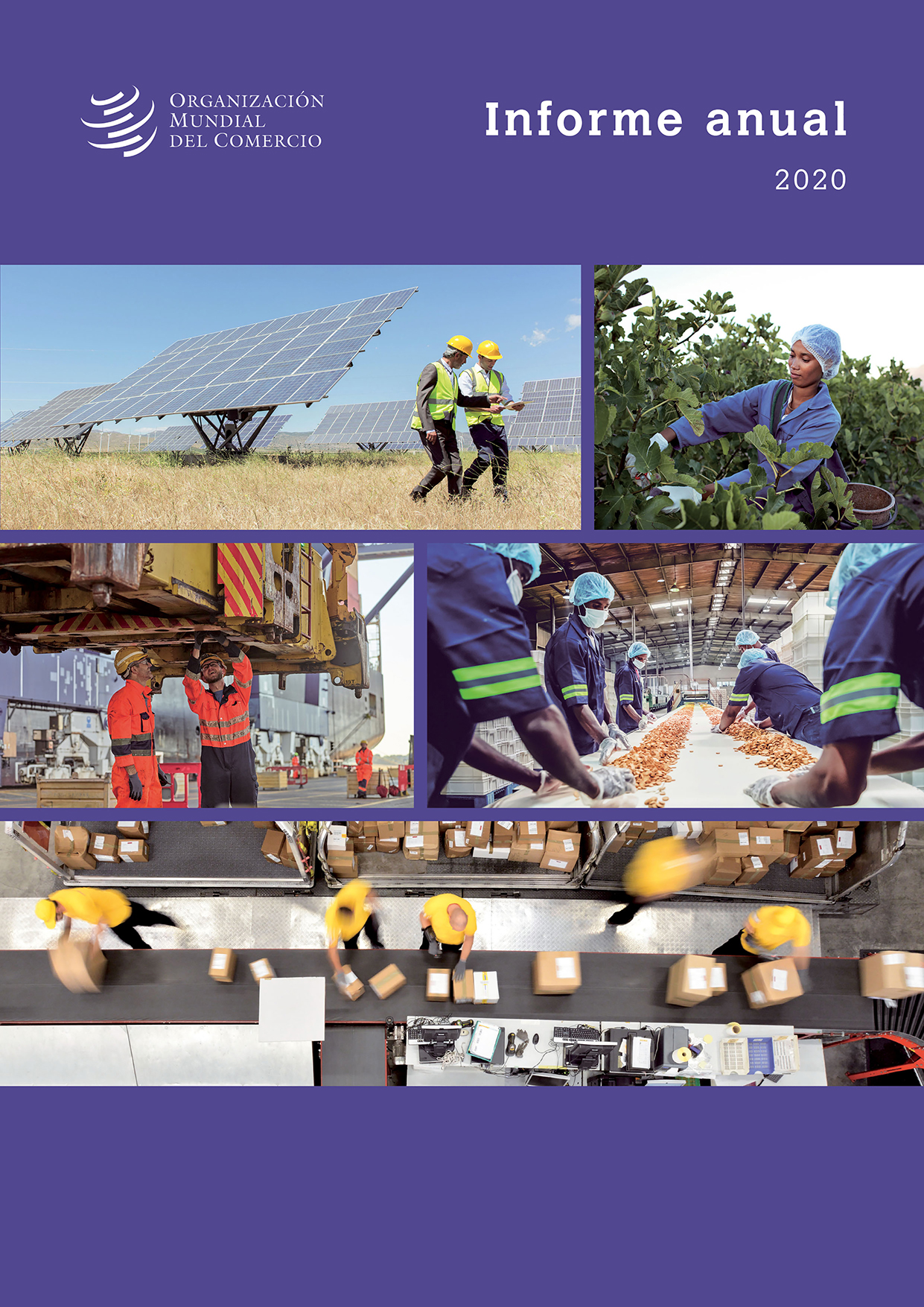
Informe anual 2020
More LessEl Informe Anual 2020 contiene una exposición completa de las actividades realizadas por la Organización en 2019 y principios de 2020. El informe comienza con un mensaje del Director General, Roberto Azevêdo, y un resumen del año anterior. Posteriormente, se hace un análisis más profundo de las actividades llevadas a cabo en las principales esferas de la OMC en los últimos 12 meses. También se destacan los eventos y las actividades más importantes de la Organización.
-
-
-
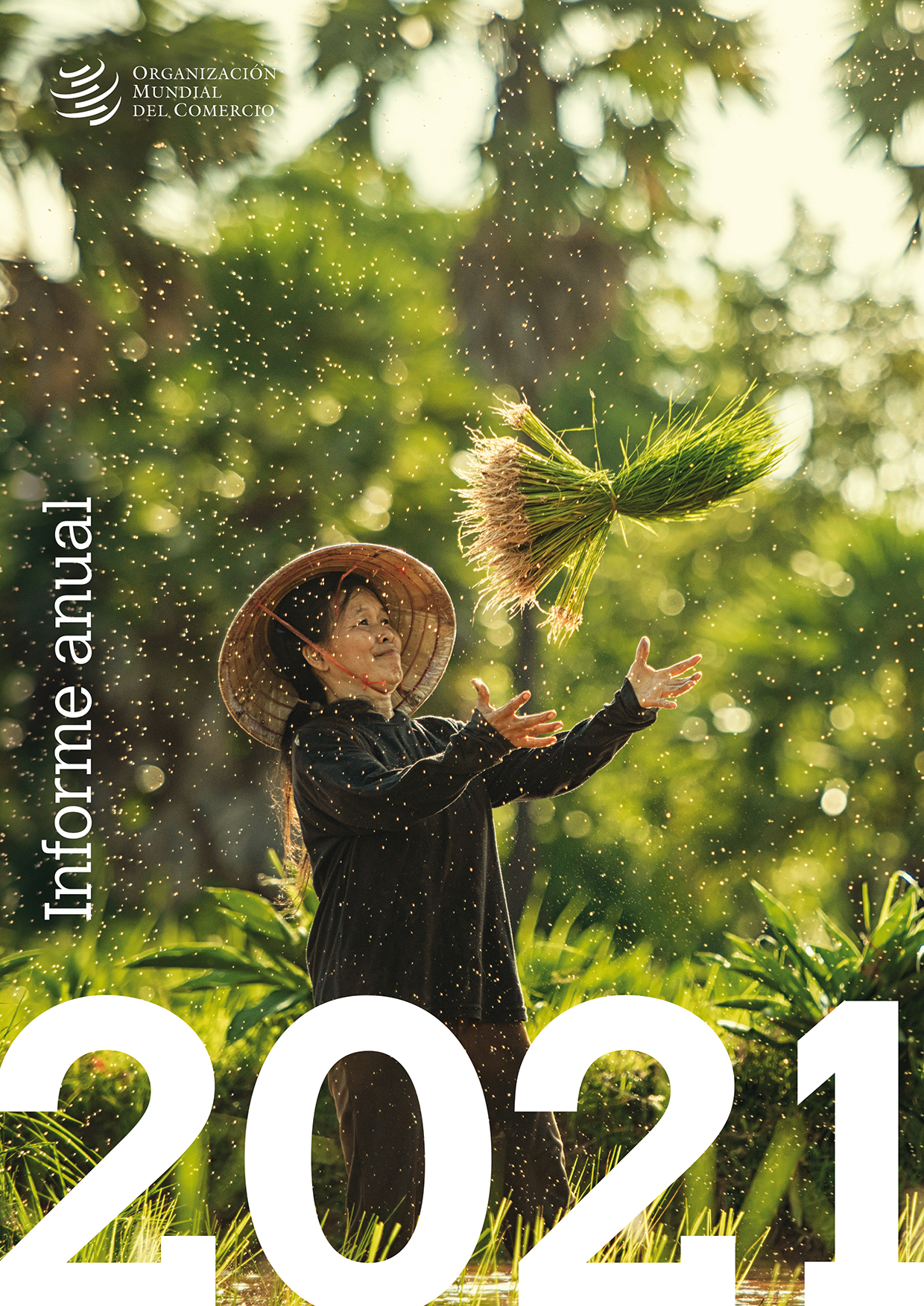
Informe anual 2021
More LessEl Informe Anual 2021 contiene una exposición completa de las actividades realizadas por la OMC en 2020 y principios de 2021. El Informe comienza con un mensaje de la Directora General de la Organización, Ngozi Okonjo-Iweala, y un resumen del año anterior. Posteriormente, se hace un análisis más profundo de las actividades llevadas a cabo en las principales esferas de la OMC. También se destacan el proceso de selección de la Directora General, la COVID-19 y el comercio mundial, y el 25º aniversario de la Organización.
-
-
-
Informe anual 2022
More LessEl Informe anual 2022 de la OMC contiene una exposición completa de las actividades realizadas por la OMC en 2021 y a principios de 2022. También abarca la Duodécima Conferencia Ministerial (CM12), prevista inicialmente para finales de 2021, pero que se postergó hasta junio de 2022. El Informe comienza con un mensaje de la Directora General de la OMC, Ngozi Okonjo-Iweala, y presenta un resumen de las actividades realizadas por la OMC durante el año, seguido por una descripción más detallada de las principales esferas de actividad de la OMC en 2021 y a principios de 2022, incluyendo, en primer plano, el impacto de la COVID-19 en el comercio mundial y el Foro Público de 2021.
-
-
-
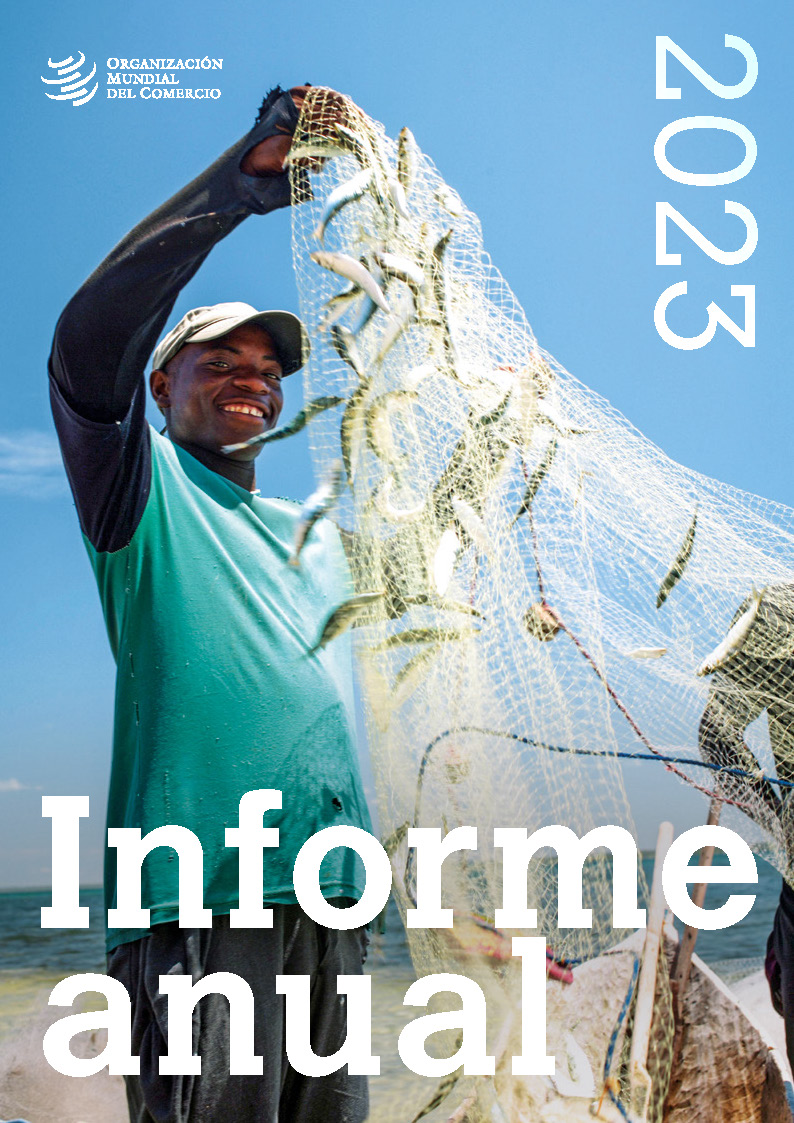
Informe anual 2023
More LessEl Informe anual 2023 informe abarca las actividades realizadas por la OMC en 2022 y principios de 2023. Al principio del informe, la Directora General Ngozi Okonjo-Iweala reflexiona sobre los retos actuales a los que se enfrenta el comercio mundial (a junio de 2023) y la función de la OMC para ayudar al mundo a afrontarlos.
-
-
-
Informe anual 2024
More LessLa OMC ha publicado su informe anual 2024, en el que se da cuenta exhaustiva de las actividades de la Organización en 2023 y en la primera parte de 2024. El informe repasa los principales acontecimientos del pasado año, como la Decimotercera Conferencia Ministerial, y describe la labor de la OMC para hacer frente a los retos a los que se enfrenta el comercio mundial y aprovechar sus oportunidades.
-