


WTO
WTO301 - 400 of 944 results
-
-
The Role of Advanced Technologies in Cross-border Trade
A customs perspective
More LessThis publication is a collaboration between the WCO and the WTO to gain a better understanding of how the latest advanced technologies can help customs authorities to contribute to trade facilitation and to shed light on the opportunities and challenges customs authorities face when deploying blockchain, the internet of things, big data, data analytics, artificial intelligence and machine learning.
-
-
-
The Role of Trade in Ending Poverty
More LessThe Role of Trade in Ending Poverty looks at the complex relationships between economic growth, poverty reduction and trade, and examines the challenges that poor people face in benefiting from trade opportunities. Written jointly by the World Bank Group and the WTO, the publication examines how trade could make a greater contribution to ending poverty by increasing efforts to lower trade costs, improve the enabling environment, implement trade policy in conjunction with other areas of policy, better manage risks faced by the poor, and improve data used for policy-making.
-
-
-
The WTO Agreements
The Marrakesh Agreement Establishing the World Trade Organization and its Annexes
More LessThis publication contains the text of the WTO’s founding agreement, the 1994 Marrakesh Agreement Establishing the World Trade Organization, and its Annexes, including all amendments and additions since its entry into force until September 2017. These include an amendment to the WTO’s intellectual property agreement (TRIPS Agreement) aimed at improving developing countries’ access to medicines, the WTO’s Trade Facilitation Agreement, which entered into force in February 2017, an amendment adopted in July 2017 to extend the frequency of peer review periods under the Trade Policy Review Mechanism as of 2019, and the amended Government Procurement Agreement. This publication updates and replaces The Legal Texts: The Results of the Uruguay Round of Multilateral Trade Negotiations, which was first printed in 1994.
-
-
-
The WTO Agreements
Third edition
More LessThis publication contains the text of the WTO’s founding agreement, the 1994 Marrakesh Agreement Establishing the World Trade Organization, and its Annexes, including all amendments and additions since its entry into force up to and including September 2025. These include an amendment to the Agreement on Trade-Related Aspects of Intellectual Property Rights (TRIPS Agreement), which entered into force in January 2017. Other amendments or additions include the Trade Facilitation Agreement (TFA), which entered into force in February 2017, an amendment to the Trade Policy Review Mechanism in July 2017, and the amended Government Procurement Agreement (GPA), which entered into force in April 2014. The amended GPA replaced the 1994 GPA for all of the parties to the latter Agreement as of January 2021. This publication also includes the Agreement on Fisheries Subsidies, which entered into force in September 2025.
-
-
-
The WTO Agreements Series
Agriculture - Fourth edition
More LessThis new edition provides an introduction to the WTO’s Agreement on Agriculture, outlining its key principles, the work of the Agriculture Committee, and how disputes have interpreted WTO law on agriculture. This publication forms part of the WTO Agreements Series, which aims to assist understanding of WTO agreements. Other publications in the series include Sanitary and Phytosanitary Measures and Technical Barriers to Trade.
-
-
-

The WTO Building
Art and Architecture at the Centre William Rappard
More LessThe WTO Building provides a fascinating insight into the artwork and architecture of the Centre William Rappard (CWR), home of the World Trade Organization. The book describes the origins and evolution of the CWR, highlighting the many works of art created and donated to adorn the building over the years. It covers the extension of the CWR, the transformation of an inner courtyard into an atrium, and the latest steps taken to preserve the building’s historic artworks.
-
-
-

The WTO Building
April 2024
More Less"The WTO Building" provides a fascinating insight into the artwork and architecture of the Centre William Rappard (CWR), home of the World Trade Organization. The book describes the origins and evolution of the CWR, highlighting the many works of art created and donated to adorn the building over the years.
-
-
-
The WTO Dispute Settlement Procedures, 3rd Edition
More LessThe third edition of The WTO Dispute Settlement Procedures collects together the treaty texts, decisions and agreed practices relating to the procedures that apply in the settlement of WTO disputes. It affords ready answers to technical questions relating to matters such as: how disputes are initiated and conducted, including at the appellate stage; what deadlines apply and how to calculate them; what rules of conduct bind individuals involved in WTO dispute settlement; and what rules of procedure apply to meetings of the Dispute Settlement Body. This highly practical work, which includes cross-references and a subject index, will prove invaluable to anyone working in WTO dispute settlement, including lawyers, civil servants working in the field of trade, economists, academics and students. This edition has been fully updated to take account of revised rules and procedures.
-
-
-
The WTO Regime on Government Procurement
More LessOriginally an important but relatively obscure plurilateral instrument, the WTO Agreement on Government Procurement (GPA) is now becoming a pillar of the WTO system as a result of important developments since the Uruguay Round. This collection examines the issues and challenges that this raises for the GPA, as well as future prospects for addressing government procurement at a multilateral level. Coverage includes issues relating to pending accessions to the GPA, particularly those of developing countries with a large state sector such as China; the revised (provisionally agreed) GPA text of 2006, including provisions on electronic procurement and Special and Differential Treatment for Developing Countries; and procurement provisions in regional trade agreements and their significance for the multilateral system. Attention is also given to emerging issues, especially those concerning environmental, social and SME policy; competition law; and the implications of the recent economic crisis.
-
-
-
The WTO at Ten
The Contribution of the Dispute Settlement System
More LessBringing together articles by some of the leading policy-makers, including previous WTO Director-Generals, practitioners, scholars of international trade law, government officials, international civil servants, Members of the WTO Appellate Body, and judges from a number of international tribunals, this volume assesses the dispute settlement system during the first ten years of the World Trade Organization. It examines the relationship and balance between political governance and dispute settlement; the functioning of the dispute settlement procedures and various reform proposals; the contribution of the Appellate Body to the development of international trade law; and treaty interpretation in a number of international dispute settlement fora such as the WTO, the International Court of Justice, the European Court of Justice, and the Tribunal for the Law of the Sea. The book has its origins in a series of events commemorating the tenth anniversary of the creation of the WTO dispute settlement system and the Appellate Body.
-
-
-
The WTO at Twenty
Challenges and Achievements
More LessThis new edition provides an introduction to the WTO’s Agreement on Agriculture, outlining its key principles, the work of the Agriculture Committee, and how disputes have interpreted WTO law on agriculture. The publication includes the full text of the Agriculture Agreement as well as the decisions taken on agriculture at the 2013 Bali Ministerial Conference. A frequently asked questions section provides a handy overview of the Agriculture Agreement and the issues covered by it. The publication also provides an update on agriculture negotiations at the WTO. This publication forms part of the WTO Agreements Series, a set of compact booklets on selected WTO agreements. Other publications in the series include Sanitary and Phytosanitary Measures and Technical Barriers to Trade.
-
-
-
The WTO in the Twenty-First Century
More LessTrois questions importantes seront déterminantes pour l'avenir de l'OMC: le règlement des différends, les négociations et l'intégration régionale. Le règlement des différends est généralement considéré comme l'un des succès majeurs de l'OMC durant ses dix premières années d'existence. La conclusion des négociations du Cycle de Doha est l'un de ses principaux défis. L'intégration régionale est désormais au premier plan du débat alors que les accords régionaux prolifèrent et que les décideurs et les universitaires prennent la mesure de leur incidence sur le système commercial multilatéral. Ces questions, et leur interaction, sont traitées par d'éminents spécialistes et professionnels du droit commercial international originaires d'Amérique du Nord, d'Europe et de la région Asie Pacifique. En outre, des sections spécifiques sont consacrées à la région Asie Pacifique, à sa participation au règlement des différends et aux négociations dans le cadre de l'OMC, et aux tendances récentes à une plus grande intégration régionale.AE1:AE10
-
-
-
The promise of TradeTech
Policy approaches to harness trade digitalization
More LessTradeTech – the set of technologies that enables global trade to become more efficient, inclusive and sustainable – is multifaceted, from trade facilitation to efficiency gains and reduced costs, to greater transparency and resilience of supply chains. Although technological innovation exists, the major challenge to the global adoption of TradeTech will be building international policy coordination. Trade agreements can play a key role. Despite ongoing efforts to introduce digital trade provisions in trade agreements, many unseized opportunities and unexplored policies remain. This joint World Economic Forum and WTO publication explores how trade agreements could be leveraged to advance the adoption of digital technologies and trade digitalization.
-
-
-
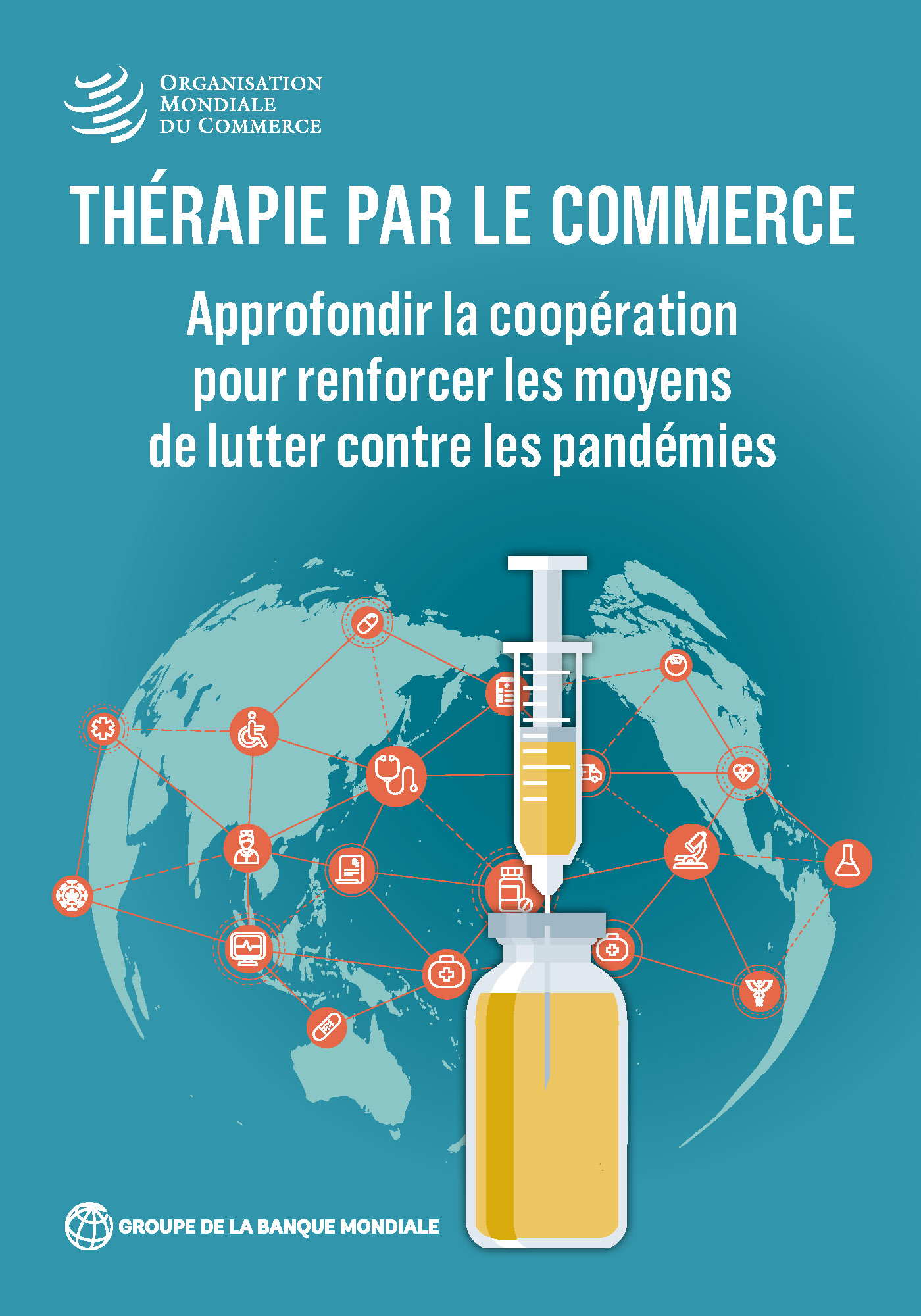
Thérapie par le commerce
Approfondir la coopération pour renforcer les moyens de lutter contre les pandémies
More LessLa pandémie de COVID-19 (coronavirus) a mis en lumière les avantages et les inconvénients du commerce international des produits et services médicaux. Un commerce ouvert peut favoriser l’accès mondial aux produits et services médicaux – ainsi qu’aux intrants essentiels nécessaires à leur production –, améliorer la qualité et la variété de ces produits et services, et réduire les coûts. Toutefois, une concentration excessive de la production, des politiques commerciales restrictives, des perturbations des chaînes d’approvisionnement et des divergences réglementaires peuvent compromettre la capacité des systèmes de santé publique à se préparer et à répondre aux pandémies et autres crises sanitaires. La publication Thérapie par le commerce : Approfondir la coopération pour renforcer les moyens de lutter contre les pandémies, coordonnée par Nadia Rocha et Michele Ruta à la Banque mondiale, et par Marc Bacchetta et Joscelyn Magdeleine à l’Organisation mondiale du commerce, contient de nouvelles données sur le commerce des produits et services médicaux et les chaînes de valeur de produits médicaux, examine l’évolution du panorama des politiques avant et pendant la pandémie, et propose un plan d’action visant à améliorer les politiques commerciales et à approfondir la coopération internationale pour faire face aux futures pandémies. Alors que la pandémie de COVID-19 perdure, l’action politique se concentre sur la réponse, qui inclut des mesures visant à promouvoir l’équité vaccinale grâce aux aides publiques et à supprimer les obstacles en la matière. Une fois l’urgence passée, l’accent devrait être mis sur la prévention et la préparation. La priorité devrait être d’adopter des mesures pour combler les lacunes d’information, s’appuyant sur les travaux de l’Équipe spéciale multilatérale des dirigeants chargée des vaccins, des traitements et des produits de diagnostic contre la COVID-19 et de l’Accélérateur ACT, et d’encourager l’ouverture des marchés, notamment par la négociation de réductions de droits de douane pour les produits médicaux et l’amélioration de l’accès aux marchés pour les services. Il convient également de prendre des mesures pour accroître l’efficacité des marchés, notamment l’harmonisation des réglementations grâce à la reconnaissance mutuelle ou l’équivalence des normes, et l’établissement de normes internationales applicables aux produits et intrants médicaux essentiels et aux processus de production. Un accord sur un ensemble de règles de crise à appliquer en cas d’urgence, qui comprendrait des limites claires et convenues concernant la flexibilité de la politique d’exportation ainsi que des règles communes sur les flexibilités relatives à la propriété intellectuelle, constituerait une base politique plus solide pour relever les défis futurs.
-
-
-

Time Series on International Trade
More LessThis site provides a searchable database on international trade in merchandise and commercial services. The data are presented according to the product definitions and regional groupings specified in the technical notes.
-
-
-
Trade Adjustment in Asia
Past Experiences and Lessons Learned
More LessAsia’s economic success over the past four decades has been built on a strategy of export promotion coupled with trade opening. Poverty rates throughout the region have fallen dramatically, especially in countries that have succeeded in integrating into regional or global value chains. However, this economic success has been accompanied by structural changes, such as the need for workers to change roles, sectors, and sometimes regions. Faced with increased foreign competition, firms have been forced to reorganize and quickly adopt new technologies. Despite the importance of this adjustment process, relatively little empirical evidence exists. This volume aims to close this gap by providing new insights into how Asia’s labor markets and firms have adjusted to trade opening. Written by leading trade economists with expertise in the region, the publication shows that trade opening has led to a more efficient allocation of capital and labor, but this has been accompanied by significant adjustment costs. The book sheds light on the effects of trade on workers and firms, with the aim of improving understanding of the adjustment process and contributing to the debate on how to make globalization work for all.
-
-
-
Trade Costs and Inclusive Growth: Case Studies Presented by WTO Chair-Holders
More LessTrade costs and inclusive growth: case studies presented by WTO chair-holders
-
-
-
Trade Finance and SMEs
Bridging the Gaps in Provision
More LessTrade finance plays a key role in helping developing countries participate in global trade. Easing the supply of credit in regions where trade potential is the greatest could have a big impact in helping small businesses grow and in supporting the development of the poorest countries. This publication takes a detailed look at trade finance and emphasises the importance of multilateral agencies working together.
-
-
-
Trade Finance in Central America and Mexico
More LessTrade finance is routinely supplied to exporters and importers by banks and other financial intermediaries, mitigating the financial and payment risks involved in cross-border trade. However, significant shortages exist in many developing economies. To better understand the trade finance ecosystem in these economies, the International Finance Corporation (IFC) and the WTO have engaged in a series of surveys aimed at examining the specific obstacles faced by lenders and borrowers in low-income regions. This latest study focuses on three developing economies in Latin America — Guatemala, Honduras and Mexico.
-
-
-
Trade Impacts of LDC Graduation
More LessA new report issued by the WTO on 8 May seeks to help least developed countries (LDCs) better understand the trade-related implications of graduation from LDC status. The product of a joint effort between the WTO and the Enhanced Integrated Framework (EIF), “Trade Impacts of LDC Graduation” looks at how graduation may affect LDCs’ participation in world trade, including their access to export markets, and implications for their WTO commitments.
-
-
-
Trade Impacts of LDC Graduation
Insights from Country-Specific Market Access Analyses
More LessGraduation from the status of least-developed country (LDC) marks an important milestone in the development path of each LDC. At the same time, the phasing-out of international support measures associated with LDC status, including trade preferences and special treatment in the WTO, could present challenges for graduating LDCs in their efforts to continue integration into the global economy. A quarter of LDCs were on track to graduate from LDC status prior to the outbreak of the COVID-19 pandemic. “Trade impacts of LDC graduation: Insights from countryspecific market access analyses” complements the report “Trade impacts of LDC graduation” issued in May 2020, and examines in greater detail the impact of graduation on preferential market access for each of the 12 graduating LDCs. The report looks at the export structure of graduating LDCs, the likely increase of tariffs on their exported products and projected changes in trade flows employing a partial equilibrium model. It sheds light on products and destination markets that require specific attention from graduating LDCs as they prepare for graduation.
-
-
-
Trade Multilateralism in the 21st Century
More LessTrade multilateralism in the twenty-first-century century faces a serious test as weakness in the global economy and fast-paced technological changes create a challenging environment for world trade. This book examines how an updated and robust, rules-based multilateral framework, anchored in the WTO, remains indispensable to maximizing the benefits of global economic integration and to reviving world trade. By examining recent accessions to the WTO, it reveals how the growing membership of the WTO has helped to support domestic reforms and to strengthen the rules-based framework of the WTO. It argues that the new realities of the twenty-first century require an upgrade to the architecture of the multilateral trading system. By erecting its 'upper floors' on the foundation of existing trade rules, the WTO can continue to adapt to a fast-changing environment and to maximize the benefits brought about by its ever-expanding membership.
-
-
-
Trade Patterns and Global Value Chains in East Asia
From Trade in Goods to Trade in Tasks
More LessThe increasing internationalization of supply chains is challenging our interpretation of conventional trade statistics, as traditional concepts like country of origin, or the distinction between goods and services, become blurred. This publication, jointly produced by the WTO and the Institute of Developing Economies — Japan External Trade Organization (IDE-JETRO), focuses on the factors that have helped to shape global production.
-
-
-

Trade Policy Review: Angola 2024
More Less“Trade Policy Reviews” analyse the trade policies and practices of each member of the WTO. The reviews consist of three parts: an independent report by the WTO Secretariat, a report by the government, and the concluding remarks by the Chair of the WTO’s Trade Policy Review Body. The opening section - “key trade facts” - provides a visual overview of the WTO member’s major exports/imports, main export destinations, origins for its imports and other key data. This edition looks into the trade practices of Angola.
-
-
-
Trade Policy Review: Argentina 2021
More Less“Trade Policy Reviews" analyse the trade policies and practices of each member of the WTO. The reviews consist of three parts: an independent report by the WTO Secretariat, a report by the government, and the concluding remarks by the Chair of the WTO’s Trade Policy Review Body. The opening section - "key trade facts" - provides a visual overview of the WTO member's major exports/imports, main export destinations, origins for its imports and other key data. This edition looks into the trade practices of Argentina.
-
-
-
Trade Policy Review: Australia 2025
More Less“Trade Policy Reviews” analyse the trade policies and practices of each member of the WTO. The reviews consist of three parts: an independent report by the WTO Secretariat, a report by the government, and the concluding remarks by the Chair of the WTO’s Trade Policy Review Body. The opening section - “key trade facts” - provides a visual overview of the WTO member’s major exports/imports, main export destinations, origins for its imports and other key data. This edition looks into the trade practices of Australia.
-
-
-
Trade Policy Review: Bahrain, Kingdom of, 2021
More Less“Trade Policy Reviews" analyse the trade policies and practices of each member of the WTO. The reviews consist of three parts: an independent report by the WTO Secretariat, a report by the government, and the concluding remarks by the Chair of the WTO’s Trade Policy Review Body. The opening section - "key trade facts" - provides a visual overview of the WTO member's major exports/imports, main export destinations, origins for its imports and other key data. This edition looks into the trade practices of Bahrain, Kingdom of.
-
-
-
Trade Policy Review: Barbados 2022
More Less“Trade Policy Reviews" analyse the trade policies and practices of each member of the WTO. The reviews consist of three parts: an independent report by the WTO Secretariat, a report by the government, and the concluding remarks by the Chair of the WTO’s Trade Policy Review Body. The opening section - "key trade facts" - provides a visual overview of the WTO member's major exports/imports, main export destinations, origins for its imports and other key data. This edition looks into the trade practices of Barbados.
-
-
-
Trade Policy Review: Brazil 2022
More Less“Trade Policy Reviews” analyse the trade policies and practices of each member of the WTO. The reviews consist of three parts: an independent report by the WTO Secretariat, a report by the government, and the concluding remarks by the Chair of the WTO’s Trade Policy Review Body. The opening section - “key trade facts” - provides a visual overview of the WTO member’s major exports/imports, main export destinations, origins for its imports and other key data. This edition looks into the trade practices of Brazil.
-
-
-
Trade Policy Review: Brunei Darussalam 2024
More LessThe fourth review of the trade policies and practices of Brunei Darussalam takes place on 27 and 29 November 2024. The basis for the review is a report by the WTO Secretariat and a report by the Government of Brunei Darussalam.
-
-
-
Trade Policy Review: Cabo Verde 2025
More Less“Trade Policy Reviews” analyse the trade policies and practices of each member of the WTO. The reviews consist of three parts: an independent report by the WTO Secretariat, a report by the government, and the concluding remarks by the Chair of the WTO’s Trade Policy Review Body. The opening section - “key trade facts” - provides a visual overview of the WTO member’s major exports/imports, main export destinations, origins for its imports and other key data. This edition looks into the trade practices of Cabo Verde.
-
-
-
Trade Policy Review: Cambodia 2025
More Less“Trade Policy Reviews” analyse the trade policies and practices of each member of the WTO. The reviews consist of three parts: an independent report by the WTO Secretariat, a report by the government, and the concluding remarks by the Chair of the WTO’s Trade Policy Review Body. The opening section - “key trade facts” - provides a visual overview of the WTO members major exports/imports, main export destinations, origins for its imports and other key data. This edition looks into the trade practices of Cambodia.
-
-
-
Trade Policy Review: Canada 2024
More LessThe twelfth review of the trade policies and practices of Canada takes place on 19 and 21 June 2024. The basis for the review is a report by the WTO Secretariat and a report by the Government of Canada.
-
-
-
Trade Policy Review: China 2021
More Less“Trade Policy Reviews” analyse the trade policies and practices of each member of the WTO. The reviews consist of three parts: an independent report by the WTO Secretariat, a report by the government, and the concluding remarks by the Chair of the WTO’s Trade Policy Review Body. The opening section – “key trade facts” – provides a visual overview of the WTO member’s major exports/imports, main export destinations, origins for its imports and other key data. This edition looks into the trade practices of China.
-
-
-
Trade Policy Review: China 2024
More LessThe ninth review of the trade policies and practices of China takes place on 17 and 19 July 2024. The basis for the review is a report by the WTO Secretariat and a report by the Government of China.
-
-
-
Trade Policy Review: Colombia 2025
More Less“Trade Policy Reviews” analyse the trade policies and practices of each member of the WTO. The reviews consist of three parts: an independent report by the WTO Secretariat, a report by the government, and the concluding remarks by the Chair of the WTO’s Trade Policy Review Body. The opening section - “key trade facts” - provides a visual overview of the WTO member’s major exports/imports, main export destinations, origins for its imports and other key data. This edition looks into the trade practices of Colombia.
-
-
-
Trade Policy Review: Djibouti 2022
More Less“Trade Policy Reviews" analyse the trade policies and practices of each member of the WTO. The reviews consist of three parts: an independent report by the WTO Secretariat, a report by the government, and the concluding remarks by the Chair of the WTO’s Trade Policy Review Body. The opening section - "key trade facts" - provides a visual overview of the WTO member’s major exports/imports, main export destinations, origins for its imports and other key data. This edition looks into the trade practices of Djibouti.
-
-
-
Trade Policy Review: Gambia 2026
More LessThe fourth review of the trade policies and practices of The Gambia takes place on 4 and 6 February 2026. The basis for the review is a report by the WTO Secretariat and a report by the Government of The Gambia.
-
-
-
Trade Policy Review: Georgia 2022
More Less“Trade Policy Reviews" analyse the trade policies and practices of each member of the WTO. The reviews consist of three parts: an independent report by the WTO Secretariat, a report by the government, and the concluding remarks by the Chair of the WTO’s Trade Policy Review Body. The opening section - "key trade facts" - provides a visual overview of the WTO member's major exports/imports, main export destinations, origins for its imports and other key data. This edition looks into the trade practices of Georgia.
-
-
-
Trade Policy Review: Ghana 2022
More Less“Trade Policy Reviews" analyse the trade policies and practices of each member of the WTO. The reviews consist of three parts: an independent report by the WTO Secretariat, a report by the government, and the concluding remarks by the Chair of the WTO’s Trade Policy Review Body. The opening section - "key trade facts" - provides a visual overview of the WTO member's major exports/imports, main export destinations, origins for its imports and other key data. This edition looks into the trade practices of Ghana.
-
-
-
Trade Policy Review: Guatemala 2025
More LessThe fourth review of the trade policies and practices of Guatemala takes place on 12 and 14 November 2025. The basis for the review is a report by the WTO Secretariat and a report by the Government of Guatemala.
-
-
-
Trade Policy Review: Guyana 2022
More Less“Trade Policy Reviews" analyse the trade policies and practices of each member of the WTO. The reviews consist of three parts: an independent report by the WTO Secretariat, a report by the government, and the concluding remarks by the Chair of the WTO’s Trade Policy Review Body. The opening section - "key trade facts" - provides a visual overview of the WTO member's major exports/imports, main export destinations, origins for its imports and other key data. This edition looks into the trade practices of Guyana.
-
-
-
Trade Policy Review: Iceland 2024
More LessThe sixth review of the trade policies and practices of Iceland takes place on 12 and 14 June 2024. The basis for the review is a report by the WTO Secretariat and a report by the Government of Iceland.
-
-
-
Trade Policy Review: India 2021
More Less“Trade Policy Reviews" analyse the trade policies and practices of each member of the WTO. The reviews consist of three parts: an independent report by the WTO Secretariat, a report by the government, and the concluding remarks by the Chair of the WTO’s Trade Policy Review Body. The opening section - "key trade facts" - provides a visual overview of the WTO member's major exports/imports, main export destinations, origins for its imports and other key data. This edition looks into the trade practices of India.
-
-
-
Trade Policy Review: Indonesia 2020
More Less“Trade Policy Reviews" analyse the trade policies and practices of each member of the WTO. The reviews consist of three parts: an independent report by the WTO Secretariat, a report by the government, and the concluding remarks by the Chair of the WTO’s Trade Policy Review Body. The opening section - "key trade facts" - provides a visual overview of the WTO member's major exports/imports, main export destinations, origins for its imports and other key data. This edition looks into the trade practices of Indonesia.
-
-
-
Trade Policy Review: Jamaica 2024
More LessThe fifth review of the trade policies and practices of Jamaica takes place on 10 and 12 July 2024. The basis for the review is a report by the WTO Secretariat and a report by the Government of Jamaica.
-
-
-
Trade Policy Review: Kazakhstan 2024
More LessThe first review of the trade policies and practices of Kazakhstan takes place on 25 and 27 September 2024. The basis for the review is a report by the WTO Secretariat and a report by the Government of Kazakhstan.
-
-
-
Trade Policy Review: Kingdom of Saudi Arabia 2021
More Less“Trade Policy Reviews" analyse the trade policies and practices of each member of the WTO. The reviews consist of three parts: an independent report by the WTO Secretariat, a report by the government, and the concluding remarks by the Chair of the WTO’s Trade Policy Review Body. The opening section - "key trade facts" - provides a visual overview of the WTO member's major exports/imports, main export destinations, origins for its imports and other key data. This edition looks into the trade practices of Kingdom of Saudi Arabia.
-
-
-
Trade Policy Review: Korea, Rep. of, 2021
More Less“Trade Policy Reviews" analyse the trade policies and practices of each member of the WTO. The reviews consist of three parts: an independent report by the WTO Secretariat, a report by the government, and the concluding remarks by the Chair of the WTO’s Trade Policy Review Body. The opening section - "key trade facts" - provides a visual overview of the WTO member's major exports/imports, main export destinations, origins for its imports and other key data. This edition looks into the trade practices of Korea, Rep. of.
-
-
-
Trade Policy Review: Kyrgyz Republic 2021
More Less“Trade Policy Reviews" analyse the trade policies and practices of each member of the WTO. The reviews consist of three parts: an independent report by the WTO Secretariat, a report by the government, and the concluding remarks by the Chair of the WTO’s Trade Policy Review Body. The opening section - "key trade facts" - provides a visual overview of the WTO member's major exports/imports, main export destinations, origins for its imports and other key data. This edition looks into the trade practices of Kyrgyz Republic.
-
-
-
Trade Policy Review: Madagascar 2025
More Less“Trade Policy Reviews” analyse the trade policies and practices of each member of the WTO. The reviews consist of three parts: an independent report by the WTO Secretariat, a report by the government, and the concluding remarks by the Chair of the WTO’s Trade Policy Review Body. The opening section - “key trade facts” - provides a visual overview of the WTO member’s major exports/imports, main export destinations, origins for its imports and other key data. This edition looks into the trade practices of Madagascar.
-
-
-
Trade Policy Review: Malawi 2024
More LessThe fourth review of the trade policies and practices of Malawi takes place on 9 and 11 October 2024. The basis for the review is a report by the WTO Secretariat and a report by the Government of Malawi.
-
-
-
Trade Policy Review: Maldives 2024
More LessThe fourth review of the trade policies and practices of the Maldives takes place on 23 and 25 October 2024. The basis for the review is a report by the WTO Secretariat and a report by the Government of the Maldives.
-
-
-
Trade Policy Review: Mauritius 2021
More Less“Trade Policy Reviews" analyse the trade policies and practices of each member of the WTO. The reviews consist of three parts: an independent report by the WTO Secretariat, a report by the government, and the concluding remarks by the Chair of the WTO’s Trade Policy Review Body. The opening section - "key trade facts" - provides a visual overview of the WTO member's major exports/imports, main export destinations, origins for its imports and other key data. This edition looks into the trade practices of Mauritus.
-
-
-
Trade Policy Review: Mexico 2022
More Less“Trade Policy Reviews” analyse the trade policies and practices of each member of the WTO. The reviews consist of three parts: an independent report by the WTO Secretariat, a report by the government, and the concluding remarks by the Chair of the WTO’s Trade Policy Review Body. The opening section - “key trade facts” - provides a visual overview of the WTO member's major exports/imports, main export destinations, origins for its imports and other key data. This edition looks into the trade practices of Mexico.
-
-
-
Trade Policy Review: Moldova, Republic of, 2022
More Less“Trade Policy Reviews" analyse the trade policies and practices of each member of the WTO. The reviews consist of three parts: an independent report by the WTO Secretariat, a report by the government, and the concluding remarks by the Chair of the WTO’s Trade Policy Review Body. The opening section - "key trade facts" - provides a visual overview of the WTO member's major exports/imports, main export destinations, origins for its imports and other key data. This edition looks into the trade practices of Moldova.
-
-
-
Trade Policy Review: Mongolia 2021
More Less“Trade Policy Reviews" analyse the trade policies and practices of each member of the WTO. The reviews consist of three parts: an independent report by the WTO Secretariat, a report by the government, and the concluding remarks by the Chair of the WTO’s Trade Policy Review Body. The opening section - "key trade facts" - provides a visual overview of the WTO member's major exports/imports, main export destinations, origins for its imports and other key data. This edition looks into the trade practices of Mongolia.
-
-
-
Trade Policy Review: Morocco 2024
More LessThe sixth review of the trade policies and practices of Morocco takes place on 22 and 24 April 2024. The basis for the review is a report by the WTO Secretariat and a report by the Government of Morocco.
-
-
-
Trade Policy Review: Mozambique 2024
More LessThe fourth review of the trade policies and practices of Mozambique takes place on 1 and 3 July 2024. The basis for the review is a report by the WTO Secretariat and a report by the Government of Mozambique.
-
-
-
Trade Policy Review: Myanmar 2021
More Less“Trade Policy Reviews" analyse the trade policies and practices of each member of the WTO. The reviews consist of three parts: an independent report by the WTO Secretariat, a report by the government, and the concluding remarks by the Chair of the WTO’s Trade Policy Review Body. The opening section - "key trade facts" - provides a visual overview of the WTO member's major exports/imports, main export destinations, origins for its imports and other key data. This edition looks into the trade practices of Myanmar.
-
-
-
Trade Policy Review: Nepal 2025
More LessThe Third review of the trade policies and practices of Nepal takes place on 17 and 19 November 2025. The basis for the review is a report by the WTO Secretariat and a report by the Government of Nepal.
-
-
-
Trade Policy Review: New Zealand 2022
More Less“Trade Policy Reviews" analyse the trade policies and practices of each member of the WTO. The reviews consist of three parts: an independent report by the WTO Secretariat, a report by the government, and the concluding remarks by the Chair of the WTO’s Trade Policy Review Body. The opening section - "key trade facts" - provides a visual overview of the WTO member's major exports/imports, main export destinations, origins for its imports and other key data. This edition looks into the trade practices of New Zealand.
-
-
-
Trade Policy Review: Nicaragua 2021
More Less“Trade Policy Reviews" analyse the trade policies and practices of each member of the WTO. The reviews consist of three parts: an independent report by the WTO Secretariat, a report by the government, and the concluding remarks by the Chair of the WTO’s Trade Policy Review Body. The opening section - "key trade facts" - provides a visual overview of the WTO member's major exports/imports, main export destinations, origins for its imports and other key data. This edition looks into the trade practices of Nicaragua.
-
-
-
Trade Policy Review: Norway 2025
More Less“Trade Policy Reviews” analyse the trade policies and practices of each member of the WTO. The reviews consist of three parts: an independent report by the WTO Secretariat, a report by the government, and the concluding remarks by the Chair of the WTO’s Trade Policy Review Body. The opening section - “key trade facts” - provides a visual overview of the WTO member’s major exports/imports, main export destinations, origins for its imports and other key data. This edition looks into the trade practices of Norway.
-
-
-
Trade Policy Review: Oman 2021
More Less“Trade Policy Reviews" analyse the trade policies and practices of each member of the WTO. The reviews consist of three parts: an independent report by the WTO Secretariat, a report by the government, and the concluding remarks by the Chair of the WTO’s Trade Policy Review Body. The opening section - "key trade facts" - provides a visual overview of the WTO member's major exports/imports, main export destinations, origins for its imports and other key data. This edition looks into the trade practices of Oman.
-
-
-
Trade Policy Review: Pakistan 2022
More Less“Trade Policy Reviews" analyse the trade policies and practices of each member of the WTO. The reviews consist of three parts: an independent report by the WTO Secretariat, a report by the government, and the concluding remarks by the Chair of the WTO’s Trade Policy Review Body. The opening section - "key trade facts" - provides a visual overview of the WTO member's major exports/imports, main export destinations, origins for its imports and other key data. This edition looks into the trade practices of Pakistan.
-
-
-
Trade Policy Review: Panama 2022
More Less“Trade Policy Reviews" analyse the trade policies and practices of each member of the WTO. The reviews consist of three parts: an independent report by the WTO Secretariat, a report by the government, and the concluding remarks by the Chair of the WTO’s Trade Policy Review Body. The opening section - "key trade facts" - provides a visual overview of the WTO member's major exports/imports, main export destinations, origins for its imports and other key data. This edition looks into the trade practices of Panama.
-
-
-
Trade Policy Review: Papua New Guinea 2026
More LessThe fourth review of the trade policies and practices of Papua New Guinea takes place on 11 and 13 February 2026. The basis for the review is a report by the WTO Secretariat and a report by the Government of Papua New Guinea.
-
-
-
Trade Policy Review: Paraguay 2024
More LessThe fifth review of the trade policies and practices of Paraguay takes place on 20 and 22 November 2024. The basis for the review is a report by the WTO Secretariat and a report by the Government of Paraguay.
-
-
-
Trade Policy Review: Qatar 2021
More Less“Trade Policy Reviews" analyse the trade policies and practices of each member of the WTO. The reviews consist of three parts: an independent report by the WTO Secretariat, a report by the government, and the concluding remarks by the Chair of the WTO’s Trade Policy Review Body. The opening section - "key trade facts" - provides a visual overview of the WTO member's major exports/imports, main export destinations, origins for its imports and other key data. This edition looks into the trade practices of Qatar.
-
-
-
Trade Policy Review: Russian Federation 2021
More Less“Trade Policy Reviews" analyse the trade policies and practices of each member of the WTO. The reviews consist of three parts: an independent report by the WTO Secretariat, a report by the government, and the concluding remarks by the Chair of the WTO’s Trade Policy Review Body. The opening section - "key trade facts" - provides a visual overview of the WTO member's major exports/imports, main export destinations, origins for its imports and other key data. This edition looks into the trade practices of Russian Federation.
-
-
-
Trade Policy Review: Seychelles 2022
More Less“Trade Policy Reviews" analyse the trade policies and practices of each member of the WTO. The reviews consist of three parts: an independent report by the WTO Secretariat, a report by the government, and the concluding remarks by the Chair of the WTO’s Trade Policy Review Body. The opening section - "key trade facts" - provides a visual overview of the WTO member's major exports/imports, main export destinations, origins for its imports and other key data. This edition looks into the trade practices of Seychelles.
-
-
-
Trade Policy Review: Sierra Leone 2025
More Less“Trade Policy Reviews” analyse the trade policies and practices of each member of the WTO. The reviews consist of three parts: an independent report by the WTO Secretariat, a report by the government, and the concluding remarks by the Chair of the WTO’s Trade Policy Review Body. The opening section - “key trade facts” - provides a visual overview of the WTO member’s major exports/imports, main export destinations, origins for its imports and other key data. This edition looks into the trade practices of Sierra Leone.
-
-
-
Trade Policy Review: Singapore 2021
More Less“Trade Policy Reviews" analyse the trade policies and practices of each member of the WTO. The reviews consist of three parts: an independent report by the WTO Secretariat, a report by the government, and the concluding remarks by the Chair of the WTO’s Trade Policy Review Body. The opening section - "key trade facts" - provides a visual overview of the WTO member's major exports/imports, main export destinations, origins for its imports and other key data. This edition looks into the trade practices of Singapore.
-
-
-
Trade Policy Review: Solomon Islands 2024
More LessThe fourth review of the trade policies and practices of the Solomon Islands takes place on 11 and 13 December 2024. The basis for the review is a report by the WTO Secretariat and a report by the Government of the Solomon Islands.
-
-
-
Trade Policy Review: Sri Lanka 2025
More LessThe Fifth review of the trade policies and practices of Sri Lanka takes place on 15 and 17 October 2025. The basis for the review is a report by the WTO Secretariat and a report by the Government of Sri Lanka.
-
-
-
Trade Policy Review: Switzerland and Liechtenstein 2022
More Less“Trade Policy Reviews" analyse the trade policies and practices of each member of the WTO. The reviews consist of three parts: an independent report by the WTO Secretariat, a report by the government, and the concluding remarks by the Chair of the WTO’s Trade Policy Review Body. The opening section - "key trade facts" - provides a visual overview of the WTO member's major exports/imports, main export destinations, origins for its imports and other key data. This edition looks into the trade practices of Switzerland and Liechtenstein.
-
-
-
Trade Policy Review: Tajikistan 2021
More Less“Trade Policy Reviews" analyse the trade policies and practices of each member of the WTO. The reviews consist of three parts: an independent report by the WTO Secretariat, a report by the government, and the concluding remarks by the Chair of the WTO’s Trade Policy Review Body. The opening section - "key trade facts" - provides a visual overview of the WTO member's major exports/imports, main export destinations, origins for its imports and other key data. This edition looks into the trade practices of Tajikistan.
-
-
-
Trade Policy Review: Thailand 2025
More LessThe ninth review of the trade policies and practices of Thailand takes place on 1 and 3 December 2025. The basis for the review is a report by the WTO Secretariat and a report by the Government of Thailand.
-
-
-
Trade Policy Review: Tonga 2021
More Less“Trade Policy Reviews" analyse the trade policies and practices of each member of the WTO. The reviews consist of three parts: an independent report by the WTO Secretariat, a report by the government, and the concluding remarks by the Chair of the WTO’s Trade Policy Review Body. The opening section - "key trade facts" - provides a visual overview of the WTO member's major exports/imports, main export destinations, origins for its imports and other key data. This edition looks into the trade practices of Tonga.
-
-
-
Trade Policy Review: Tunisia 2025
More LessThe fourth review of the trade policies and practices of Tunisia takes place on 25 and 27 November 2025. The basis for the review is a report by the WTO Secretariat and a report by the Government of Tunisia.
-
-
-
Trade Policy Review: United Arab Emirates 2022
More Less“Trade Policy Reviews" analyse the trade policies and practices of each member of the WTO. The reviews consist of three parts: an independent report by the WTO Secretariat, a report by the government, and the concluding remarks by the Chair of the WTO’s Trade Policy Review Body. The opening section - "key trade facts" - provides a visual overview of the WTO member's major exports/imports, main export destinations, origins for its imports and other key data. This edition looks into the trade practices of the United Arab Emirates.
-
-
-
Trade Policy Review: United Kingdom 2025
More LessThe First review of the trade policies and practices of the United Kingdom takes place on 28 and 30 October 2025. The basis for the review is a report by the WTO Secretariat and a report by the Government of the United Kingdom.
-
-
-
Trade Policy Review: United States of America 2022
More Less“Trade Policy Reviews" analyse the trade policies and practices of each member of the WTO. The reviews consist of three parts: an independent report by the WTO Secretariat, a report by the government, and the concluding remarks by the Chair of the WTO’s Trade Policy Review Body. The opening section - "key trade facts" - provides a visual overview of the WTO member’s major exports/imports, main export destinations, origins for its imports and other key data. This edition looks into the trade practices of the United States of America.
-
-
-
Trade Policy Review: Vanuatu 2025
More LessThe second review of the trade policies and practices of Vanuatu takes place on 10 and 12 December 2025. The basis for the review is a report by the WTO Secretariat and a report by the Government of Vanuatu.
-
-
-
Trade Policy Review: Viet Nam 2021
More Less“Trade Policy Reviews" analyse the trade policies and practices of each member of the WTO. The reviews consist of three parts: an independent report by the WTO Secretariat, a report by the government, and the concluding remarks by the Chair of the WTO’s Trade Policy Review Body. The opening section - "key trade facts" - provides a visual overview of the WTO member's major exports/imports, main export destinations, origins for its imports and other key data. This edition looks into the trade practices of Viet Nam.
-
-
-
Trade Policy Review: Zambia 2025
More LessThe fifth review of the trade policies and practices of Zambia takes place on 23 and 25 September 2025. The basis for the review is a report by the WTO Secretariat and a report by the Government of Zambia.
-
-
-
Trade Policy Reviews
More LessMonitoring of national trade policies is a fundamentally important activity running throughout the work of the WTO. At the centre of this work is the Trade Policy Review Mechanism (TPRM). All WTO members are reviewed, the frequency of each member’s review varying according to its share of world trade. For each review, two documents are prepared: a policy statement by the government under review, and a detailed report written independently by the WTO Secretariat. These two reports, together with the conclusions of the Chair of the Trade Policy Review Body, are published shortly after the meeting.
-
-
-
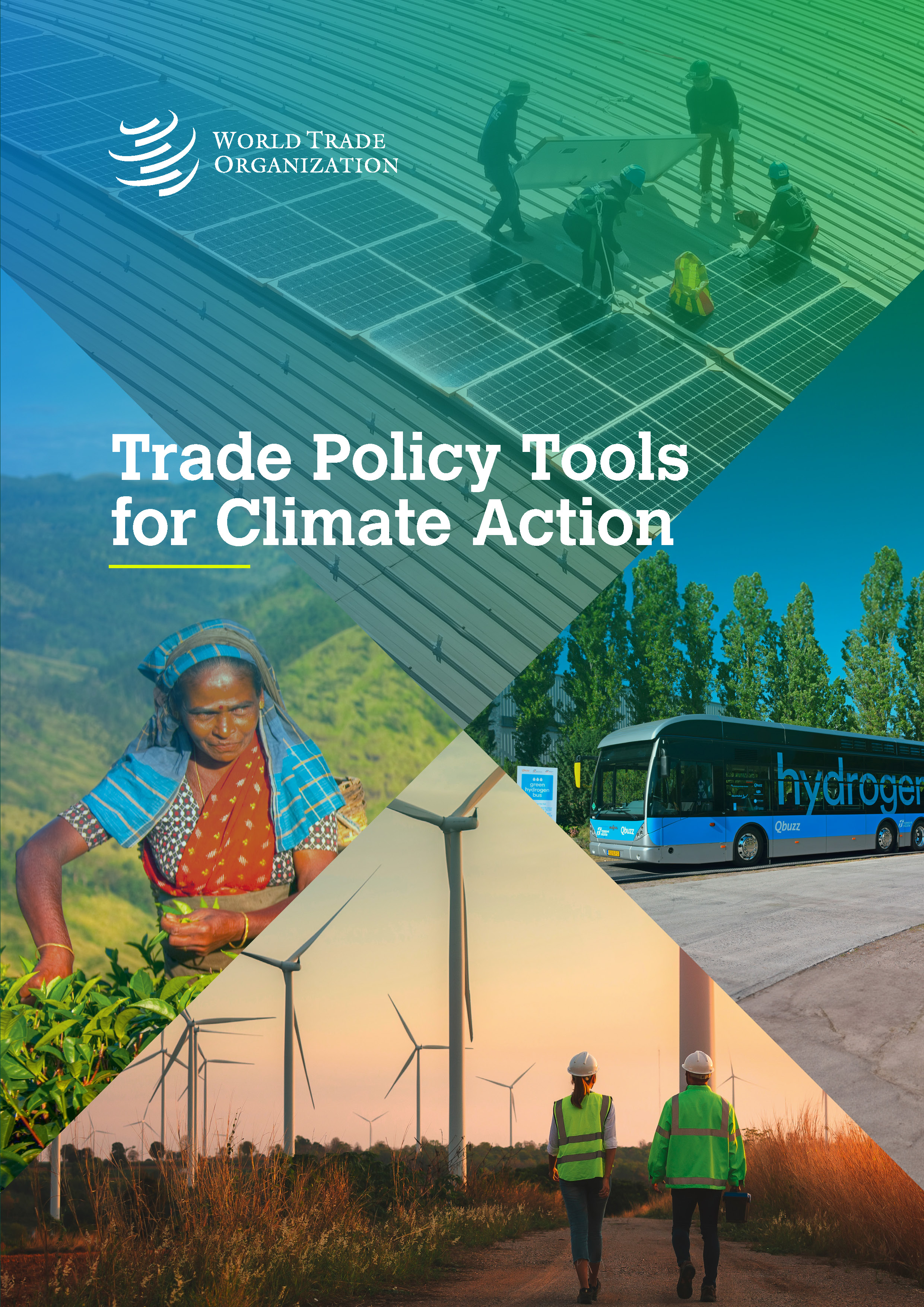
Trade Policy Tools for Climate Action
More LessTrade Policy Tools for Climate Action, a publication by the WTO Secretariat, looks into the trade policies that governments could consider as part of their strategies for climate change mitigation and adaptation. The publication covers ten policy areas where governments have introduced measures to support the transition to a low-carbon economy, improve the flow of climate-friendly goods and services, decarbonize supply chains, and build resilience to extreme weather events and climate change. Launched at COP28, the publication is intended to shed light on how trade policy actions for climate could accelerate the transition to a climate-friendly global economy as part of the WTO Secretariat’s efforts to encourage the full use of the power of trade to deliver on collective sustainable development objectives, including those in relation to the climate crisis.
-
-
-
Trade Profiles
More Less"Trade Profiles" provides two-pages snapshots of the most relevant indicators on merchandise trade, services and intellectual property for over 200 economies, including all WTO members.
-
-
-
Trade Profiles
More LessThe Trade Profiles provide standard information on the structural trade situation and trade policy measures of members, observers and other selected economies. The profiles are complemented with general macroeconomic indicators.
-
-
-
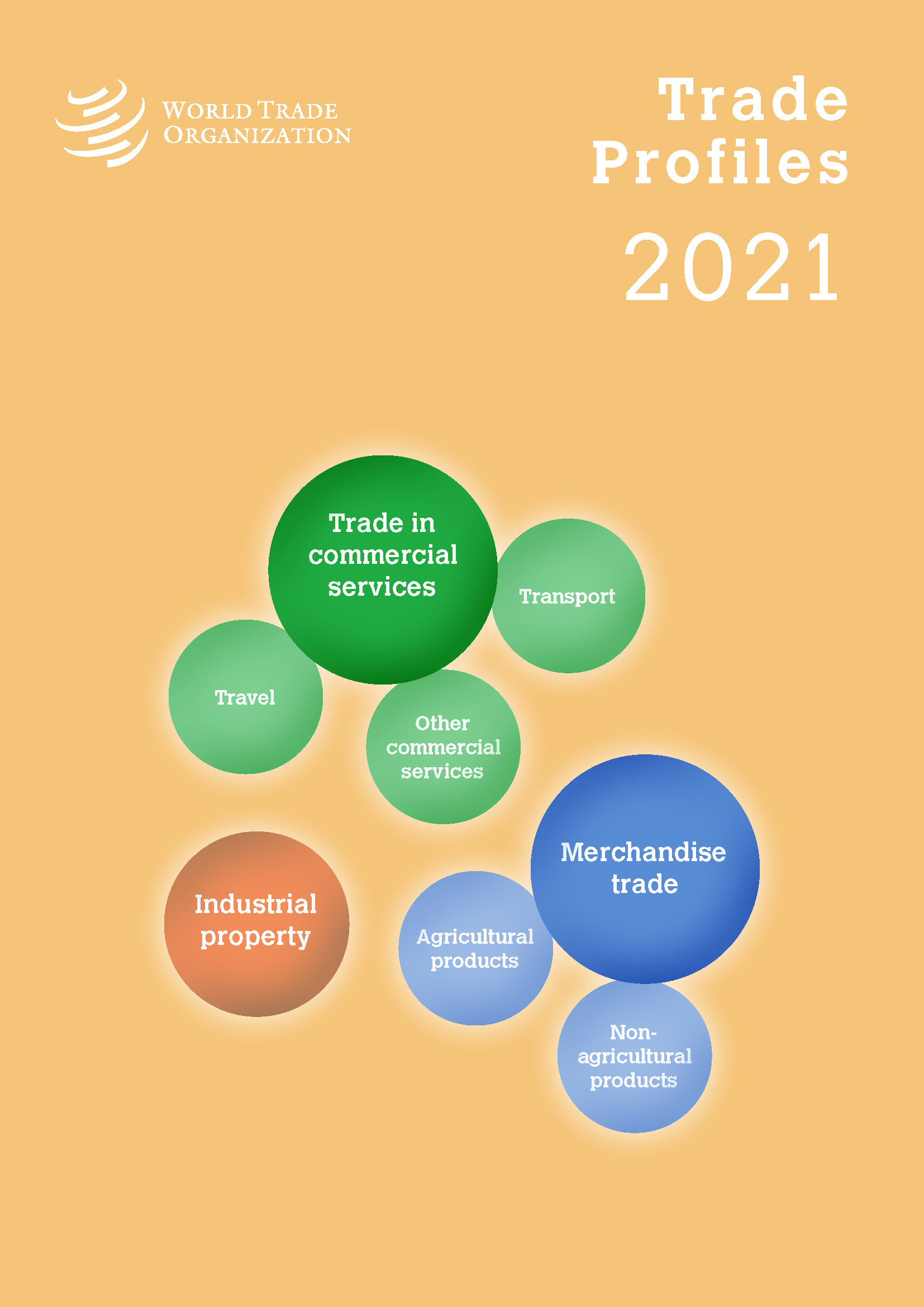
Trade Profiles 2021
More LessTrade Profiles 2021 provides a series of key indicators on trade in goods and services for 197 economies. For merchandise trade, major exports and imports are listed for both agricultural and non-agricultural products as well as major origins and destinations for total merchandise trade. For trade in services, a detailed breakdown is provided for transport, travel and other commercial services. Statistics on intellectual property are also provided. The information is available for all WTO members and observers and for other selected economies. For each economy, the data is presented in a handy two-page format, providing a concise overview of global trade. The publication is an invaluable reference tool for anyone looking for essential trade statistics.
-
-
-
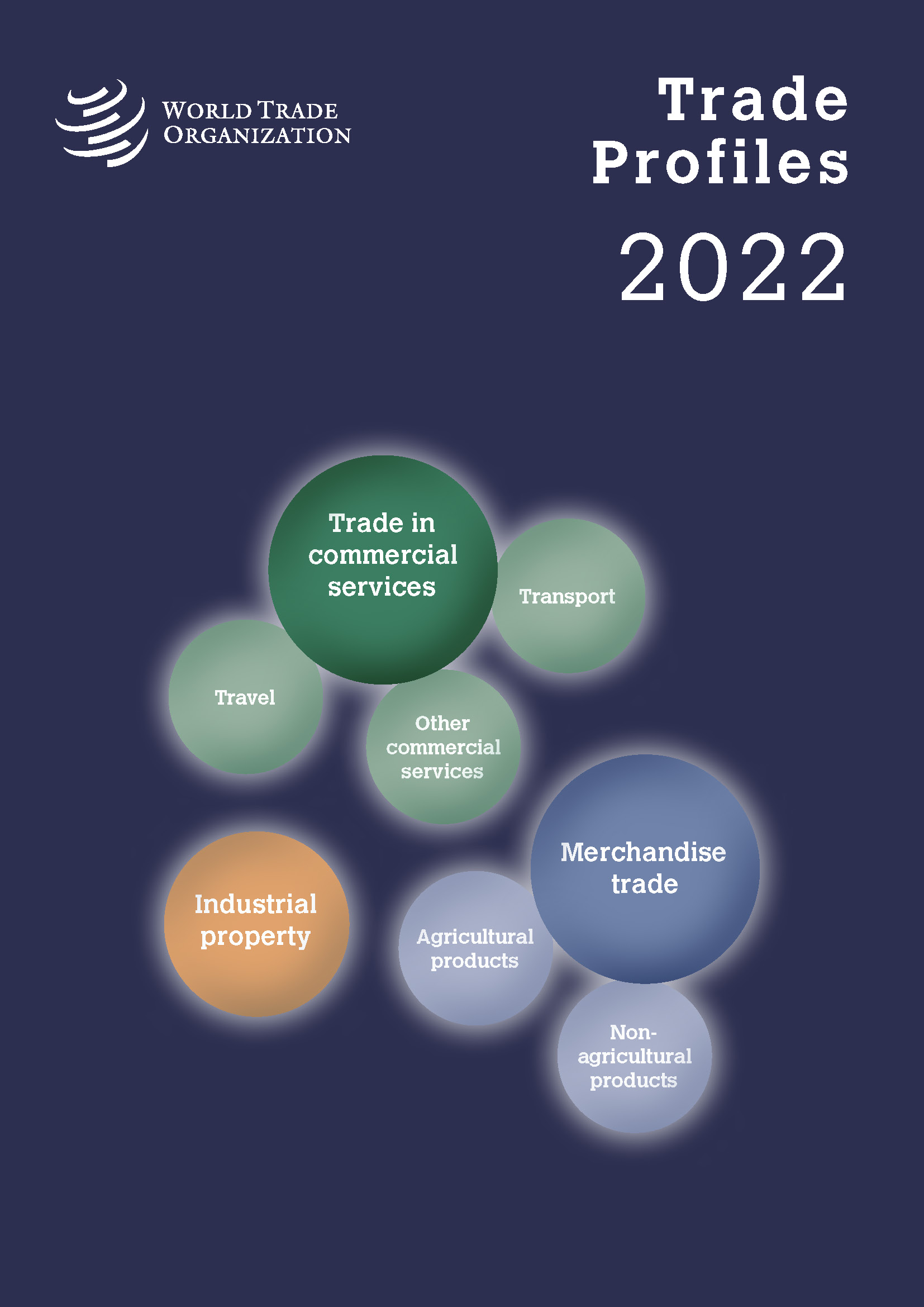
Trade Profiles 2022
More LessTrade Profiles 2022 provides a series of key indicators on trade in goods and services for 197 economies. For merchandise trade, major exports and imports are listed for both agricultural and non-agricultural products as well as major origins and destinations for total merchandise trade. For trade in services, a detailed breakdown is provided for transport, travel and other commercial services. Statistics on intellectual property are also provided. The information is available for all WTO members and observers and for other selected economies. For each economy, the data is presented in a handy twopage format, providing a concise overview of global trade. The publication is an invaluable reference tool for anyone looking for essential trade statistics.
-
-
-
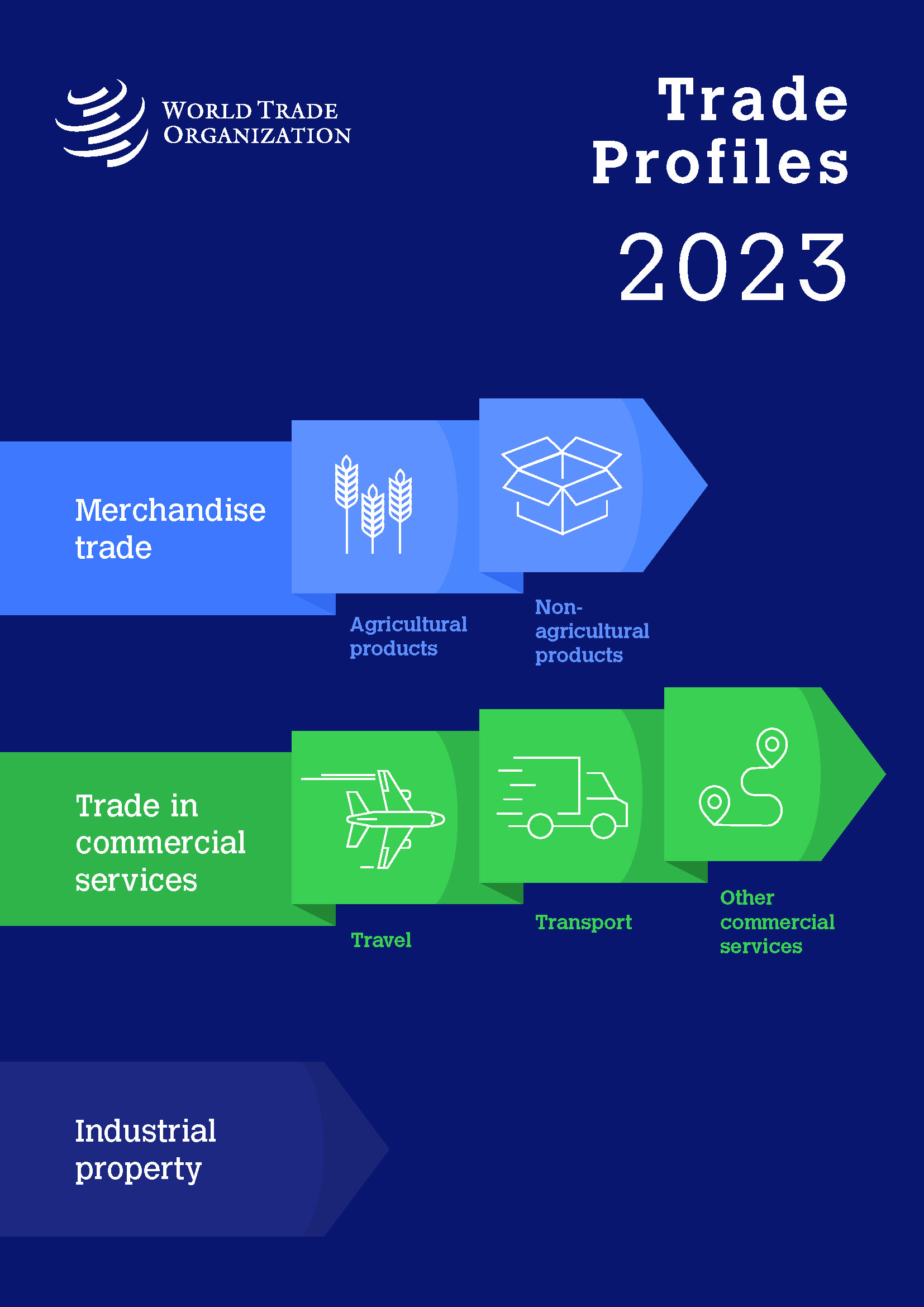
Trade Profiles 2023
More LessTrade Profiles 2023 provides a series of key indicators on trade in goods and services for 197 economies. For merchandise trade, major exports and imports are listed for both agricultural and non-agricultural products as well as major origins and destinations for total merchandise trade. For trade in services, a detailed breakdown is provided for transport, travel and other commercial services. Statistics on intellectual property are also provided. The information is available for all WTO members and observers and for other selected economies. For each economy, the data is presented in a handy two page format, providing a concise overview of global trade. The publication is an invaluable reference tool for anyone looking for essential trade statistics.
-
-
-
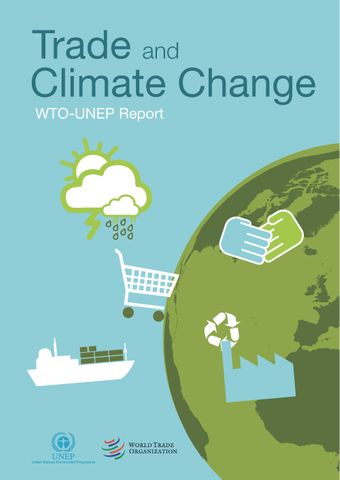
Trade and Climate Change
WTO-UNEP Report
More LessWhat do we know about climate change? What is the relationship between trade and climate change? How does trade affect greenhouse gas emissions and can more open trade help to address climate change? What is the range of national measures that can contribute to global mitigation efforts? These are just some of the questions discussed by this report by the World Trade Organization and the United Nations Environment Programme.
-
-
-
Trade and Employment
Challenges for Policy Research
More LessOn the basis of an overview of the existing academic economic literature, the study provides an impartial view of what can be said, and with what degree of confidence, on the relationship between trade and employment, an often contentious issue of public debate. Its focus is on the connections between trade policies, and labour and social policies and it will be useful to all those who are interested in this debate: academics and policy-makers, workers and employers, trade and labour specialists.
-
-
-
Trade and Environment at the WTO
More LessDeveloped to assist public understanding of the trade and environment debate in the WTO, this document briefly presents its history and focuses on trade and environment related issues within the Doha mandate, the effects of trade liberalization on the environment, the relationship between multilateral environmental agreements and the WTO, and a review of trade disputes involving environmental issues.
-
-
-
Trade and Food Standards
More LessCo-published by the World Trade Organization (WTO) and the Food and Agriculture Organization (FAO)
-
-
-
Trade and Poverty Reduction
New Evidence of Impacts in Developing Countries
More LessGlobal trade has contributed strongly to reducing poverty but important challenges remain in making trade work for the poorest. This publication presents eight case studies to reveal how trade can help to reduce poverty in developing countries. It focuses on four constraints faced by the extremely poor – namely that they tend to live in rural areas, work in the informal sector, live in fragile and conflict-affected regions and face gender inequality. The case studies identify ways to overcome these constraints, including through the adoption of policies that maximize the contribution of trade to poverty reduction. The studies also highlight the ongoing gaps in data and research that constrain policy-making. The publication is a follow-up to The Role of Trade in Ending Poverty, co-published by the WTO and the World Bank in 2015, which examined the challenges the poor face in benefiting from trade opportunities. The country-specific approach of this new publication complements the global perspective of the previous report.
-
-
-
Trade and Poverty Reduction in the Asia-Pacific Region
More LessThis book explores the complex relationship between international trade and poverty reduction through a combination of research papers and contemporary case studies. Written mainly by developing-country authors in consultation with local businesses and communities, the case studies contribute to our understanding of the ways in which low-income communities are dealing with trade as a practical challenge, especially in the Asia-Pacific region where approximately two-thirds of the world’s poor live. While making it clear that there is no ‘one size fits all’ formula, the research and stories highlight a number of necessary preconditions, such as political commitment and cooperation at all levels, if trade is to successfully reduce poverty. Openness to trade, serious commitment to domestic reform, trade-related capacity building, a robust and responsible private sector and access to the markets of developed countries are all identified as powerful tools for building trade-related sustainable development.
-