501 - 600 of 894 results
-
-
Profils tarifaires dans le monde 2021
More LessLa publication intitulée « Profils tarifaires dans le monde 2021 » donne des renseignements complets sur les droits imposés par plus de 170 pays et territoires douaniers. La publication commence par une ventilation des droits de douane appliqués par ces économies. Les données sont présentées dans des tableaux récapitulatifs et sous forme de profils individuels d’une page pour chaque économie. Un tableau récapitulatif concernant certains indicateurs relatifs au profil des importations et des exportations pour ces économies est aussi disponible. Vient ensuite une section qui porte sur l’utilisation des mesures non tarifaires, qui sont de plus en plus importantes dans le commerce international. Cette édition traite en particulier l’estimation des indicateurs analytiques concernant les mesures non tarifaires (MNT) par le Système d’analyse et d’information commerciales de la CNUCED (TRAINS). Cette publication est établie conjointement par l’Organisation mondiale du commerce, la Conférence des Nations Unies sur le commerce et le développement (CNUCED) et le Centre du commerce international (ITC).
-
-
-
Promoting Access to Medical Technologies and Innovation
More LessPromoting Access to Medical Technologies and Innovation examines the interplay between public health, trade and intellectual property, and how these policy domains affect medical innovation and access to medical technologies. Co-published by the World Health Organization, the World Intellectual Property Organization and the WTO, the study draws together the three Secretariats respective areas of expertise.
-
-
-
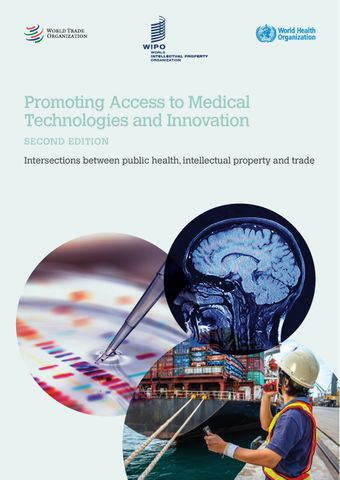
Promoting Access to Medical Technologies and Innovation, 2nd Edition
More LessMedical technologies – medicines, vaccines and medical devices – are essential for public health. Access to essential medicines and the lack of research to address neglected diseases have been a major concern for many years. To promote innovation and to ensure equitable access to all vital medical technologies, policy-makers need a clear understanding of the innovation processes that lead to new technologies and of the ways in which these technologies are disseminated in health systems. This study seeks to reinforce the understanding of the interplay between the distinct policy domains of health, trade and intellectual property, and of how they affect medical innovation and access to medical technologies. This collaborative effort by the World Health Organization, the World Intellectual Property Organization and the World Trade Organization draws together the three Secretariats’ respective areas of expertise. The study is intended to inform ongoing technical cooperation activities undertaken by the three organizations and to support policy discussions. It has been prepared to serve the needs of policy-makers, as well as lawmakers, government officials, delegates to international organizations, non-governmental organizations and researchers. The second edition comprehensively reviews the existing material and captures new developments in key areas since the initial launch of the study in 2013. Among the new topics covered by the study are antimicrobial resistance and cuttingedge health technologies. The second edition provides updated data on health, innovation trends in the pharmaceutical sector, and trade and tariffs. It includes an updated overview of access to medical technologies globally and key provisions in free trade agreements, and takes account of developments in IP legislation and jurisprudence.
-
-
-
Rapport Annuel 1998
More LessLe Rapport annuel de l'OMC se concentre sur les activités régulières de l'organisation et détaille sa structure actuelle, incluant le personnel et le budget.
-
-
-
Rapport Annuel 1999
More LessLe Rapport annuel de l'OMC se concentre sur les activités régulières de l'organisation et détaille sa structure actuelle, incluant le personnel et le budget.
-
-
-
Rapport Annuel 2000
More LessLe Rapport annuel de l'OMC se concentre sur les activités régulières de l'organisation et détaille sa structure actuelle, incluant le personnel et le budget.
-
-
-
Rapport Annuel 2001
More LessLe Rapport annuel de l'OMC se concentre sur les activités régulières de l'organisation et détaille sa structure actuelle, incluant le personnel et le budget.
-
-
-
Rapport Annuel 2002
More LessLe Rapport annuel de l'OMC se concentre sur les activités régulières de l'organisation et détaille sa structure actuelle, incluant le personnel et le budget.
-
-
-
Rapport Annuel 2003
More LessLe Rapport annuel 2003 porte essentiellement sur la première année complète de négociations menées dans le cadre du Programme de Doha pour le développement.
-
-
-
Rapport Annuel 2004
More LessLe Rapport annuel de l'OMC traite des activités courantes de l'Organisation et donne des renseignement sur sa structure, son personnel et de son budget actuel. Il est publié au premier semestre de chaque année.
-
-
-
Rapport Annuel 2005
More LessLe Rapport annuel de l'OMC traite des activités courantes de l'Organisation et donne des renseignement sur sa structure, son personnel et de son budget actuel. Il est publié au premier semestre de chaque année.
-
-
-
Rapport Annuel 2006
More LessLe Rapport annuel de l'OMC porte avant tout sur les activités courantes de l'Organisation et présente en détail sa structure, son personnel et son budget. Il complète le Rapport sur le commerce mondial et les Statistiques du commerce international.
-
-
-
Rapport Annuel 2007
More LessLe Rapport annuel de l'OMC se concentre sur les activités régulières de l'organisation et détaille sa structure actuelle, incluant le personnel et le budget.
-
-
-
Rapport Annuel 2008
More LessLe Rapport annuel de l'OMC 2008 traite des activités de l'Organisation en 2007 et donne des renseignements sur sa structure, son personnel et son budget actuels.
-
-
-
Rapport Annuel 2009
More LessLe Rapport annuel 2009 de l'OMC, dans sa nouvelle présentation, est divisé en deux grandes sections. La première résume brièvement les activités de l'organisation et passe en revue l'année 2008. La deuxième fournit des renseignements plus détaillés, illustrés par des graphiques, des tableaux et des photos.
-
-
-
Rapport Annuel 2010
More LessLe Rapport annuel 2010 de l'OMC propose une brève présentation de l'Organisation et un examen détaillé de ses activités en 2009. Il contient aussi un message personnel du Directeur général, qui passe en revue les événements survenus en 2009, l'impact de la crise financière et les défis futurs.
-
-
-
Rapport Annuel 2011
More LessLe Rapport annuel 2011 de l'OMC propose une brève présentation de l'Organisation et un examen détaillé de ses activités en 2010. Il contient aussi un message personnel du Directeur général, qui passe en revue les événements survenus en 2010 et les défis futurs.
-
-
-
Rapport Annuel 2012
More LessLe Rapport annuel 2012 de l'OMC présente brièvement l'Organisation et contient un aperçu de l'année 2011 ainsi qu'un examen détaillé des principaux domaines d'activité de l'OMC.
-
-
-
Rapport Annuel 2013
More LessLe Rapport annuel 2013 offre un aperçu des activités de l'OMC en 2012 et au début de 2013. Il comporte un bref résumé concernant l'année, suivi d'un examen approfondi des principaux domaines d'activité de l'OMC.
-
-
-
Rapport Annuel 2014
More LessLe Rapport annuel 2014 offre un aperçu des activités de l'OMC en 2013 et au début de 2014. Il s'ouvre avec un message du Directeur général de l'OMC Roberto Azevêdo et un bref résumé de l'année, suivi d'un examen approfondi des principaux domaines d'activité de l'OMC
-
-
-
Rapport Annuel 2015
More LessLe Rapport annuel 2015 offre un aperçu des activités de l'OMC en 2014 et au début de 2015. Il commence par un message du Directeur général de l'OMC Roberto Azevêdo, suivi d'une brève présentation de la période 2014-2015 et de comptes rendus plus approfondis des activités menées par l'OMC l'année dernière.
-
-
-
Rapport Annuel 2017
More LessLe Rapport annuel 2017 offre un compte rendu complet des activités de l'OMC en 2016 et au début de 2017. Il est disponible en format papier et en format PDF.
-
-
-
Rapport annuel 2018
More LessLe Rapport annuel 2018 offre un compte rendu complet des activités menées par l'OMC en 2017 et au début de 2018. Il commence par un message du Directeur général de l'OMC, Roberto Azevêdo. Il donne ensuite un bref aperçu de l'année 2017 et une description plus détaillée des domaines d'activité de l'Organisation au cours des 12 derniers mois. Des gros plans sont faits sur les principaux événements et activités organisés à l'OMC, y compris la onzième Conférence ministérielle de l'Organisation, qui s'est tenue à Buenos Aires.
-
-
-
Rapport annuel 2019
More LessLe Rapport annuel 2019 offre un compte rendu complet des activités menées par l'OMC en 2018 et au début de 2019. Il commence par un message du Directeur général de l'OMC, Roberto Azevêdo. Il donne ensuite un bref aperçu de l'année écoulée, puis une description plus détaillée des principaux domaines d'activité de l'Organisation au cours des 12 derniers mois. Des gros plans sont faits sur les principaux événements et activités organisés à l'OMC.
-
-
-
Rapport sur le Commerce Mondial 2003
More LessLe rapport sur le commerce mondial 2003 est entièrement centré sur le développement. En expliquant la génèse du problème et en proposant un cadre d'analyse dans lequel traiter la question des rapports entre commerce et développement, il vise à aider chacun à débattre en toute connaissance de cause et à mieux évaluer les options qui s'offrent aux gouvernements pour faire face aux défis du moment.
-
-
-
Rapport sur le Commerce Mondial 2005
More LessL'attention que l'on porte à l'incidence des normes sur le commerce masque parfois le rôle important qu'elles jouent en contribuant à l'efficience économique et en remédiant aux défaillances du marché. C'est en remplissant ces fonctions qu'elles génèrent des avantages pour la société. Le rapport sur le commerce mondial 2005 vise à préciser les diverses fonctions des normes et leurs conséquences.
-
-
-
Rapport sur le Commerce Mondial 2006
More LessLes “subventions” sont le sujet central du rapport 2006 sur le commerce mondial. Les auteurs explorent ce champ d'action pour voir comment on peut définir les subventions, ce que la théorie économique peut nous dire d'elles, pourquoi les gouvernements y ont recours, quels sont les secteurs qui en sont les principaux bénéficiaires et quel rôle l'Accord de l'OMC peut jouer pour les réglementer dans le contexte du commerce international.
-
-
-
Rapport sur le Commerce Mondial 2007
More LessLe 1er janvier 2008, le système commercial multilatéral a eu 60 ans. Le rapport 2007 sur le commerce mondial commémore cet anniversaire par une analyse approfondie du GATT et de l'Organisation mondiale du commerce (OMC) qui lui a succédé – leurs origines, leurs réalisations, les défis qu'ils ont dû relever et ce que l'avenir leur réserve.
-
-
-
Rapport sur le Commerce Mondial 2008
More LessLe Rapport sur le commerce mondial est une publication annuelle qui vise à permettre de mieux comprendre les tendances du commerce international, les questions de politique commerciale et le système commercial multilatéral.
-
-
-
Rapport sur le Commerce Mondial 2009
More LessLe Rapport sur le commerce mondial est une publication annuelle qui vise à permettre de mieux comprendre les tendances du commerce international, les questions de politique commerciale et le système commercial multilatéral..
-
-
-
Rapport sur le Commerce Mondial 2010
More LessLe Rapport sur le commerce mondial 2010 traite du commerce des ressources naturelles, comme les combustibles, les forêts, les produits miniers et les ressources halieutiques. Il examine les caractéristiques du commerce des ressources naturelles, les choix qui s'offrent aux gouvernements et comment la coopération internationale, notamment dans le cadre de l'OMC, peut contribuer à la bonne gestion des échanges dans ce secteur.
-
-
-
Rapport sur le Commerce Mondial 2011
More LessL'augmentation constante du nombre d'accords commerciaux préférentiels (ACPr) est un trait dominant de la politique commerciale internationale. Le Rapport sur le commerce mondial 2011 décrit l'évolution historique des ACPr et le paysage actuel des accords. Il examine les raisons pour lesquelles les ACPr sont établis, leurs effets économiques et leur teneur. Enfin, il analyse l'interaction entre les ACPr et le système commercial multilatéral.
-
-
-
Rapport sur le Commerce Mondial 2012
More LessLes mesures de réglementation visant le commerce des marchandises et des services sont la source de nouvelles difficultés très préoccupantes pour la coopération internationale au XXIe siècle. Le rapport sur le commerce mondial 2012 examine les raisons pour lesquelles les gouvernements ont recours à ces mesures non tarifaires et l'ampleur des distorsions des échanges internationaux qu'elles sont susceptibles de créer.
-
-
-
Rapport sur le Commerce Mondial 2013
More LessLe monde change à une incroyable vitesse et ce sous l’influence de nombreux facteurs, y compris l’évolution des modes de production et de consommation, l’innovation technologique permanente, les nouvelles façons de faire du commerce et, bien sûr, la politique. Le Rapport sur le commerce mondial 2013 montre en quoi le commerce est à la fois une cause et un effet du changement et examine les facteurs qui façonnent l’avenir du commerce mondial.
-
-
-
Rapport sur le Commerce Mondial 2014
More LessLe Rapport sur le commerce mondial 2014 examine comment quatre grandes tendances économiques récentes ont modifié la façon dont les pays en développement peuvent se servir du commerce pour favoriser leur développement. Ces tendances sont l'essor économique des pays en développement, l'intégration croissante de la production mondiale à travers les chaînes d'approvisionnement, la hausse des prix des produits agricoles et des ressources naturelles, et la plus grande interdépendance de l'économie mondiale. Le Rapport examine aussi le rôle de l'OMC.
-
-
-
Rapport sur le Commerce Mondial 2015
More LessL’Accord de l’OMC sur la facilitation des échanges (AFE), approuvé par les Membres de l’OMC à la Conférence ministérielle de Bali en décembre 2013, est le premier accord commercial multilatéral conclu depuis la création de l’OMC en 1995. Le Rapport sur le commerce mondial 2015 est la première étude détaillée sur les effets potentiels de l’AFE fondée sur une analyse complète du texte final de l’Accord.
-
-
-
Rapport sur le Commerce Mondial 2016
More LessLe Rapport sur le commerce mondial 2016 examine la participation des petites et moyennes entreprises (PME) au commerce mondial, l’évolution du paysage commercial international pour les PME et ce que le système commercial multilatéral fait et peut faire pour encourager la participation plus large et inclusive des PME aux marchés mondiaux.
-
-
-
Rapport sur le Commerce Mondial 2017
More LessLe Rapport sur le commerce mondial 2017 examine comment la technologie et le commerce influent sur l'emploi et les salaires. Il analyse les difficultés que rencontrent les travailleurs et les entreprises pour s'adapter à l'évolution du marché du travail et la façon dont les gouvernements peuvent faciliter cet ajustement pour faire en sorte que le commerce et la technologie soient inclusifs.
-
-
-
Rapport sur le Commerce Mondial 2018
More LessLe monde change à une incroyable vitesse et ce sous l’influence de nombreux facteurs, y compris l’évolution des modes de production et de consommation, l’innovation technologique permanente, les nouvelles façons de faire du commerce et, bien sûr, la politique. Le Rapport sur le commerce mondial 2013 montre en quoi le commerce est à la fois une cause et un effet du changement et examine les facteurs qui façonnent l’avenir du commerce mondial.
-
-
-
Rapport sur le commerce mondial 2019
More LessLes services sont devenus la composante la plus dynamique du commerce mondial et jouent un rôle de plus en plus important dans l’économie mondiale et dans la vie quotidienne. Pourtant, l’importance de la contribution des services au commerce mondial n’est pas toujours bien comprise. Le Rapport sur le commerce mondial 2019 tente d’y remédier en utilisant un nouvel ensemble de données élaboré par l’OMC qui prend en compte les différentes façons dont les services sont fournis à travers les frontières. Le Rapport examine la manière dont le commerce des services a évolué ces dernières années et se penche sur la question de savoir pourquoi le commerce des services compte. Les grandes tendances qui influent sur le commerce des services, y compris l’évolution démographique, les technologies numériques, la hausse des revenus et le changement climatique, sont examinées. Le Rapport donne aussi des estimations concernant l’évolution possible du commerce des services au cours des 20 prochaines années et les perspectives en matière de renforcement de la coopération internationale dans le domaine des politiques relatives au commerce des services. Le Rapport constate que les coûts du commerce des services sont plus élevés que ceux du commerce des marchandises mais qu’ils diminuent, en grande partie sous l’effet des technologies numériques. Il montre en quoi la baisse des coûts du commerce devrait accroître la part des services dans le commerce mondial et en quoi cela pourrait contribuer à une croissance et un développement plus inclusifs. Pour que les économies puissent tirer parti du rôle croissant joué par le commerce des services, la coopération internationale devra s’intensifier.
-
-
-
Rapport sur le commerce mondial 2020
More LessÀ l’ère numérique, les états sont de plus en plus nombreux à adopter des politiques visant à stimuler la croissance par l’innovation et la modernisation technologique. Le Rapport sur le commerce mondial 2020 présente ces tendances et examine comment le commerce et l’OMC s’y adaptent. Le soutien à la transition vers une économie numérique a caractérisé les politiques publiques adoptées ces dernières années. Le commerce et les politiques commerciales ont toujours été des moteurs importants pour l’innovation. En particulier, le système commercial multilatéral a largement contribué à la diffusion planétaire de l’innovation et des technologies en favorisant la prévisibilité des conditions du marché mondial et en soutenant le développement des chaînes de valeur mondiales. À mesure que les données deviennent un intrant essentiel dans l’économie numérique, les entreprises s’appuient davantage sur des actifs incorporels que sur des actifs physiques et les entreprises numériques peuvent accéder plus rapidement aux marchés mondiaux sans devoir consentir aux importants investissements matériels qui étaient auparavant nécessaires dans d’autres secteurs. Dans le contexte de l’économie numérique, le succès dépendra de l’ouverture, de l’accès aux biens et services liés aux technologies de l’information et de la communication (TIC), de la collaboration dans les projets de recherche et de la diffusion des connaissances et des nouvelles technologies. Le Rapport sur le commerce mondial 2020 montre que la coopération internationale a un rôle important à jouer pour rendre plus efficace la poursuite du développement numérique et de l’innovation technologique, tout en réduisant au minimum les retombées négatives des politiques nationales. Conclus il y a un quart de siècle, les Accords de l’OMC se sont révélés remarquablement avancés en mettant en place un cadre favorable au développement des économies reposant sur les TIC, quel que soit leur niveau de développement. La poursuite de la coopération internationale, à l’OMC et dans d’autres instances, permettrait de poursuivre l’innovation et de réduire les tensions commerciales pour contribuer à rendre plus prévisible le fonctionnement des marchés internationaux.
-
-
-
Regional Rules on the Global Trading System
More LessThe proliferation of regional trade agreements (RTAs) over the past two decades has highlighted the need to look closely at the potential conflicts between regional and WTO rules or disciplines. A major obstacle to advancing understanding of RTAs is the absence of detailed information about their contents. This has limited the debate between those who view RTAs as discriminatory instruments hostage to protectionist interests and those who see them as conducive to multilateral trade opening. This book provides detailed analysis of RTA rules in six key areas - market access, technical barriers to trade, contingent protection, investment, services and competition policy - across dozens of the main RTAs in the world. The analysis helps to provide new insights into the interplay between regional and multilateral trade rules, advances understanding of the economic effects of RTAs and contributes to the discussion on how to deal with the burgeoning number of RTAs.
-
-
-
Regional Trade Agreements and the Multilateral Trading System
More LessThis volume contains a collection of studies examining trade-related issues negotiated in regional trade agreements (RTAs) and how RTAs are related to the WTO's rules. While previous work has focused on subsets of RTAs, these studies are based on what is probably the largest dataset used to date, and highlight key issues that have been negotiated in all RTAs notified to the General Agreement on Tariffs and Trade (GATT) and the World Trade Organization (WTO). New rules within RTAs are compared to rules agreed upon by WTO members. The extent of their divergences and the potential implications for parties to RTAs, as well as for WTO members that are not parties to RTAs, are examined. This volume makes an important contribution to the current debate on the role of the WTO in regulating international trade and how WTO rules relate to new rules being developed by RTAs.
-
-
-
Report on G20 Trade Measures
More LessThe WTO’s 21st Monitoring Report on G20 trade measures issued on 24 June shows that the trade coverage of new import-restrictive measures introduced during the period (October 2018 to May 2019) was more than 3.5 times the average since May 2012 when the report started including trade coverage figures. The report found that trade coverage of USD 335.9 billion during the period is the second highest figure on record, after the USD 480.9 billion reported in the previous period. Together, these two periods represent a dramatic spike in the trade coverage of import-restrictive measures, leading WTO Director-General Roberto Azevêdo to call on G20 economies to work together urgently to ease trade tensions.
-
-
-
Report on G20 Trade Measures (2010)
More LessG20 governments continue to resist protectionist pressures but risks remain: A joint report by the WTO, OECD and UNCTAD released on 4 November 2010 for the Group of 20 biggest economies, ahead of their meeting in Seoul on 11 November, says that by and large, G20 governments have continued to resist protectionist pressures. But it also warns of potential dangers in the months ahead because of persistent high levels of unemployment and tensions over foreign exchange rates.
-
-
-
Report on G20 Trade Measures (2011)
More LessProtectionist pressures on the rise, latest G20 monitoring report says: G20 governments have introduced more trade barriers, including export restrictions, in the past six months than in previous periods since the financial crisis began, according to the monitoring report by the World Trade Organization, the Organisation for Economic Co-operation and Development and the UN Conference on Trade and Development released on 24 May 2011. Although measures to lower trade barriers are also accelerating, new import restrictive measures taken by G20 economies over the period October 2010 to April 2011 cover around 0.6% of total G20 imports which is also an increase over the previous six months (0.3%). Export restrictions are also on the rise. This adds to the cumulative total of world trade affected by new restrictions since the crisis began. Despite the positive forecasts for 2011, the outlook for world trade remains clouded by a number of significant risk factors in addition to the recent natural disasters in Japan. Sovereign debt problems, rising prices for food and other primary commodities, and unrest in major oil exporting countries generate uncertainties for the near future.
-
-
-
Report on G20 Trade Measures (2011)
More LessWTO G-20 report: Weak growth and imbalances “testing” government resolve against protectionism: The WTO’s report on G-20 trade measures, issued on 26 October 2011, said that “disappointingly weak growth in some G-20 countries and continuing macroeconomic imbalances globally are testing the political resolve of many governments to abide by the G-20 commitment to resist protectionism”. It said that “the situation is not yet alarming, but it is clearly adding to the downside risks to the global economy”.
-
-
-
Report on G20 Trade Measures (2012)
More LessLamy reports slowdown in G-20 trade restrictions but warns trade frictions on the rise: Director-General Pascal Lamy, in his report on G-20 trade measures issued on 31 October 2012, said that “there has been a slowdown in the imposition of new trade restrictive measures by G-20 economies over the past five months”. However, “at a time of continuous economic difficulties, trade frictions seem to be increasing”. He urged G-20 governments “to redouble their efforts to keep their markets open, and to advance trade opening as a way to counter slowing global economic growth”.
-
-
-
Report on G20 Trade Measures (2012)
More LessJoint study: restrictive measures continue apace, accrued restraints hit 3% of imports: The seventh WTO-OECD-UNCTAD report for the G-20 on trade and investment restrictions reveals that government-imposed trade and investment restrictions have not slowed and that the pace of removing such obstacles has decelerated. The accumulation of such restraints means that nearly 3% of global imports are affected while the restrictions now impact nearly 4% of G-20 trade.
-
-
-
Report on G20 Trade Measures (2013)
More LessG-20 trade restrictions increase as trade flows slow down, says WTO report: In the last six months, most G-20 members have put in place new trade restrictions or measures that have the potential to restrict trade, according to the latest WTO report on G-20 trade measures published on 18 December 2013. A total of 116 new trade restrictive measures were identified since the last WTO report, up from 109 measures recorded for the previous seven-month period.
-
-
-
Report on G20 Trade Measures (2013)
More LessWTO warns G-20 trade restrictions continue to accumulate as pace of removal remains slow: Director-General Pascal Lamy, in his report on G-20 trade measures issued on 17 June 2013, said that “more than 100 trade-restrictive measures were implemented by G-20 economies over the past seven months, covering around 0.5% of G-20 merchandise imports”. He called on the G-20 to “take positive steps to unlock the potential for trade to grow stronger by ensuring a successful outcome at the next Ministerial Conference in Bali”.
-
-
-
Report on G20 Trade Measures (2014)
More LessWTO report says restrictive trade measures continue to rise in G-20 economies: Restrictive trade measures introduced by G-20 economies since 2008 continue to rise, according to the latest WTO report on recent trade developments issued on 6 November 2014. Given the continuing uncertainties in the global economy, the report stresses the need for countries to show restraint in imposing new measures and to eliminate more of the existing measures.
-
-
-
Report on G20 Trade Measures (2014)
More LessAzevêdo reports trade restrictions down slightly, urges G-20 leadership on post-Bali agenda: The WTO’s report on G-20 trade measures, issued on 18 June 2014, said that “G-20 members put in place 112 new trade restrictive measures during the period mid November 2013 to mid-May 2014 — slightly down from the 116 new restrictive measures introduced in the previous period from mid-May to mid-November 2013”. Director-General Roberto Azevêdo said that “ it is clear that the coat of trade restrictions has grown a bit thicker over this period…this will not help our efforts to support growth and development around the world — and therefore we must remain watchful”.
-
-
-
Report on G20 Trade Measures (2015)
More LessWTO sees “slight deceleration” in G20 trade restrictions but calls for continued vigilance: The WTO’s thirteenth trade monitoring report on G20 trade measures, issued on 15 June, shows a slight deceleration in the application of new trade-restrictive measures by G20 economies, with the average number of such measures applied per month lower than at any time since 2013. The report also underlines that it is not yet clear that this deceleration will continue and it calls on G20 leaders to show continued vigilance and reinforced determination towards eliminating existing trade restrictions.
-
-
-
Report on G20 Trade Measures (2015)
More LessWTO reports levelling of new G20 trade restrictions, but stockpile grows: The WTO’s fourteenth trade monitoring report on G20 trade measures, issued on 2 November, shows the application of new trade-restrictive measures by G20 economies remained stable compared to the previous reporting period. Although the report shows relative restraint by G20 economies in introducing new trade restrictions, the stockpile of measures continues to grow. Because the uncertain global economic outlook continues to have a negative impact on international trade, the report calls on G20 leaders to deliver on their pledge to refrain from implementing new protectionist measures and to roll back existing trade-restrictive measures.
-
-
-
Report on G20 Trade Measures (2016)
More LessG20 trade restrictions reach highest monthly level since the crisis: The WTO’s fifteenth trade monitoring report on G20 trade measures, issued on 21 June, shows the application of new trade-restrictive measures by G20 economies increased compared to the previous reporting period, reaching the highest monthly average registered since the WTO began its monitoring exercise in 2009.
-
-
-
Report on G20 Trade Measures (2016)
More LessTrade restrictions among G20 remain high, despite slight slowdown in new measures: The WTO’s sixteenth monitoring report on Group of 20 (G20) trade measures, issued on 10 November, shows that the number of trade-restrictive measures applied by G20 economies remains high, despite a slight decline against the previous period. This is of particular concern given the continuing global economic uncertainty and the WTO’s recent downward revision of its trade forecasts.
-
-
-
Report on G20 Trade Measures (2017)
More LessG20 countries show restraint in new trade restrictions, despite economic uncertainties: The WTO’s eighteenth monitoring report on Group of 20 (G20) trade measures, issued on 9 November, shows that G20 economies introduced fewer trade-restrictive measures compared to the previous review period. The estimated trade coverage of these restrictions recorded during the period of mid-May 2017 to mid-October 2017 slightly exceeded the coverage of trade-facilitating measures.
-
-
-
Report on G20 Trade Measures (2018)
More LessThe WTO’s eighteenth monitoring report on Group of 20 (G20) trade measures, issued on 9 November, shows that G20 economies introduced fewer trade-restrictive measures compared to the previous review period. The estimated trade coverage of these restrictions recorded during the period of mid-May 2017 to mid-October 2017 slightly exceeded the coverage of trade-facilitating measures.
-
-
-
Report on G20 Trade Measures (2018)
More LessThe WTO’s 20th monitoring report on Group of 20 (G20) trade measures issued on 22 November shows that the amount of trade covered by new import-restrictive measures hit a new high during the current reporting period. The estimated US$ 481 billion in trade coverage of these new measures imposed by G20 economies from mid-May to mid-October 2018 is more than six times larger than that recorded in the previous reporting period and the largest since this measure was first calculated in 2012. The report also shows that the trade coverage of new import-facilitating measures (US$ 216 billion) rose significantly during this period but is less than half that of trade-restrictive measures. WTO Director-General Roberto Azevêdo warned the report’s findings constitute a source of serious concern and called for immediate action to de-escalate the situation.
-
-
-
Report on G20 Trade Measures (2019)
More LessThe WTO’s new Trade Monitoring Report issued on 21 November shows that G20 economies from mid-May to mid-October 2019 introduced import-restrictive measures covering an estimated USD 460.4 billion worth of traded merchandise. This represents a 37% increase over the previous period going back to mid-October 2018, and is second only to the USD 480.9 billion coverage of import-restricting measures reported between mid-May and mid-October 2018. The report notes that with restrictions accumulating over time, the share of global trade covered by such measures has soared. WTO Director-General Roberto Azevêdo called on G20 economies to de-escalate trade tensions to spur investment, growth and job creation.
-
-
-
Report on G20 Trade Measures (2020)
More LessThe WTO's latest Trade Monitoring Report on G20 trade measures shows a slowdown in the number and coverage of trade-restrictive and trade-facilitating measures on goods implemented by G20 countries between mid-May and mid-October 2020, primarily as a result of the sharp decline in overall global trade since the COVID-19 outbreak. The report also documents numerous trade-facilitating and support measures introduced by G20 economies in response to the economic downturn in order to prepare the ground for a strong economic recovery.
-
-
-
Report on G20 Trade Measures (2020)
More LessWhile import-restrictive measures introduced by Group of 20 (G20) economies continue to cover a growing share of trade, the WTO’s latest biannual monitoring report on trade measures — the first to cover a time period coinciding with the coronavirus pandemic — points to significant moves to facilitate imports, including products related to COVID-19. During the mid-October 2019 to mid-May 2020 review period, G20 economies implemented 154 new trade and trade-related measures, 95 of them import-facilitating and 59 import-restrictive. Of these measures, 93 (about 60 per cent) were linked to the COVID-19 pandemic.
-
-
-
Report on G20 Trade Measures (2020)
More LessThe WTO’s latest Trade Monitoring Report on G20 trade measures shows a slowdown in the number and coverage of trade-restrictive and trade-facilitating measures on goods implemented by G20 countries between mid-May and mid-October 2020, primarily as a result of the sharp decline in overall global trade since the COVID-19 outbreak. The report also documents numerous trade-facilitating and support measures introduced by G20 economies in response to the economic downturn in order to prepare the ground for a strong economic recovery.
-
-
-
Report on G20 Trade Measures (2021)
More LessTrade policy restraint by G20 economies, as well as WTO members more broadly, prevented a destructive acceleration of protectionist trade measures that would have further hurt the world economy, according to the WTO’s latest Trade Monitoring Report. But WTO Director-General Ngozi Okonjo-Iweala cautioned that obstacles to trade remain in place and continue to undermine global efforts to increase and diversify the production of vaccines.
-
-
-
Report on G20 Trade Measures (2021)
More LessG20 economies have continued to roll back COVID-19-related trade-restrictive measures and demonstrated restraint in the imposition of new ones, but the value of trade covered by pandemic-related restrictions still in place now exceeds that of trade-facilitating measures, according to the latest WTO Trade Monitoring Report on G20 trade measures released today (28 October). Ahead of a G20 leaders’ summit in Rome this weekend, Director-General Ngozi Okonjo-Iweala called on G20 economies to continue to unwind pandemic-related trade restrictions and to push for a strong WTO response to the pandemic at the 12th Ministerial Conference.
-
-
-
Report to the TPRB from the Director-General on Trade-Related Developments
More LessTrade-restrictive measures continue at historically high level: Trade flows hit by new restrictions implemented by WTO members continued at a historically high level between mid-October 2018 and mid-May 2019, according to the Director-General’s latest mid-year report on trade-related developments presented to members on 22 July. The report, which was reviewed at a meeting of the WTO’s Trade Policy Review Body, notes that the trade coverage of import-restrictive measures implemented during the review period is estimated at USD 339.5 billion, the second-highest figure on record after the USD 588.3 billion reported in the previous period. Together, these two periods represent a dramatic spike in the trade coverage of import-restrictive measures.
-
-
-
Report to the TPRB from the Director-General on Trade-Related Developments (2010)
More LessWTO-OECD-UNCTAD: Despite crisis, G20 governments largely resist protectionist pressures: The WTO, OECD and UNCTAD, in a joint report on G20 trade and investment measures released on 14 June 2010, noted the imposition of fewer trade restrictions but warned “they are accumulating”. In a separate report to WTO members on trade-related developments, Director-General Pascal Lamy confirmed this trend but urged governments to remain “vigilant” and to give priority to “exiting current restricting measures”. The OECD and UNCTAD also released a separate report on G20 investment measures.
-
-
-
Report to the TPRB from the Director-General on Trade-Related Developments (2011)
More LessTrade restrictions on the rise: Director-General Pascal Lamy, in presenting his interim report on trade developments to the Trade Policy Review Body on 21 June 2011, urged “increased vigilance by all WTO Members” as “protectionist pressures remain and are being generated by stubbornly high levels of unemployment in many countries, persistent global imbalances, and macroeconomic concerns”. Many delegations expressed concern over the recent increase in trade restrictions, and called on the WTO to continue with its regular trade monitoring reports
-
-
-
Report to the TPRB from the Director-General on Trade-Related Developments (2012)
More LessLamy reports no slowdown in new trade restrictions: Director-General Pascal Lamy, in his report on trade-related developments issued on 29 June 2012, said that “there has been no slowdown in the imposition of new trade restrictions over the past seven months”. He noted that “the more recent wave of trade restrictions seems no longer to be aimed at combatting the temporary effects of the global crisis, but rather at trying to stimulate recovery through national industrial planning, which is a an altogether longer-term affair”.
-
-
-
Report to the TPRB from the Director-General on Trade-Related Developments (2013)
More LessLamy hails transparency as the best insurance policy against protectionism: Director-General Pascal Lamy, in presenting his monitoring report (covering the period mid-October 2012 to mid-May 2013) to the Trade Policy Review Body on 19 July 2013, said: “I am convinced that a strong and vibrant multilateral trading system remains the best insurance policy to overcome protectionist threats”. He said that “while there is no need for alarmist or dramatic announcements, trade restrictive measures continue to be adopted and the stock of existing measures remains high”.
-
-
-
Report to the TPRB from the Director-General on Trade-Related Developments (2014)
More LessDDG Agah notes no acceleration of new restrictions, urges more trade transparency: Deputy Director-General Yonov Frederick Agah, in presenting the Director-General’s report on trade-related developments (mid-November 2013 to mid-May 2014) to the Trade Policy Review Body on 11 July 2014, said that “the pace at which new trade restrictions have been introduced has not accelerated during the period under review”. He urged members to provide more trade information for the monitoring reports: “I am convinced, and the Director-General’s recent meetings with business groups have confirmed this, that members must accept their collective responsibility for promoting the transparency and predictability which importers and exporters demand”.
-
-
-
Report to the TPRB from the Director-General on Trade-Related Developments (2015)
More LessIncreasing stockpile of trade-restrictive measures “a cause for concern”: The increasing stockpile of trade-restrictive measures introduced by WTO members remains a cause for concern, and continued vigilance is required, according to the latest report on trade-related developments presented on 23 July by WTO Director General Roberto Azevêdo. On the positive side, an increasing number of trade-liberalizing measures, such as tariff-cutting measures, were adopted by WTO members during the period under review, 16 October 2014 to 15 May 2015.
-
-
-
Report to the TPRB from the Director-General on Trade-Related Developments (2016)
More LessReport urges WTO members to resist protectionism and “get trade moving again”: WTO members need to avoid putting up barriers and “get trade moving again” in order to address slow global economic growth, according to the Director-General’s mid-year report on trade-related developments issued on 25 July. The Trade Monitoring Report concludes that the “best safeguard we have against protectionism is a strong multilateral trading system”.
-
-
-
Report to the TPRB from the Director-General on Trade-Related Developments (2017)
More LessWTO members record lowest monthly average in new trade restrictions since 2008: Between mid-October 2016 and mid-May 2017 WTO members recorded the lowest monthly average of new trade restrictions since the financial crisis of 2008, according to the Director-General’s mid-year report on trade-related developments presented to members on 24 July. Director-General Roberto Azevêdo welcomed this news, and urged WTO members to show continued moderation. The report also shows that the trade coverage of the trade-facilitating measures was significantly higher than that of the restrictions.
-
-
-
Report to the TPRB from the Director-General on Trade-Related Developments (2018)
More LessWTO members introduced more trade-restrictive measures from mid-October 2017 to mid-May 2018 compared to the previous review period (mid-October 2016 to mid-October 2017), according to the Director-General’s mid-year report on trade-related developments presented to members on 25 July at a meeting of the Trade Policy Review Body. While WTO members continued to implement more trade-facilitating than trade-restrictive measures, the value of trade covered by the restrictive measures rose and the value covered by facilitating measures fell. The report draws attention to this shift, and to the fact that it is taking place at a time of heightened trade tensions and associated rhetoric, which should be of concern to the international community.
-
-
-
Report to the TPRB from the Director-General on Trade-Related Developments (2021)
More LessWTO economies from mid-October 2020 to mid-May 2021 exercised trade policy restraint and refrained from an acceleration of protectionism that would have further harmed a world economy reeling from the COVID-19 pandemic, according to the Director-General’s mid-year report on trade-related developments presented to members on 29 July. The report calls on WTO members to ensure that markets remain open and predictable, and warns that failing to ensure wider access to COVID-19 vaccines could undermine the global economic and trade recovery.
-
-
-

Réponses courtes aux grandes questions sur l’OMC et l’environnement
More LessCette brochure de la Division du commerce et de l’environnement vise à améliorer la compréhension du rôle du commerce et des règles commerciales en ce qui concerne les questions environnementales. Il cherche à répondre, dans des termes faciles à comprendre, à certaines des questions clés du débat sur le commerce et l’environnement en ce qui concerne le système commercial multilatéral.
-
-
-
Sanitary and Phytosanitary Measures
More LessAgricultural products worth over US$ 1,765 billion were traded in 2013. WTO rules help to ensure that these products are traded safely and that health protection measures are not used as an excuse for protecting domestic producers. This brochure, produced to mark the WTO’s 20th anniversary, looks into the key provisions of the Agreement and the work of the SPS Committee.
-
-
-
Sanitary and Phytosanitary Measures
More LessThe WTO Secretariat has prepared this booklet to assist public understanding of the SPS Agreement, it concerns the application of food safety and animal and plant health regulations. The first section of the booklet presents the basic structure of WTO agreements; the second looks at the key features of the SPS Agreement; the third addresses a number of frequently-asked questions; and the fourth is the legal text of the agreement.
-
-
-
Sanitary and Phytosanitary Measures Agreement
More LessA new booklet launched on 27 July highlights strong engagement from WTO members at all levels of development in transparency and prevention of trade disputes. The information contained in the booklet is based on the 2020 review of members’ implementation of the Agreement on the Application of Sanitary and Phytosanitary Measures (the “SPS Agreement”).
-
-
-
Serie de Acuerdos de la OMC: Obstáculos Técnicos al Comercio
More LessEsta nueva edición ofrece una descripción general del propósito y alcance del Acuerdo sobre Obstáculos Técnicos al Comercio (OTC) de la OMC, los tipos de medidas que cubre y los principios clave del Acuerdo. Tiene como objetivo mejorar la comprensión del Acuerdo OTC.
-
-
-
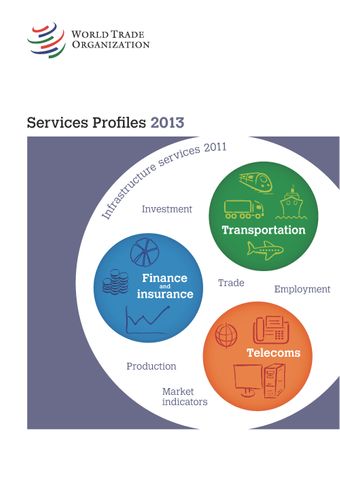
Services Profiles 2013
More LessServices Profiles 2013 provides statistics on key “infrastructure services”, i.e. transportation, telecommunications, finance and insurance, for 140 economies. The information is derived from multiple sources, such as national accounts, employment statistics, balance of payments statistics, foreign affiliates’ trade in services (FATS) statistics, foreign direct investment (FDI) statistics and quantitative indicators largely sourced from international/regional organizations and specialized bodies.
-
-
-
Services Profiles 2014
More LessServices Profiles 2014 provides key statistics on “infrastructure services”, i.e. transportation, telecommunications, finance and insurance, for some 150 economies. The information is derived from multiple sources, such as national accounts, employment statistics, balance of payments statistics, foreign affiliates’ trade in services statistics, foreign direct investment statistics and quantitative indicators largely sourced from international/regional organizations and specialized bodies. The profiles reflect data as contained in the WTO’s Integrated Trade Intelligence Portal (I-TIP) services database as of July 2014.
-
-
-
Services Profiles 2015
More LessServices Profiles 2015 provides key statistics on “infrastructure services”, i.e. transportation, telecommunications, finance and insurance, for some 150 economies. The 2016 edition of Trade Profiles incorporates the data previously provided in Services Profiles.
-
-
-

Short Answers to Big Questions on the WTO and the Environment
More LessThis booklet by the Trade and Environment Division aims at improving understanding of the role of trade and trade rules with regards to environmental issues. It seeks to answer, in easy-to-understand terms, some of the key questions of the trade and environment debate as they relate to the multilateral trading system.
-
-
-
Solución de diferencias en la OMC: Resúmenes de una página por caso 1995–2018
More LessEsta publicación contiene resúmenes útiles de una página de las principales constataciones contenidas en cada uno de los informes de los Grupos Especiales publicados hasta finales de 2018, así como en los informes correspondientes del Órgano de Apelación publicados en ese período. Cada resumen de una página se compone de los hechos fundamentales, las constataciones principales que figuran en los informes y otras cuestiones especialmente importantes. La publicación incluye dos índices en los que se enumeran las diferencias en función de los Acuerdos de la OMC abordados y del Miembro de la OMC demandado.
-
-
-
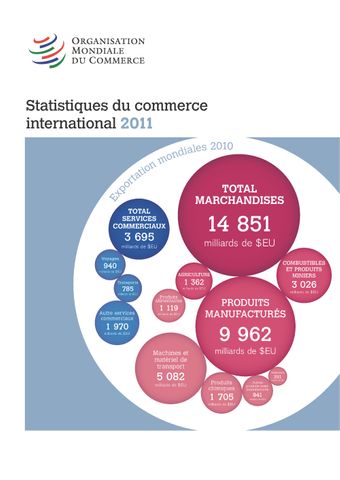
Statistiques du Commerce International 2011
More LessL'édition 2011 des Statistiques du commerce international présente un aperçu général de l'évolution la plus récente du commerce mondial, donnant des renseignements détaillés sur le commerce des marchandises par produit et sur le Commerce des services commerciaux.
-
-
-
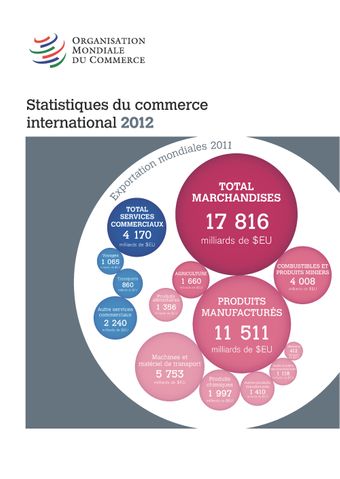
Statistiques du Commerce International 2012
More LessL'édition 2012 des Statistiques du commerce international présente un aperçu général de l'évolution la plus récente du commerce mondial, donnant des renseignements détaillés sur le commerce des marchandises par produit et sur le Commerce des services commerciaux.
-
-
-
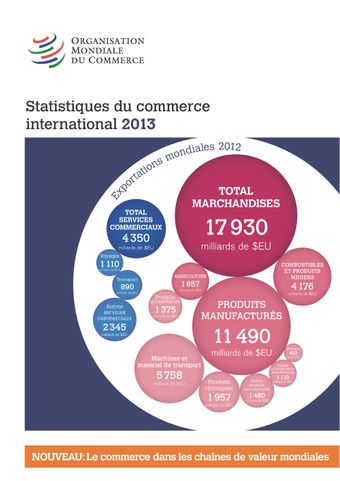
Statistiques du Commerce International 2013
More LessL'édition 2013 des Statistiques du commerce international présente un aperçu général de l'évolution la plus récente du commerce mondial, donnant des renseignements détaillés sur le commerce des marchandises par produit et sur le Commerce des services commerciaux.
-
-
-
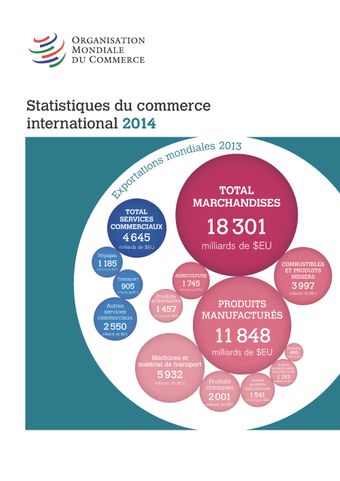
Statistiques du Commerce International 2014
More LessL'édition 2014 des Statistiques du commerce international présente un aperçu détaillé de l'évolution la plus récente du commerce mondial, donnant des renseignements détaillés sur le commerce des marchandises par produit et sur le Commerce des services commerciaux.
-
-
-
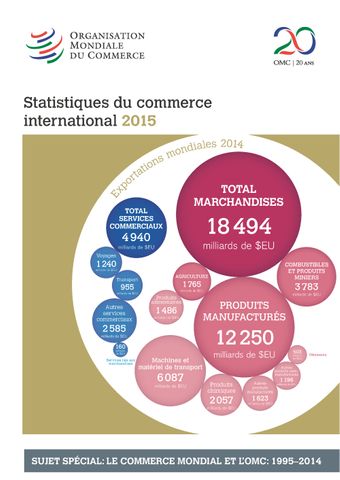
Statistiques du Commerce International 2015
More LessL'édition 2015 des Statistiques du commerce international présente un aperçu détaillé de l'évolution la plus récente du commerce mondial, donnant des renseignements détaillés sur le commerce des marchandises par produit et sur le Commerce des services commerciaux.
-
-
-
Status of WTO Legal Instruments
More LessStatus of WTO Legal Instruments covers the legal instruments drawn up by WTO members in relation to the Marrakesh Agreement Establishing the World Trade Organization and the plurilateral trade agreements annexed to that Agreement. For each legal instrument, information is provided regarding signature, acceptance, ratification, accession and entry into force. The relevant final clauses of each instrument are also included. The cut-off point for information in this publication is end-April 2015.
-
-
-
Status of WTO Legal Instruments
More LessThis publication covers the treaty instruments drawn up by WTO Members in relation to the Agreement Establishing the WTO and the multilateral and plurilateral trade agreements annexed to this Agreement. It lists the signature dates of WTO agreements and the dates of acceptance or amendments to these agreements. It also provides the date of their entry into force as well as for other communications and declarations received by the WTO Director-General in his capacity as depositary. This publication reflects several WTO accessions and treaty amendments since the previous edition. Following a brief introduction, a dedicated section provides a comprehensive summary of the establishment of the WTO and the evolution of its treaty instruments. It also provides information on depositary notifications by the WTO Director-General, the relevant volumes of the WTO and UN Treaty Series, and treaty registration with the United Nations. Hyperlinks in the PDF allow readers direct access to the relevant WTO and UN documents.
-
-
-
Status of WTO Legal Instruments
More LessThis publication covers the treaty instruments drawn up by WTO Members in relation to the Marrakesh Agreement Establishing the WTO and the multilateral and plurilateral trade agreements annexed to this Agreement. It lists the adoption and signature dates of WTO treaty instruments and the dates of acceptances, accessions or amendments to these. It also provides the date of their entry into force as well as the dates of other communications and declarations received by the WTO Director-General in her capacity as depositary. This updated 2021 edition reflects several WTO treaty developments since the previous edition. Following a brief introduction, a dedicated section provides a comprehensive summary of the establishment of the WTO and the evolution of its treaty instruments. It also provides information on depositary notifications by the WTO Director-General, the relevant volumes of the WTO and UN Treaty Series, and treaty registration with the United Nations. Hyperlinks in the PDF version allow readers direct access to the relevant WTO and UN documents.
-
-
-
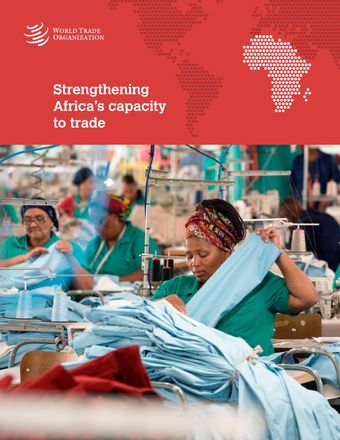
Strengthening Africa’s Capacity to Trade
More LessOpen global trade has had positive effects for African industrialization and development. Keeping markets open and predictable, as well as fostering a more generally favourable business environment, will be critical to spur renewed investment in Africa and support the continent’s economic recovery from the COVID-19 pandemic. This report looks at efforts to help African countries build capacity and to take fuller advantage of the benefits that trade brings. It examines various activities and projects the WTO is implementing in the continent, including in the areas of trade facilitation, compliance with sanitary and phytosanitary regulations, and capacity building for trade and production. The report also looks into projects aimed at mainstreaming trade into the national development strategies of African countries. International cooperation, a multilaterally coordinated response to the COVID-19 crisis and a reinvigorated multilateral trading system have the potential to lessen the effects of the pandemic and bolster Africa’s economic growth.
-
-
-
Supply Chain Perspectives and Issues
More LessGlobal value chains (GVCs) have become ubiquitous. The literature that attempts to understand and explain GVCs is vast, multidisciplinary and no less complex than the phenomenon itself. This volume is an ambitious attempt at a fairly comprehensive review of literature on the subject.
-
-
-
Série des accords de l’OMC : Obstacles techniques au commerce
More LessCette nouvelle édition donne un aperçu de l’objet et de la portée de l’Accord sur les obstacles techniques au commerce (OTC), des types de mesures qu’il couvre et des principes clés de l’Accord. Il vise à améliorer sa compréhension.
-