


WTO
WTO401 - 500 of 944 results
-
-
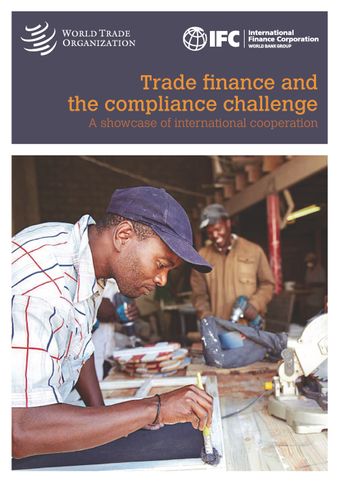
Trade finance and the compliance challenge
A showcase of international cooperation
More LessThe availability of trade finance has become an increasingly important issue in the past few years. As international banks have become less willing to provide trade finance guarantees, particularly in developing countries, this has reduced the capacity of local banks to provide credit to businesses wishing to trade, leading to a significant gap between the demand and supply of trade finance. Small and medium-sized enterprises have been especially hard-hit by this trade finance gap. This publication delves into the global trade finance gap and the reasons for the growing reluctance of the global financial sector to engage in this form of financing. It examines the challenges of regulatory compliance and describes the efforts of international organizations, such as the World Trade Organization and the International Finance Corporation, to respond to this issue. It also presents case studies of the capacity-building programmes organized by multilateral development banks which aim to improve the availability of trade finance.
-
-
-
Trade finance in West Africa
More LessA joint publication on “Trade Finance in West Africa” was launched by Director-General Ngozi Okonjo-Iweala and International Finance Corporation (IFC) Managing Director Makhtar Diop on 12 October in Washington DC. Using the results of a survey of banks in the four largest economies of the Economic Community of West African States (ECOWAS) — Côte d’Ivoire, Ghana, Nigeria and Senegal — the publication assesses the shortfall in trade finance in these countries. It also outlines ways of removing obstacles to credit facilities and of unleashing the trade potential of the region.
-
-
-
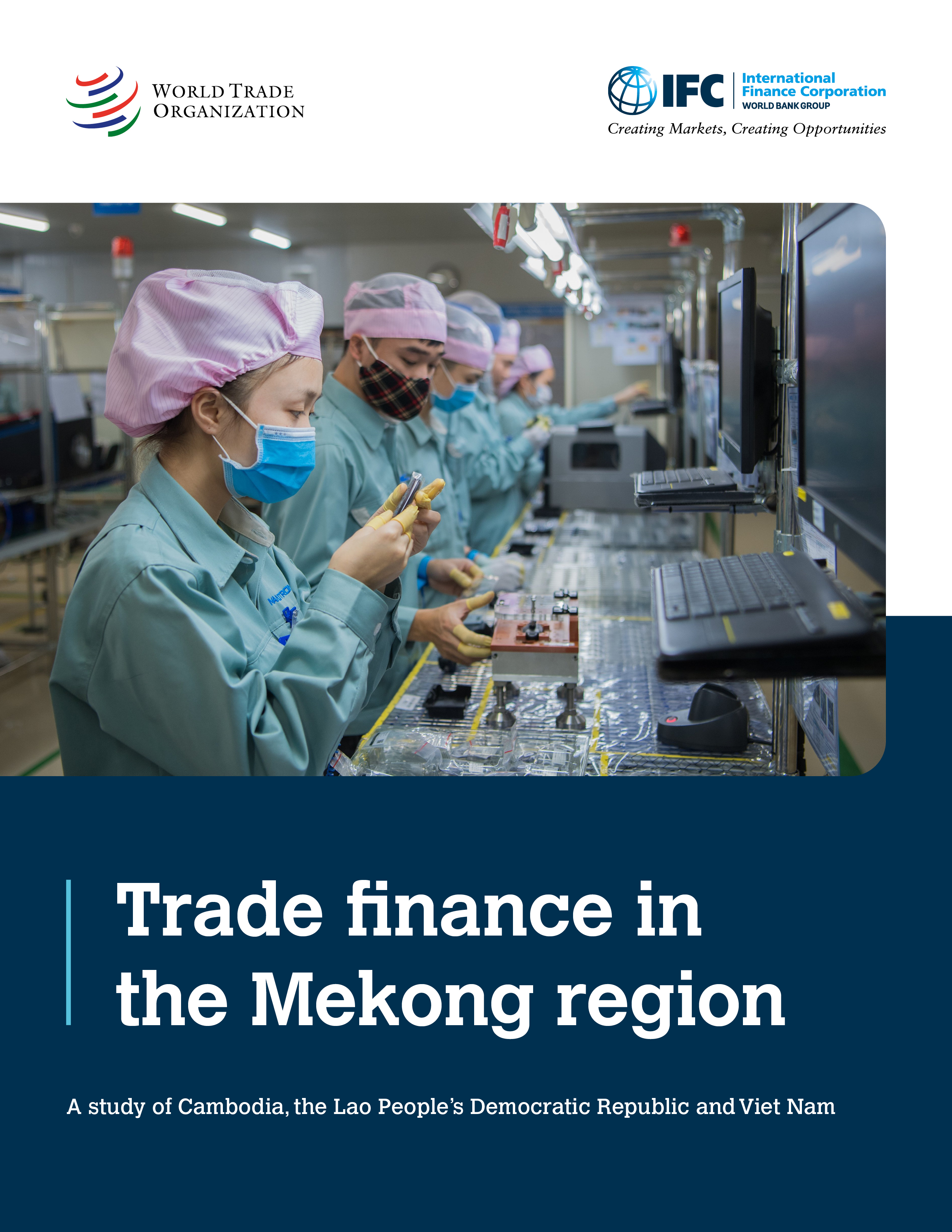
Trade finance in the Mekong region
A study of Cambodia, the Lao People’s Democratic Republic and Viet Nam
More LessCambodia, the Lao People’s Democratic Republic and Viet Nam – the so-called Mekong-3 - have experienced rapid trade growth over the last ten years. However, growth could be boosted even further by improving access to trade finance, such as loans and guarantees, for locally owned businesses seeking to trade globally. This publication presents the results of two surveys undertaken by the IFC to determine the level of trade finance available to businesses in the Mekong region. An analysis of the data conducted by the WTO explores the potential impact of an expansion in trade finance and how this could lead to greater integration into world trade and more inclusiveness, with increased participation in global supply chains by small businesses and women-owned enterprises. The publication is intended to serve as a guide to how domestic financial sectors can reorient their operations to support cross-border trade and enhanced access to global markets.
-
-
-
Trade for Peace Programme
Pathways to Sustainable Trade and Peace
More LessCan the flow of goods, services, and ideas build bridges where conflict once prevailed? If so, under whatcircumstances? The World Trade Organization (WTO) stands for a predictable, rules-based system based on the principle of non-discrimination. When the predecessor to the WTO – the General Agreement on Tariffs and Trade – was established some 70 years ago, conflict among nations was at an historic low, following World War II. In the changed global political landscape of today, geopolitical tensions, disruptions to trade and increasing concerns about economic inequality have come to the fore, challenging the foundations of multilateral trade relationships, and trade cooperation more generally. Pathways to Sustainable Trade and Peace is the first WTO publication dedicated to an in-depth exploration of the complex relationship between trade and peace. The publication examines a number of critical questions. How do trade and peace interact? Can trade be leveraged to foster economic development and stability? What can governments and other stakeholders do to foster positive interaction between trade and peace? The volume focuses specifically but not exclusively on fragile and conflict-affected economies, including case studies and analyses from various policy angles.
-
-
-
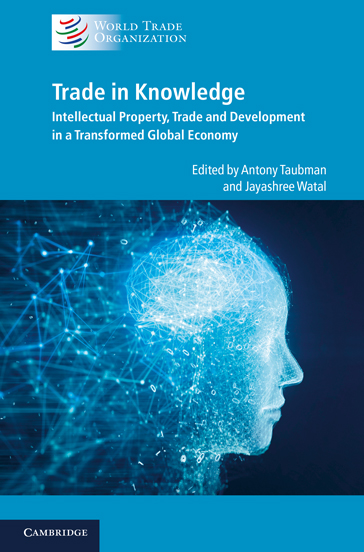
Trade in Knowledge
Intellectual Property, Trade and Development in a Transformed Global Economy
More LessTechnological change has transformed the ways knowledge is developed and shared internationally. Accordingly, in the quarter-century since the WTO was established, and since its Agreement on Trade-Related Aspects of Intellectual Property Rights came into force, both the knowledge dimension of trade and the functioning of the IP system have been radically transformed. The need to understand and respond to this change has placed knowledge at the centre of policy debates about economic and social development. Recognizing the need for modern analytical tools to support policymakers and analysts, this publication draws together contributions from a diverse range of scholars and analysts. Together, they offer a fresh understanding of what it means to trade in knowledge in today’s technological and commercial environment. The publication offers insights into the prospects for knowledge-based development and ideas for updated systems of governance that promote the creation and sharing of the benefits of knowledge.
-
-
-
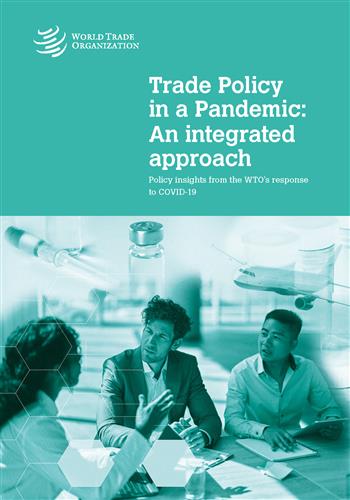
Trade policy in a pandemic
An integrated approach
More LessThe COVID-19 pandemic highlighted the integral role of international trade in responding to the global health crisis. All communities depended to some extent on trade for medical products, related services and vaccines. In particular, the pandemic accentuated the mutual benefit from the core principles of the multilateral trading system, especially the benefits of open and well-functioning international production and supply chains, and non-discriminatory measures. This publication looks into the WTO’s response to the pandemic in terms of four key areas: monitoring the flow of goods related to COVID-19, working towards a coordinated and effective international response to the pandemic, conducting policy and statistical analysis with other intergovernmental organizations, and analysing the lessons learned from the pandemic to shape a blueprint for future international cooperation. The publication examines how WTO members negotiated a framework to guide and consolidate the WTO’s response to the pandemic, to enhance the flow of practical knowledge, and to help render the multilateral trading system better prepared for future crises. Negotiations resulted in the Ministerial Declaration on the WTO Response to the COVID-19 Pandemic and Preparedness for Future Pandemics adopted at the 12th Ministerial Conference in June 2022. The importance of this work was confirmed in the Ministerial Declaration issued in March 2024 at MC13, which encouraged relevant WTO bodies to continue their work on reviewing the lessons learned from the pandemic and on building effective solutions in case of future pandemics.
-
-
-
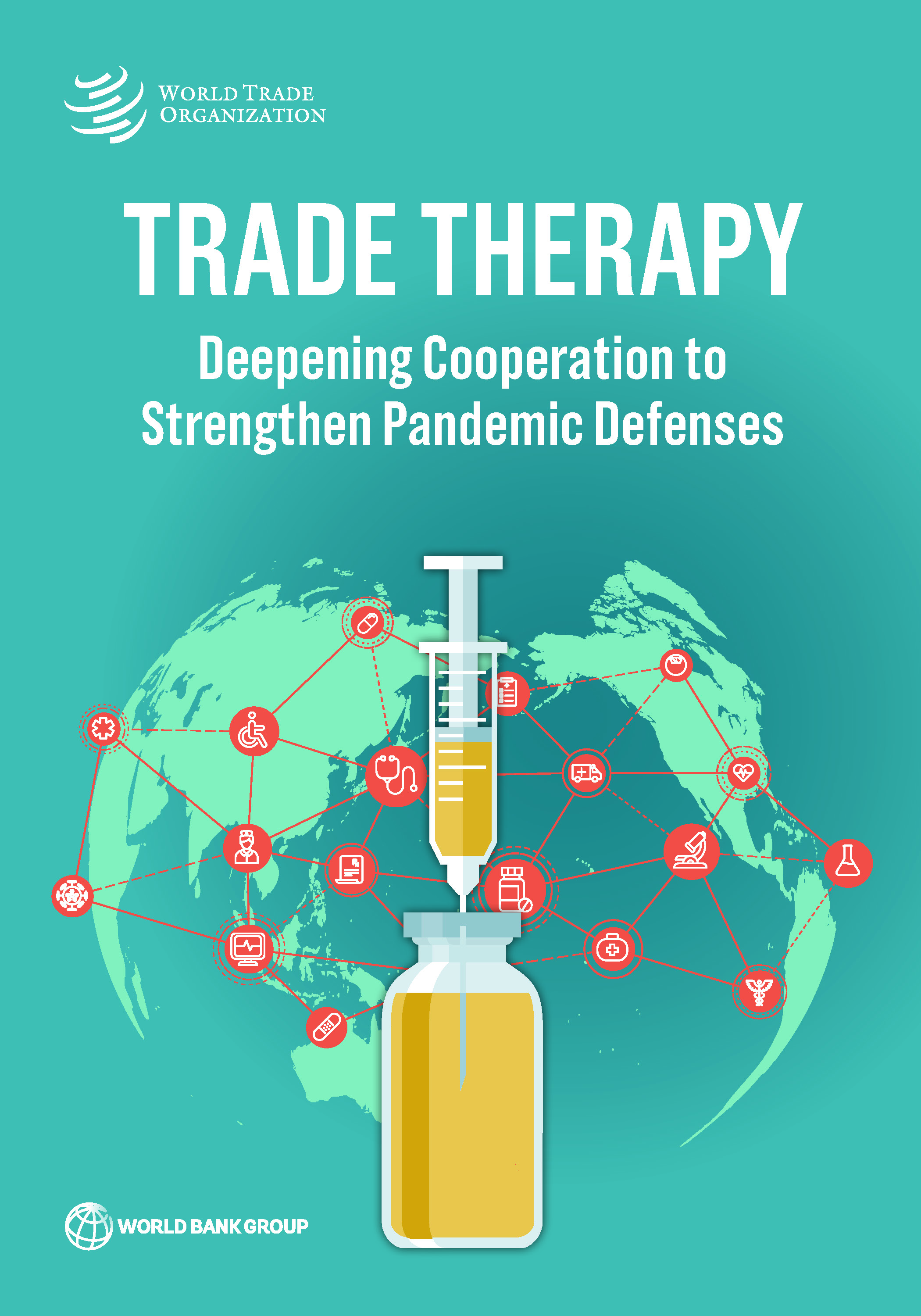
Trade therapy
Deepening cooperation to strengthen pandemic defenses
More LessThe COVID-19 (coronavirus) pandemic has exposed the upsides and downsides of international trade in medical goods and services. Open trade can increase access to medical services and goods—and the critical inputs needed to manufacture them—improve quality and variety, and reduce costs. However, excessive concentration of production, restrictive trade policies, supply chain disruptions, and regulatory divergence can jeopardize the ability of public health systems to respond to pandemics and other health crises. Trade Therapy: Deepening Cooperation to Strengthen Pandemic Defenses, coordinated by Nadia Rocha and Michele Ruta at the World Bank and Marc Bacchetta and Joscelyn Magdeleine at the World Trade Organization, provides new data on trade in medical goods and services and medical value chains, surveys the evolving policy landscape before and during the pandemic, and proposes an action plan to improve trade policies and deepen international cooperation to deal with future pandemics. As the COVID-19 pandemic lingers, the focus of policy action is on the response, which includes actions aimed at removing bottlenecks and providing government support to promote equitable access to vaccines. As the emergency subsides, the focus should shift to prevention and preparedness. Steps to close information gaps—building on the Multilateral Leaders Task Force on COVID-19, the ACT-Accelerator, and the open markets, for example—by negotiating tariff reductions on medical goods and greater market access in services should take priority. Also important are measures to improve the efficiency of markets, which include harmonizing regulation through mutual recognition or equivalence of standards and creating international standards for essential medical goods, inputs, and production processes. Agreement on a crisis rulebook to be deployed during an emergency—including clear and agreed limits on export policy flexibility and shared rules on intellectual property flexibilities—would provide a more solid policy foundation to address future challenges.
-
-
-
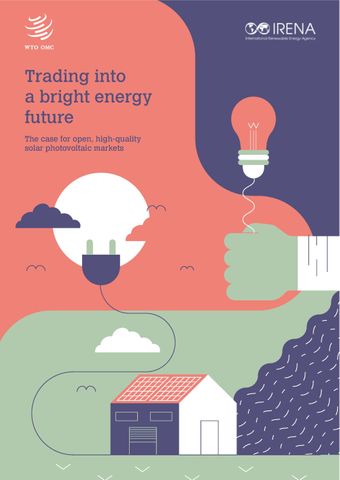
Trading into a Bright Energy Future
The Case for Open, High-Quality Solar Photovoltaic Markets
More LessOpen global trade, supported by a well-functioning “quality infrastructure”, has been an important factor in the rapid deployment of solar photovoltaic (PV) technologies around the world. Keeping markets open is critically important to ensure that all countries can benefit from solar PV, a pillar of the low-carbon, sustainable energy system needed to help achieve the goals of the Paris Agreement and fulfil the United Nations’ Sustainable Development Goals. This report by the World Trade Organization (WTO) and the International Renewable Energy Agency (IRENA) looks at how open, transparent and inclusive trade policies can support cost reductions, deployment of components and job creation in the solar PV sector, strengthening the critical infrastructure needed to fight the COVID-19 pandemic and supporting efforts to rebuild the world economy. The report examines the need for countries to develop a robust quality infrastructure to promote safe trade in solar PV goods and services. This would reduce the risks of unreliable products entering the value chain, and ensure stability for investors and other participants in the value chain. The report also looks at the need to strengthen international cooperation, and demonstrates how IRENA and the WTO can support efforts to promote a secure and inclusive global solar PV market through the effective use of quality infrastructure.
-
-
-
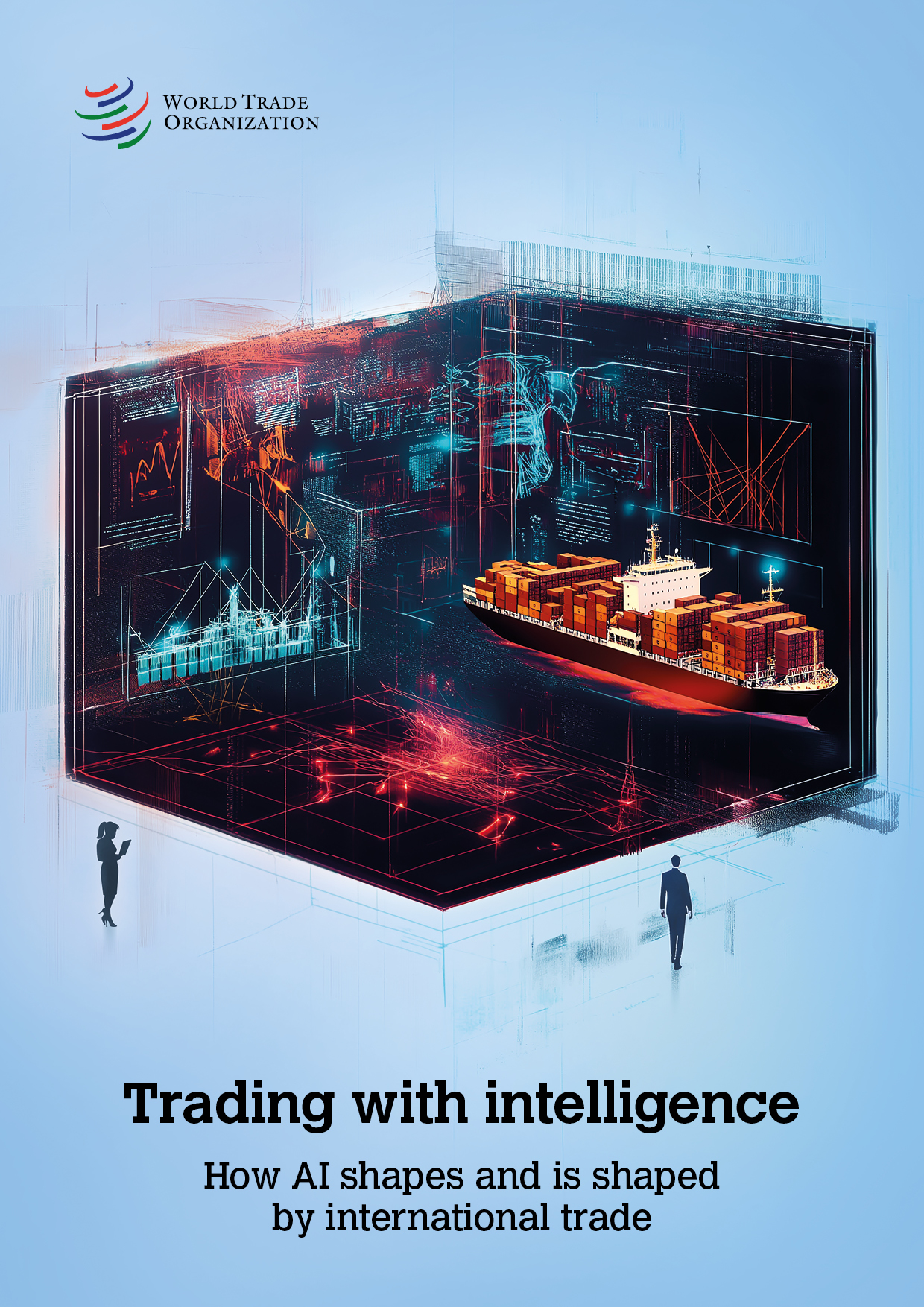
Trading with intelligence
How AI shapes and is shaped by international trade
More LessArtificial intelligence (AI) is transforming the way we live, work, produce and trade. As it further develops, AI is expected to unlock unprecedented economic and societal opportunities. However, it is also a source of significant risks and challenges. This report examines the intersection of AI and international trade. It discusses how AI may shape the future of international trade by reducing trade costs, improving productivity and expanding economies' comparative advantages. The report reviews some key trade policy considerations, in particular the urgent need to address the growing AI divide between economies and between large and small firms, as well as data governance and intellectual property issues. It examines how to guarantee the trustworthiness of AI without hindering trade. The report also provides an overview of domestic, regional and international government initiatives to promote and regulate AI, and highlights the resulting risk of regulatory fragmentation. Finally, the report discusses the critical role of the WTO in facilitating AI-related trade, ensuring trustworthy AI and addressing emerging trade tensions, noting that the rapid evolution of AI is prompting questions about the implications of AI for international trade rules.
-
-
-
Twenty Years of the WTO
A Retrospective
More Less20 Years of the WTO: A retrospective provides an overview of the first two decades of the arbiter of the multilateral trading system. A selection of compelling images and excerpts guides the reader through the history of the organization. Readers will uncover the origins, mission, composition, functioning and key figures of the organization, all the while exploring the challenges it has faced, and how it has worked to meet these challenges.
-
-
-
Un enfoque integrado de la salud, el comercio y la propiedad intelectual para hacer frente a la pandemia de COVID-19
Segunda actualización, mayo de 2023
More LessLa pandemia de enfermedad por coronavirus de 2019 (COVID-19) ha generado una crisis mundial de salud pública extraordinaria. Ha creado una necesidad acuciante de intensificar la cooperación a nivel mundial, y, desde un principio, ha planteado cuestiones que conciernen a la vez a las políticas de salud pública, a las políticas comerciales y al marco y la gestión de la innovación, incluidas las cuestiones relacionadas con los derechos de propiedad intelectual. La segunda edición de la publicación conjunta de la OMS, la OMPI y la OMC titulada Promover el acceso a las tecnologías y la innovación en medicina: intersecciones entre la salud pública, la propiedad intelectual y el comercio, publicada en 2020, incluía un suplemento especial en que se presentaban los desafíos planteados por la pandemia de COVID-19 en relación con los marcos de política integrados de salud, comercio y propiedad intelectual descritos en el estudio. En la presente actualización se revisa la información contenida en la última versión, publicada en octubre de 2021, a la luz de los acontecimientos más recientes al 17 de mayo de 2023.
-
-
-
Une approche intégrée de la santé, du commerce et de la PI pour faire face à la pandémie de COVID-19
Deuxième mise à jour, mai 2023
More LessLa pandémie de maladie à coronavirus 2019 (COVID 19) constitue une crise de santé publique mondiale extraordinaire. Elle a rendu nécessaire l'intensification de la coopération au niveau planétaire. Dès le début, elle a soulevé des questions à l'intersection entre la politique de santé publique, la politique commerciale ainsi que le cadre et la gestion de l'innovation, y compris pour ce qui est des droits de propriété intellectuelle. La deuxième édition de l'étude conjointe de l'OMS, de l'OMPI et de l'OMC intitulée "Promouvoir l'accès aux technologies médicales et l'innovation: Intersections entre la santé publique et la propriété intellectuelle et le commerce", publiée en 2020, contenait un encart spécial présentant les défis posés par la pandémie de COVID 19 par rapport au cadre intégré de politiques en matière de santé, de commerce et de PI établi dans l'étude. Cette mise à jour révise les renseignements figurant dans la dernière version, lancée en octobre 2021, à la lumière de la situation au 17 mai 2023.
-
-
-

WIPO-WTO colloquium papers
More LessThe WIPO-WTO Colloquium Papers is a peer-reviewed academic journal, published jointly by the World Intellectual Property Organization and the World Trade Organization each year since 2010. Providing a uniquely representative and diverse showcase for emerging IP scholarship from across the globe, the journal aims to stimulate analysis and debate on intellectual property (IP) issues particularly of interest to developing countries. And it offers an avenue for the dissemination of a broader and more geographically diverse and representative range of scholarship than is common in much of the academic literature on IP law and policy.
-
-
-
WTO Accessions and Trade Multilateralism
More LessTrois questions importantes seront déterminantes pour l'avenir de l'OMC: le règlement des différends, les négociations et l'intégration régionale. Le règlement des différends est généralement considéré comme l'un des succès majeurs de l'OMC durant ses dix premières années d'existence. La conclusion des négociations du Cycle de Doha est l'un de ses principaux défis. L'intégration régionale est désormais au premier plan du débat alors que les accords régionaux prolifèrent et que les décideurs et les universitaires prennent la mesure de leur incidence sur le système commercial multilatéral. Ces questions, et leur interaction, sont traitées par d'éminents spécialistes et professionnels du droit commercial international originaires d'Amérique du Nord, d'Europe et de la région Asie Pacifique. En outre, des sections spécifiques sont consacrées à la région Asie Pacifique, à sa participation au règlement des différends et aux négociations dans le cadre de l'OMC, et aux tendances récentes à une plus grande intégration régionale.AE1:AE10
-
-
-
WTO Agreement on Fisheries Subsidies
What are its objectives and the expected benefits?
More LessThe WTO Agreement on Fisheries Subsidies, which entered into force in September 2025, establishes binding, multilateral rules for curbing harmful subsidies, a key factor in the widespread depletion of the world’s fish stocks. This brochure looks at why the Agreement is important, which subsidies are prohibited, and WTO members’ transparency obligations under the Agreement. It also covers the expected benefits of the Agreement, from protecting the livelihoods of fishing communities around the world to supporting a more sustainable future for our shared oceans.
-
-
-
WTO Agreements & Public Health
A Joint Study by the WHO and the WTO Secretariat
More LessThis joint study by the World Health Organization and the World Trade Organization Secretariat on the relationship between trade rules and public health. The study explains how WTO Agreements relate to different aspects of health policies. It is meant to give a better insight into key issues for those who develop, communicate or debate policy issues related to trade and health. The study covers areas such as drugs and intellectual property rights, food safety, tobacco and many other issues which have been subject to passionate debate. In this joint effort, the first of its kind, WHO and the WTO Secretariat endeavour to set out the facts.
-
-
-
WTO Agreements Series
More LessThe WTO's Agreements are the legal foundation for the international trading system that is used by the bulk of the world's trading nations. This series offers a set of handy reference booklets on selected Agreements.
-
-
-
WTO Analytical Index
More LessThe "WTO Analytical Index" is a comprehensive guide to the interpretation and application of the WTO agreements by the Appellate Body, dispute settlement panels and other WTO bodies. It contains extracts of key pronouncements and findings from tens of thousands of pages of WTO jurisprudence, including panel reports, Appellate Body reports, arbitral decisions and awards, and decisions of WTO committees, councils and other WTO bodies.
-
-
-
WTO Appellate Body Repertory
More Less"The Repertory" covers all rulings of the Appellate Body, a seven-member body that hears appeals from WTO members regarding dispute panel findings.
-
-
-
WTO Dispute Settlement: One-Page Case Summaries
More Less"One-Page Case Summaries" provides a succinct summary of all disputes brought to the WTO. It covers the findings of the dispute panel report for each case and the subsequent Appellate Body report in cases where WTO members appealed the original ruling.
-
-
-
WTO Dispute Settlement: One-Page Case Summaries 1995–2022
2023 edition
More LessThis publication provides handy one-page summaries of the key findings of every dispute panel report issued up to the end of 2022 and the relevant Appellate Body reports issued over this period. Each one-page summary comprises the core facts, the key findings contained in the reports and any other matters of particular significance. Two indexes list the disputes by WTO agreement and by WTO member responding to the complaint.
-
-
-
WTO Domestic Regulation and Services Trade
More LessDomestic regulation of services sectors has a significant impact on services trade liberalization, which is why General Agreement on Trade in Services (GATS) disciplines are negotiated in the WTO. With the help of analyses and case-studies from academics, regulators and trade experts, this book explores the scope and limits of WTO legal principles to promote domestic regulatory reform. Case-studies discuss country-specific challenges and experiences of regulating important service sectors, such as finance, telecommunications, distribution, legal, education, health, postal and logistics services, as well as the role of regulatory impact assessments. The findings will interest trade officials, policy-makers, regulators, think tanks and businesses concerned with the implications of domestic regulation on access to services markets, and with the opportunities for formulating trade disciplines in this area. It is also a useful resource for academics and students researching regulatory approaches and practices in services sectors.
-
-
-
WTO Ministerial Conferences
Key Outcomes
More LessKey outcomes from WTO Ministerial Conferences since the organization was established in 1995.
-
-
-
WTO Ministerial Conferences
Key Outcomes - Second Edition
More LessWTO Ministerial Conferences: Key Outcomes contains all the key outcomes from WTO Ministerial Conferences since the organization was established in 1995. Covering twelve Ministerial Conferences held between 1996 and 2022, the key outcomes include Ministerial Decisions and Declarations as well as Chairpersons’ statements. This publication also reproduces relevant Ministerial outcomes of the Uruguay Round adopted in connection with the establishment of the WTO. This publication complements The WTO Agreements, published by Cambridge University Press and the WTO, which contains the Marrakesh Agreement Establishing the WTO and its Annexes.
-
-
-

WTO Ministerial conferences - MC13
Key outcomes - MC13
More LessThe supplement concerning the 13th Ministerial Conference for the publication “WTO Ministerial Conferences, key outcomes”
-
-
-
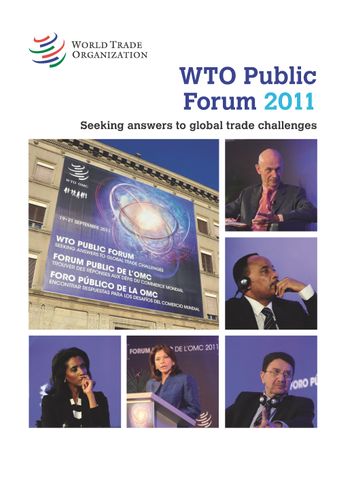
WTO Public Forum 2011
Seeking Answers to Global trade Challenges
More LessThe sessions held during the 2011 Public Forum triggered a frank and open debate on the principal global challenges for the multilateral trading system. The Forum also sought to identify practical and effective solutions and ways forward to enable the WTO to adapt and respond effectively to our fast-changing world. A chapter is devoted to each of the sessions held during the three-day programme.
-
-
-
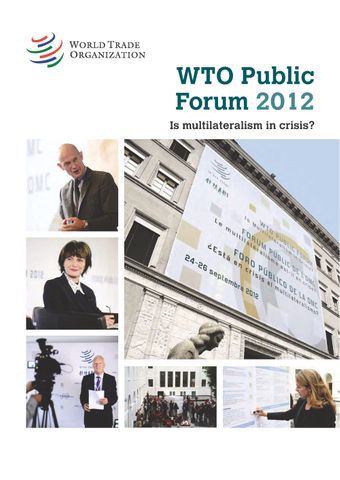
WTO Public Forum 2012
Is multilateralism in crisis?
More LessThe 2012 WTO Public Forum posed the question: “Is multilateralism in crisis?”, providing an opportunity for participants from a variety of backgrounds to discuss this question across the three-day event. The themes of the Forum included formulating new approaches to multilateral trade opening in areas such as trade facilitation, addressing 21st-century issues and identifying areas in need of new regulations, and examining the role of non-state actors in strengthening the multilateral trading system. This publication contains summaries of all of the sessions held and reports on the results of the WTO Youth Ambassador Programme and Ideas Workshops.
-
-
-
WTO Working Papers
More LessWTO working papers usually represent research in progress. Such research may be conducted in the preparation of WTO Secretariat reports, studies or other material for WTO members. The papers are circulated for comment because the WTO considers critical review of professional research to be extremely important.
-
-
-
WTO contribution to the 2022 UN High-Level Political Forum
More LessThe WTO is playing an important role in the achievement of the UN's Agenda 2030 for Sustainable Development and collaborates closely with the UN's Department for Economic and Social Affairs in monitoring progress in attaining the Sustainable Development Goals (SDGs). Since 2016, the WTO has submitted annual reports to the UN's High-level Political Forum (HLPF) on WTO efforts to achieve trade-specific targets in the SDGs. In its 2022 report, the WTO provides a comprehensive overview of the relationship between trade and SDGs 4 (“quality education”), 5 (“gender equality”), 14 (“life below water”), 15 (“life on land”) and 17 (“partnerships for the Goals”), as well as the WTO’s role in contributing to the realisation of these five goals.
-
-
-
WTO in Brief
More LessIn brief, the World Trade Organization (WTO) is the only international organization dealing with the global rules of trade. Its main function is to ensure that trade flows as smoothly, predictably and freely as possible.
-
-
-
WTO in Brief
2023
More LessIn brief, the World Trade Organization (WTO) is the only international organization dealing with the global rules of trade. Its main function is to ensure that trade flows as smoothly, predictably and freely as possible.
-
-
-
WTO/WCO Study Report on Disruptive Technologies
More LessSo-called disruptive technologies, such as blockchain, the Internet of Things, artificial intelligence and machine learning, have the potential to transform border management and the conduct of international trade. This publication explores how these advanced technologies can be used to improve the efficiency of Customs processes and to ease the flow of goods across borders.
-
-
-
WTO’s Contribution to Attaining UN Sustainable Development Goals
2023 update to the High-Level Political Forum
More LessThis report, which was submitted to the UN High-level Political Forum on Sustainable Development in 2023, highlights the role of trade in helping countries recover from the COVID-19 pandemic and meet the United Nations’ Sustainable Development Goals (SDGs). It also underlines the WTO’s contribution to improving livelihoods and making trade work for people.
-
-
-
Women and Trade
The Role of Trade in Promoting Gender Equality
More LessTrade can dramatically improve women’s lives, creating new jobs, enhancing consumer choices, and increasing women’s bargaining power in society. It can also lead to job losses and a concentration of work in low-skilled employment. Given the complexity and specificity of the relationship between trade and gender, it is essential to assess the potential impact of trade policy on both women and men and to develop appropriate, evidence-based policies to ensure that trade helps to enhance opportunities for all. Research on gender equality and trade has been constrained by limited data and a lack of understanding of the connections among the economic roles that women play as workers, consumers, and decision makers. Building on new analyses and new sex-disaggregated data, Women and Trade: The Role of Trade in Promoting Gender Equality aims to advance the understanding of the relationship between trade and gender equality and to identify a series of opportunities through which trade can improve the lives of women.
-
-
-
Working together for better climate action
Carbon pricing, policy spillovers, and global climate goals
More LessThe report of the Joint Task Force on Climate Action, Carbon Pricing, and Policy Spillovers, with participation by the IMF, OECD, UNCTAD, World Bank, and WTO, makes four main contributions. First, it reflects on a common understanding of carbon pricing metrics which inform on the incentives to decarbonize and on cross-country variation in carbon prices, a key determinant of international spillover effects and competitiveness concerns. Second, the report analyzes the appropriate mixes of climate change mitigation policies, emphasizing the pivotal role of carbon pricing as the only policy implementing the polluter pays principle while generating revenues. Third, it analyzes how international organizations can support the coordination of policies to maximize positive and limit negative cross-border spillovers from climate change mitigation policies. Finally, it discusses how such coordination can help to scale up climate action by closing the transparency gap, the implementation gap, and the ambition gap.
-
-
-
World Tariff Profiles
More Less"World Tariff Profiles" provides a unique collection of data on tariffs imposed by WTO members and other economies. It is jointly published by the WTO, the International Trade Centre (ITC) and the UN Conference on Trade and Development (UNCTAD)
-
-
-
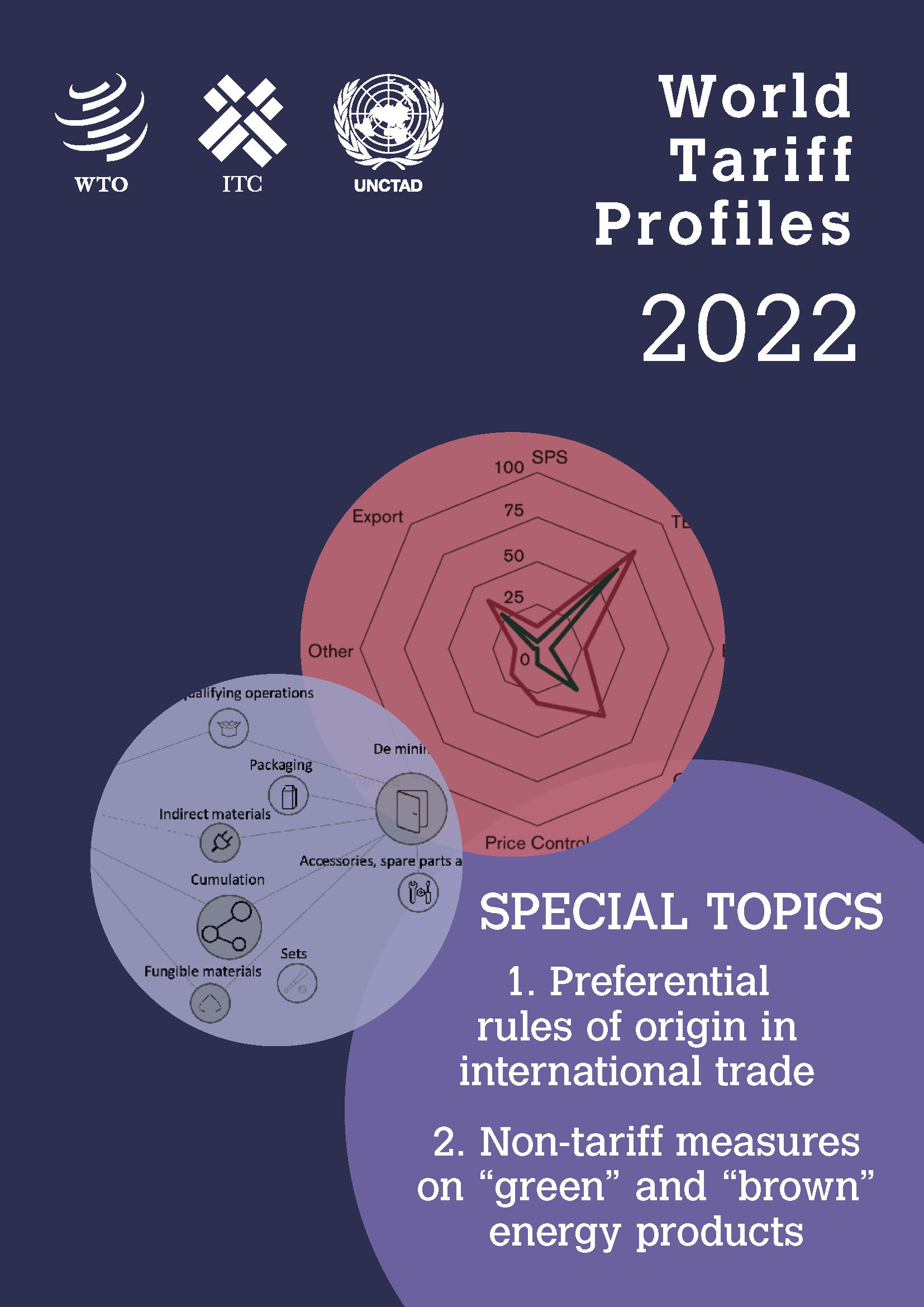
World Tariff Profiles 2022
More LessWorld Tariff Profiles 2022 provides comprehensive information on the tariffs and non-tariff measures imposed by over 170 countries and customs territories. The publication starts with a breakdown of the tariffs imposed by these economies. Tariff data are presented in comparative tables and in one-page profiles for each economy. A summary table on selected indicators on the imports and exports profile for these economies is also presented. Statistics on non‑tariff measures by country and by product group complement the data on tariffs. Under the special topics part, there are two technical papers. The first one analyses the preferential rules of origin in international trade and the second one focuses on non-tariff measures on “green” and “brown” energy products. The publication is jointly prepared by the World Trade Organization, the United Nations Conference on Trade and Development (UNCTAD) and the International Trade Centre (ITC).
-
-
-
World Tariff Profiles 2023
More LessWorld Tariff Profiles 2023 provides comprehensive information on the tariffs and non-tariff measures imposed by over 170 countries and customs territories. The publication starts with a breakdown of the tariffs imposed by these economies. Tariff data are presented in comparative tables and in one-page profiles for each economy. A summary table on selected indicators on the imports and exports profile for these economies is also presented. Statistics on non tariff measures by country and by product group complement the data on tariffs. Under the special topics part, there are two technical papers. The first one analyses the evolution of market access over 16 years of World Tariff Profiles and the second one focuses on Product classification for WTO trade statistics and policy analysis - Multilateral Trade Negotiations (MTN) Categories. The publication is jointly prepared by the World Trade Organization, the United Nations Conference on Trade and Development (UNCTAD) and the International Trade Centre (ITC).
-
-
-
World Tariff Profiles 2024
More LessWorld Tariff Profiles 2024 provides comprehensive information on the tariffs and non-tariff measures imposed by over 170 countries and customs territories. The publication starts with a breakdown of the tariffs imposed by these economies. Tariff data are presented in comparative tables and in one-page profiles for each economy. A summary table on selected indicators on the imports and exports profile for these economies is also presented. Statistics on non tariff measures by economy and by product group complement the data on tariffs. This special topic deals with “Tariffs on critical minerals in the electric vehicle value chain”. The publication is jointly prepared by the World Trade Organization, the UN Trade and Development (UNCTAD) and the International Trade Centre (ITC).
-
-
-
World Tariff Profiles 2025
More LessWorld Tariff Profiles 2025 provides comprehensive information on the tariffs and non-tariff measures imposed by over 170 countries and customs territories. The publication starts with a breakdown of the tariffs imposed by these economies. Tariff data are presented in comparative tables and in one-page profiles for each economy. A summary table on selected indicators on the imports and exports profile for these economies is also presented. Statistics on non tariff measures by economy and by product group complement the data on tariffs. The special topic deals with “Global trade on most-favoured-nation terms”. The publication is jointly prepared by the World Trade Organization, the UN Trade and Development (UNCTAD) and the International Trade Centre (ITC).
-
-
-
World Trade Report
More LessThe "World Trade Report" is an annual publication that aims to deepen understanding about trends in trade, trade policy issues and the multilateral trading system.
-
-
-
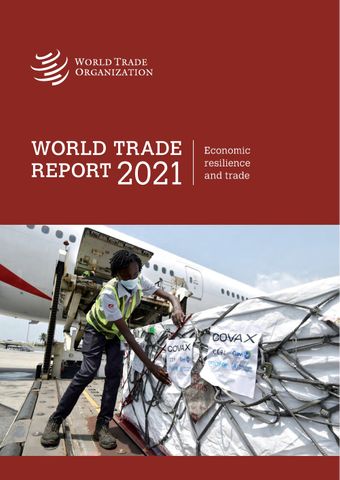
World Trade Report 2021
Economic resilience and trade
More LessThe COVID-19 pandemic and the prospect of increasingly frequent and more intense natural and man-made disasters raise important questions about the resilience of the global economy to such shocks. The World Trade Report 2021 explores the basic, binary assumption driving much of the current debate about economic resilience, namely the inherent trade-off between global trade interdependence and national economic security, and suggests that this can be a false dilemma. Due to its interconnected nature, international trade can increase an economy’s exposure to risks and contribute to the transmission of shockwaves. At the same time, it can bolster economic resilience, particularly when backed by domestic policies and effective global cooperation. As a driver of economic growth, trade can generate the resources and knowledge needed to prepare for crises. It can also help countries recover by facilitating the provision of goods and services needed to cope with a crisis. Policies aimed at increasing economic resilience by re-shoring production and unwinding trade integration ultimately reduce economic resilience. Conversely, trade diversification can contribute to economic resilience by allowing countries to be less dependent on a limited number of importers, exporters and sectors. The World Trade Report 2021 shows that a more open, inclusive and predictable trade environment is needed to promote diversification and contribute to economic resilience. The WTO already plays a key role in making economies more resilient by promoting lower trade barriers and greater transparency in trade policies. Further international cooperation at the WTO can strengthen the mutual supportiveness of trade openness and economic resilience so that the world is better prepared to deal with future crises.
-
-
-
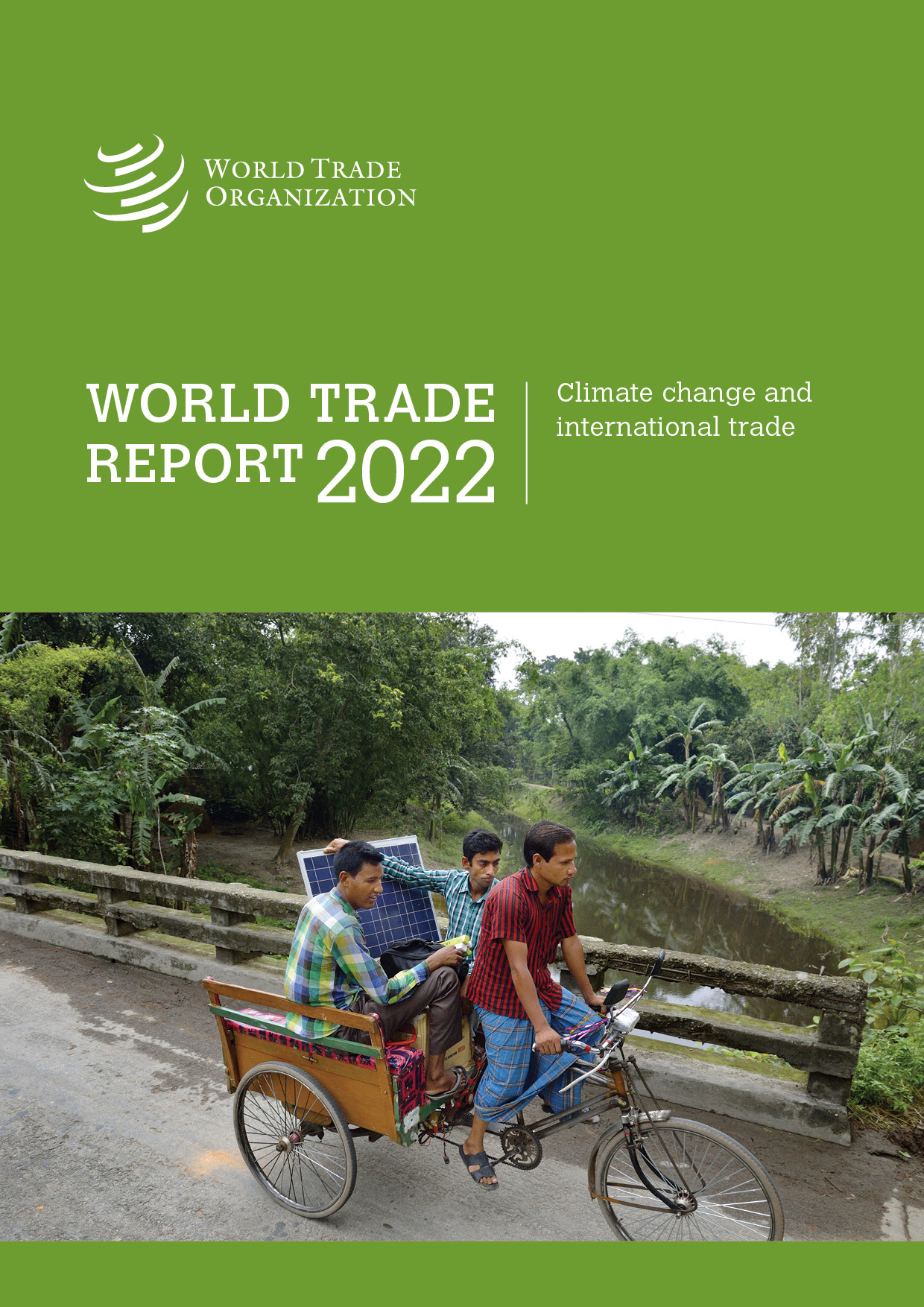
World Trade Report 2022
Climate change and international trade
More LessClimate change is having a profound impact on people’s lives across the world. Mitigating and adapting to climate change will require major economic investment and coordinated action to transition to a sustainable, low-carbon economy. The World Trade Report 2022 explores the complex interlinkages between climate change, international trade, and climate and trade policies. Although international trade generates greenhouse gas emissions which contribute to climate-related natural disasters, it can also play an essential role in helping countries reduce emissions by increasing the availability and affordability of environmental goods, services and technologies. International trade can also play a key role in helping countries adapt to the impacts of climate change and build future resilience. The World Trade Report 2022 shows how international trade and trade rules can contribute to addressing climate change. Ensuring trade and climate change policies are mutually supportive requires global coordination and transparency about government measures. The WTO already plays an important role in helping countries tackle climate change by maintaining a predictable trading environment underpinned by WTO rules that allow for international trade in critical goods and services needed to cope with the consequences of climate change and to reduce emissions. Further international cooperation at the WTO could strengthen the mutual supportiveness of trade and climate change policies so that the world is better equipped to transition to a low-carbon economy.
-
-
-
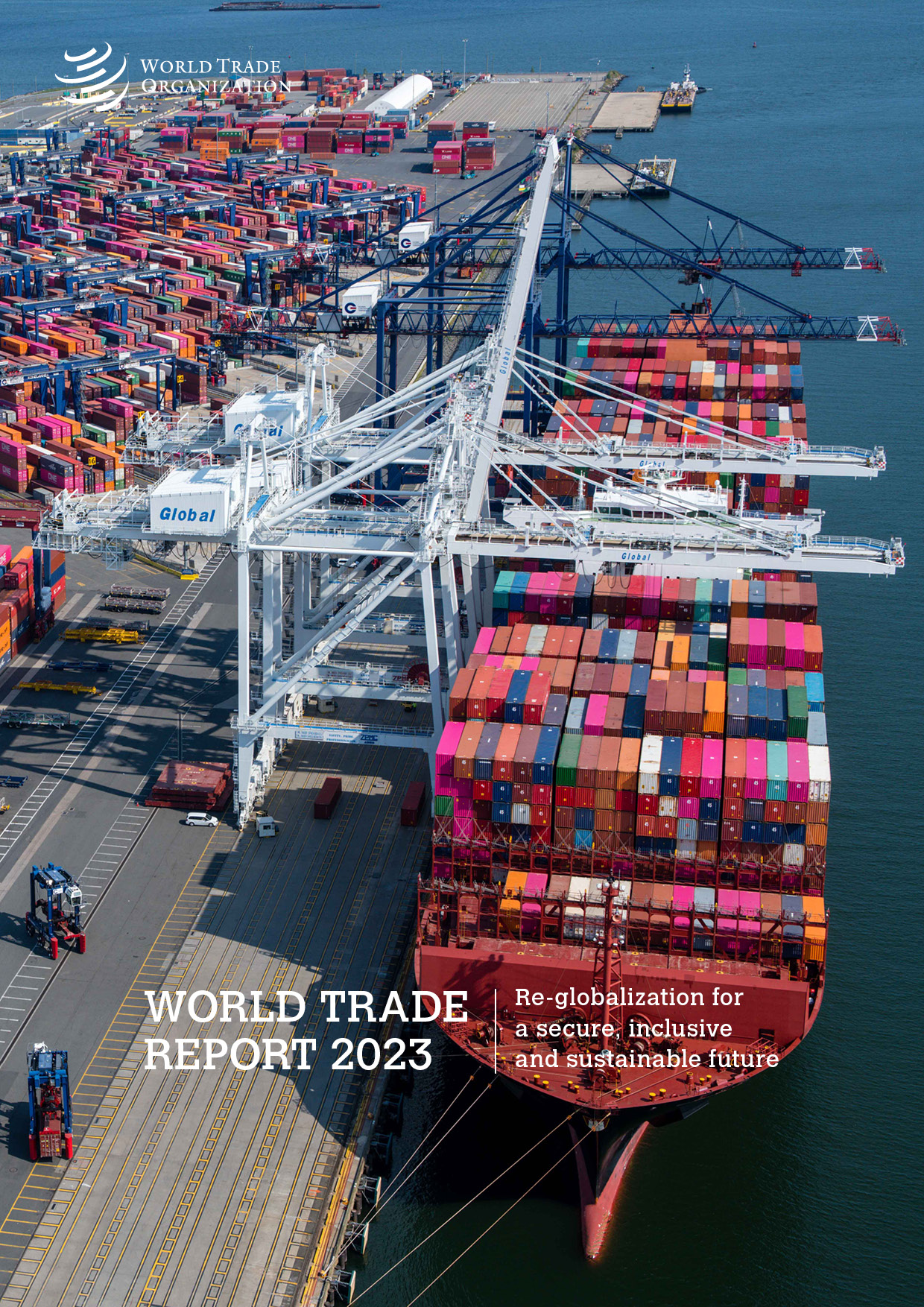
World Trade Report 2023
More LessThe establishment of the multilateral trading system over seven decades ago was based on the understanding that interdependence and cooperation contribute to peace and shared prosperity. More recently, however, new challenges, such as geopolitical tensions, rising inequalities and climate change, have led to fears that globalization exposes countries to excessive risks. Such fears have increased pressures to unwind trading relationships and turn to unilateral policies through a process of fragmentation. This year’s World Trade Report examines the benefits of integration into world trade as well as the risks of fragmentation. It shows that trade has proved to be a source of security and peace, a driver of poverty reduction, and a critical tool for addressing climate change. The Report argues that, to make our economies more secure, inclusive and sustainable, re-globalization – or integrating more people, economies and pressing issues into global trade and strengthening multilateral cooperation – is a much more effective solution to global challenges than fragmentation. Global problems need global solutions, meaning that today’s world needs more cooperation, not less. A reinvigorated multilateral trading system overseen by the WTO has an important role to play in this process.
-
-
-
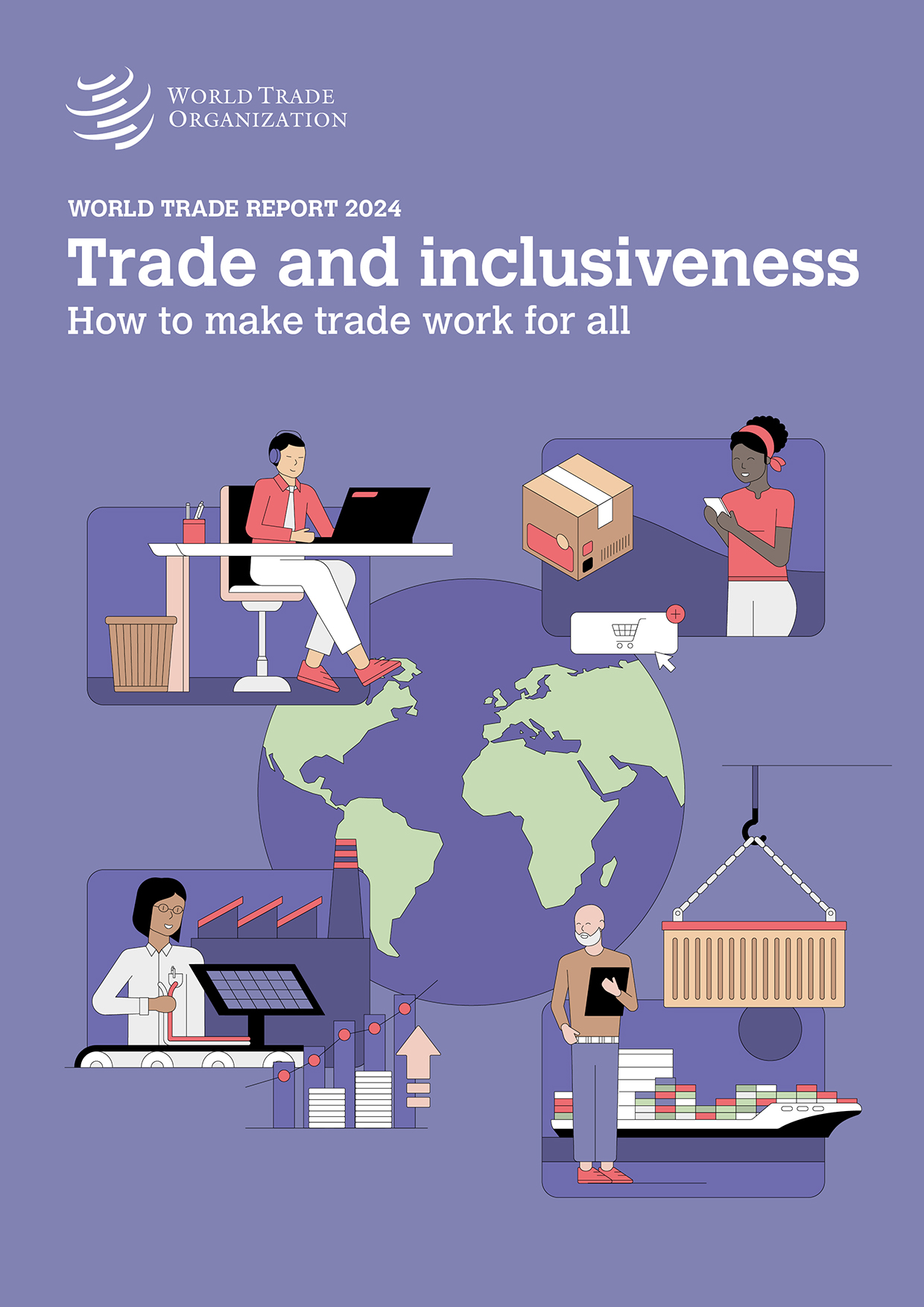
World Trade Report 2024
More LessOver the past 30 years, the world has witnessed a period of unprecedented income convergence, as the wide gap in income levels between economies has narrowed. Economic growth has improved living conditions and prospects for many people around the world. However, not all individuals, regions and economies have benefited equally from the changes brought about by more open trade. The World Trade Report 2024 explores the complex interlinkages between trade and inclusiveness across and within economies. Openness to international trade can drive economic growth, but many low- and middle-income economies struggle to diversify or to integrate into world trade. Although trade supports numerous jobs and provides access to affordable goods and services, some individuals can face challenges in adapting to new economic conditions following trade openness. However, trade protectionism neither protects the overall economy, nor promotes inclusiveness within economies. Diversifying global value chains, reducing trade costs through digitalization, and transitioning to a low-carbon economy can create new opportunities for low- and middle-income economies. Addressing remaining barriers to trade and investment, facilitating the implementation of existing WTO agreements, and ensuring that the WTO is fit for new challenges are crucial to support inclusiveness across and within economies. Furthermore, trade policies need to be complemented by domestic measures, such as labour, education and competition policies, so that the gains from trade can flow to workers and consumers, and so that those individuals can move to benefit from those gains. WTO cooperation with other international organizations can magnify combined action on inclusiveness across and within economies.
-
-
-
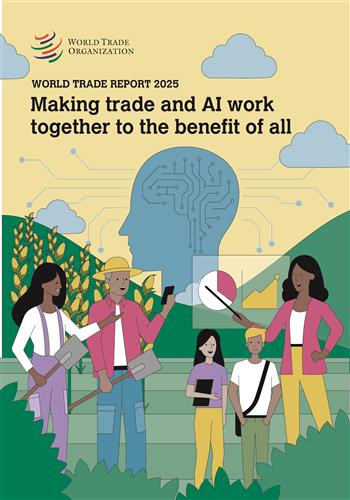
World Trade Report 2025
How trade and AI can contribute to inclusive growth
More LessArtificial intelligence (AI) has the potential to lead to a new era of growth. By transforming how goods and services are produced, exchanged and consumed, AI can bring about substantial changes in the global economy. Yet the future trajectory of AI remains uncertain, raising critical questions about trade and inclusive growth. The World Trade Report 2025 explores the complex and fast-evolving relationship between AI and international trade and how this relationship can shape inclusive growth. AI offers new opportunities to reduce trade costs, boost productivity and expand access to global markets. In addition, trade can help to render AI more accessible by spreading knowledge, fostering innovation and promoting participation in AI value chains. However, unequal access across the world to digital infrastructure, appropriate skills and capabilities could increase the digital divide. Also, the impact of AI on the labour market presents additional challenges. Whether AI-enabled trade translates into broad-based, inclusive growth will depend on the design and implementation of trade and trade-related policies. WTO rules on trade in goods, services, data, intellectual property and public procurement can shape the availability, affordability and diffusion of AI. Complementary policies regulating competition, data infrastructure, energy, education and government support can also help to determine whether and how economies benefit from AI-enabled trade. The WTO can play a central role in ensuring that AI supports more inclusive trade-led growth by administering WTO rules, by fostering dialogue, transparency and capacity-building, and by deepening collaboration on AI and digital trade with other international organizations.
-
-
-
World Trade Statistical Review
More LessThe "World Trade Statistical Review" series provides a detailed analysis of the latest developments in world trade. It will be produced on an annual basis and replaces the series "International Trade Statistics", the WTO's former annual statistical publication.
-
-
-
World Trade Statistical Review 2022
More Less“World Trade Statistical Review” looks into the latest trends in global trade, with in-depth analysis of what is being traded and who the key players are. Analytical chapters are complemented by over 65 tables providing a detailed breakdown of the goods and services being traded and the leading exporters/importers.
-
-
-
World Trade Statistical Review 2023
More Less“World Trade Statistical Review” looks into the latest trends in global trade, with in-depth analysis of what is being traded and who the key players are. Analytical chapters are complemented by over 65 tables providing a detailed breakdown of the goods and services being traded and the leading exporters/importers.
-
-
-
¿Pueden las cadenas de bloques revolucionar el comercio internacional?
More LessEl progreso tecnológico siempre ha condicionado el comercio. En los últimos años, muchos observadores han saludado la aparición de una nueva tecnología, las cadenas de bloques, como el nuevo factor que transformará de manera radical el panorama comercial. ¿Pueden las cadenas de bloques revolucionar el comercio internacional? El objetivo de la presente publicación es desmitificar el fenómeno de las cadenas de bloques aportando una explicación básica de esta tecnología. En el documento se analiza la importancia que tiene esta tecnología para el comercio internacional, indicando cómo se utiliza en la actualidad y cómo podría llegar a utilizarse en diversas esferas abarcadas por las normas de la OMC. Del análisis se desprende en qué medida podría la adopción de esta tecnología afectar al comercio transfronterizo de mercancías y servicios y a los derechos de propiedad intelectual. El documento examina las posibilidades que ofrecen las cadenas de bloques para reducir los costes del comercio y mejorar la transparencia en las cadenas de suministro, así como las oportunidades que brinda a los pequeños productores y las pequeñas empresas. Por último, el documento repasa los distintos retos que es necesario superar para que la tecnología pueda utilizarse a gran escala e incidir de manera significativa en el comercio internacional.
-
-
-
Annual Report 1998
More LessThe Annual report of the WTO focuses on the regular activities of the organization, the details of its current structure, staff and budget. The Annual report is published in the first half of each year.
-
-
-
Arbitration Reports
More LessArbitration reports determine the reasonable period of time for a WTO member to comply with the recommendations and rulings of the Dispute Settlement Body and the level of retaliation that a WTO member may undertake in situations where a WTO member has not complied within the prescribed time.
-
-
-
Examen Estadístico del Comercio Mundial 2016
More LessEl Examen estadístico del comercio mundial ofrece un análisis detallado de la evolución reciente del comercio mundial. Este informe se elaborará con carácter anual y reemplaza la anterior publicación estadística anual de la OMC, Estadísticas del comercio internacional.
-
-
-
Examen Statistique du Commerce Mondial 2016
More LessL'Examen statistique du commerce mondial présente une analyse détaillée de l'évolution la plus récente du commerce mondial. Il paraîtra tous les ans et remplace les “Statistiques du commerce international”, la publication statistique annuelle précédente de l'OMC.
-
-
-
Informe Anual 1998
More LessEl Informe anual de la OMC se centra en las actividades ordinarias de la organización y los detalles de su estructura, personal y presupuesto actuales.
-
-
-
Informe sobre el Comercio Mundial 2003
More LessEl tema principal del Informe sobre el Comercio Mundial 2003 es el desarrollo. Al explicar el origen de esta cuestión y ofrecer un marco analítico para abordar la cuestión de la relación entre comercio y desarrollo, se pretende que el Informe contribuya a un debate más informado y a una mejor apreciación de las distintas opciones disponibles para abordar los problemas de política.
-
-
-
Informes de Arbitraje
More LessLos Informes de arbitraje determinan el período de tiempo razonable para que un miembro de la OMC cumpla con las recomendaciones y resoluciones del Órgano de Solución de Diferencias y el nivel de represalias que un miembro de la OMC puede asumir en situaciones en las que un miembro de la OMC no ha cumplido dentro del tiempo establecido.
-
-
-
International Trade Statistics 2003
More LessThe International Trade Statistics 2003 contains up-to-date statistics on trade in merchandise and commercial services for an assessment of world trade flows by country, region and main product groups or service categories.
-
-
-
Overview of Developments in the International Trading Environment - Annual Report by the Director-General (2009)
October 2008 to October 2009
More LessLamy calls for exit strategies on temporary trade restrictions and subsidies: Director-General Pascal Lamy, in his annual report on trade and trade-related developments in 2009, said that “although there have been instances of slippage, in general terms the world economy is about as open for trade today as it was before the crisis started.” He called on members “to devise and announce exit strategies to remove trade restrictions and production subsidies that they have introduced temporarily to counteract the effects of the crisis, and start implementing those strategies as soon as domestic economic recovery takes hold.”
-
-
-
Rapport Annuel 1998
More LessLe Rapport annuel de l'OMC se concentre sur les activités régulières de l'organisation et détaille sa structure actuelle, incluant le personnel et le budget.
-
-
-
Rapport sur le Commerce Mondial 2003
More LessLe rapport sur le commerce mondial 2003 est entièrement centré sur le développement. En expliquant la génèse du problème et en proposant un cadre d'analyse dans lequel traiter la question des rapports entre commerce et développement, il vise à aider chacun à débattre en toute connaissance de cause et à mieux évaluer les options qui s'offrent aux gouvernements pour faire face aux défis du moment.
-
-
-
Rapports d'Arbitrage
More LessLes Rapports d'arbitrage déterminent le délai raisonnable qu'un membre de l'OMC pour se conformer aux recommandations et décisions de l'Organe de règlement des différends et le niveau de représailles qu'un membre de l'OMC peut engager dans les cas où un membre de l'OMC ne s'est pas conformé dans le délai imparti.
-
-
-
Report on G20 Trade Measures (2010)
May 2010 to October 2010
More LessG20 governments continue to resist protectionist pressures but risks remain: A joint report by the WTO, OECD and UNCTAD released on 4 November 2010 for the Group of 20 biggest economies, ahead of their meeting in Seoul on 11 November, says that by and large, G20 governments have continued to resist protectionist pressures. But it also warns of potential dangers in the months ahead because of persistent high levels of unemployment and tensions over foreign exchange rates.
-
-
-
Report to the TPRB from the Director-General on Trade-Related Developments (2010)
1 November 2009 to Mid-May 2010
More LessWTO-OECD-UNCTAD: Despite crisis, G20 governments largely resist protectionist pressures: The WTO, OECD and UNCTAD, in a joint report on G20 trade and investment measures released on 14 June 2010, noted the imposition of fewer trade restrictions but warned “they are accumulating”. In a separate report to WTO members on trade-related developments, Director-General Pascal Lamy confirmed this trend but urged governments to remain “vigilant” and to give priority to “exiting current restricting measures”. The OECD and UNCTAD also released a separate report on G20 investment measures.
-
-
-
Sanitary and Phytosanitary Measures
The WTO Agreements Series
More LessThe WTO Secretariat has prepared this booklet to assist public understanding of the SPS Agreement, it concerns the application of food safety and animal and plant health regulations. The first section of the booklet presents the basic structure of WTO agreements; the second looks at the key features of the SPS Agreement; the third addresses a number of frequently-asked questions; and the fourth is the legal text of the agreement.
-
-
-
Services Profiles 2013
More LessServices Profiles 2013 provides statistics on key “infrastructure services”, i.e. transportation, telecommunications, finance and insurance, for 140 economies. The information is derived from multiple sources, such as national accounts, employment statistics, balance of payments statistics, foreign affiliates’ trade in services (FATS) statistics, foreign direct investment (FDI) statistics and quantitative indicators largely sourced from international/regional organizations and specialized bodies.
-
-
-
Status of WTO Legal Instruments
2015 Edition
More LessStatus of WTO Legal Instruments covers the legal instruments drawn up by WTO members in relation to the Marrakesh Agreement Establishing the World Trade Organization and the plurilateral trade agreements annexed to that Agreement. For each legal instrument, information is provided regarding signature, acceptance, ratification, accession and entry into force. The relevant final clauses of each instrument are also included. The cut-off point for information in this publication is end-April 2015.
-
-
-
Trade Policy Review: OECS 2008
More Less“Trade Policy Reviews” analyse the trade policies and practices of each member of the WTO. The reviews consist of three parts: an independent report by the WTO Secretariat, a report by the government, and the concluding remarks by the Chair of the WTO’s Trade Policy Review Body. The opening section - “key trade facts” - provides a visual overview of the WTO member’s major exports/imports, main export destinations, origins for its imports and other key data. This edition looks into the trade practices of OECS.
-
-
-
Trade Profiles 2006
More LessThis booklet is a quick source for national and trade statistics of WTO Members and countries which are in the process of negotiating WTO membership. These Trade Profiles combine information on trade flows and trade policy measures of Members, Observers and other selected economies. The information is retrieved from various WTO Divisions and external sources and presented in standardized format for quick reference. The indicators are divided into five categories: Basic economic indicators – population, GDP, current account balance, etc. Trade policy indicators – specific WTO relevant information, including tariff binding information, import duties collected in total tax revenue, the number of dispute rulings(complainant, defendant), notifications outstanding and contingency measures in force. Merchandise trade indicators (customs-based statistics) – information on total trade flows broken down by broad product categories and major origins and destinations. Commercial services indicators (balance of payments based statistics) – trends in total trade flows and a breakdown by major components. Industrial property indicators – annual number of patents granted and marks registered in the name of residents and non-residents in the economy.
-
-
-
Trade and Tariffs
Trade Grows as Tariffs Decline
More LessOver the past 20 years, global trade in goods has nearly quadrupled, reaching US$ 19 trillion in 2013 compared with US$ 5 trillion in 1996. This represents an annual growth rate of 7.6 per cent on average. Over the same period, there has been a 15 per cent reduction in average tariffs applied by WTO members. This brochure, produced to mark the WTO’s 20th anniversary, looks at the evolution of trade and tariffs over the past 20 years.
-
-
-
WTO Appellate Body Repertory of Reports and Awards, 1995–2013, 5th edition
More LessTrade multilateralism in the twenty-first-century century faces a serious test as weakness in the global economy and fast-paced technological changes create a challenging environment for world trade. This book examines how an updated and robust, rules-based multilateral framework, anchored in the WTO, remains indispensable to maximizing the benefits of global economic integration and to reviving world trade. By examining recent accessions to the WTO, it reveals how the growing membership of the WTO has helped to support domestic reforms and to strengthen the rules-based framework of the WTO. It argues that the new realities of the twenty-first century require an upgrade to the architecture of the multilateral trading system. By erecting its 'upper floors' on the foundation of existing trade rules, the WTO can continue to adapt to a fast-changing environment and to maximize the benefits brought about by its ever-expanding membership.
-
-
-
WTO Dispute Settlement: One-Page Case Summaries, 1995-2012
2013 edition
More LessWTO Dispute Settlement: One-Page Case Summaries provides a succinct summary of the key findings of every dispute panel report up to the end of 2011 and, where applicable, the subsequent Appellate Body report. Each one-page summary comprises three sections: the core facts; the key findings contained in the reports; and, where relevant, other matters of particular significance. The disputes are presented in chronological order (by dispute settlement number). Two indexes at the end of the publication list the disputes by WTO agreement and by WTO member responding to the complaint.
-
-
-
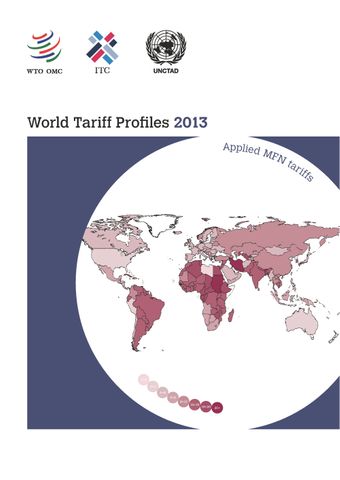
World Tariff Profiles 2013
More LessWorld Tariff Profiles 2013 — a joint publication of the WTO, the International Trade Centre (ITC) and the UN Conference on Trade and Development (UNCTAD) — provides comprehensive tariff information on all WTO members and a number of other countries where data is available. It is the only compilation of tariff information of its kind available to researchers and negotiators. The publication summarizes the market access that each country offers to imports as well as the market access conditions faced by its products in its major export markets. The profiles show both the maximum tariff rates that are legally “bound” in the WTO and the rates that countries actually apply. The technical annex in this year’s issue focuses on WTO members’ participation in regional trade agreements (RTAs), with complementary data provided on tariff elimination in RTAs notified under the WTO’s Transparency Mechanism.
-
-
-
World Trade Report 2003
More LessThe World Trade Report is a new annual WTO publication focused on trade trends and policy issues. The 2003 edition examines developments in South-South trade, trends in commodity markets, and the growth of Regional Trade Agreements.
-
-
-
World Trade Statistical Review 2016
More LessThis new publication replaces the WTO’s annual flagship publication, "International Trade Statistics". "Statistical Review of International Trade 2016" provides a detailed analysis of the latest developments in world trade, focusing on the most recent trends in goods and services trade and the participation of developing economies in world trade. The publication also looks ahead to future developments. The analytical chapters are complemented by a statistical appendix containing over 60 tables providing detailed data on trade by region and sector. The publication serves as an invaluable reference tool for researchers, policy makers and anyone interested in international trade.
-
-
-
Annual Report 2007
More LessThe Annual Report of the World Trade Organization focuses on the main activities of the organization and details of its current structure, staff and budget. This is a companion report to the World Trade Report, the World Tariff Profiles and the International Trade Statistics.
-
-
-
Informe Anual 2007
More LessEl Informe anual de la OMC se centra en las actividades ordinarias de la organización y los detalles de su estructura, personal y presupuesto actuales.
-
-
-
Informe sobre el Comercio Mundial 2012
More LessLas medidas de reglamentación en el ámbito del comercio de mercancías y servicios plantean retos nuevos y urgentes para la cooperación internacional en el siglo XXI. En el Informe sobre el Comercio Mundial 2012 se examinan las razones por las que los gobiernos recurren a estas medidas no arancelarias y el grado en que dichas medidas pueden distorsionar el comercio internacional.
-
-
-
Overview of Developments in the International Trading Environment: Annual Report by the Director-General (2018)
October 2017 to October 2018
More LessThe Director-General’s annual overview on trade-related developments presented to members on 11 December at a meeting of the Trade Policy Review Body (TPRB) shows a significant increase in trade coverage of trade restrictive measures by WTO members from mid-October 2017 to mid-October 2018. While members continued to implement trade-facilitating measures, the trade coverage of the import-restrictive measures was more than seven times larger than that recorded in the previous annual overview. The report provides the first WTO-wide factual insight into the trade restrictive measures imposed in the context of current trade tensions and calls on WTO members to use all means at their disposal to de-escalate the situation.
-
-
-
Rapport Annuel 2007
More LessLe Rapport annuel de l'OMC se concentre sur les activités régulières de l'organisation et détaille sa structure actuelle, incluant le personnel et le budget.
-
-
-
Rapport sur le Commerce Mondial 2012
More LessLes mesures de réglementation visant le commerce des marchandises et des services sont la source de nouvelles difficultés très préoccupantes pour la coopération internationale au XXIe siècle. Le rapport sur le commerce mondial 2012 examine les raisons pour lesquelles les gouvernements ont recours à ces mesures non tarifaires et l'ampleur des distorsions des échanges internationaux qu'elles sont susceptibles de créer.
-
-
-
Report on G20 Trade Measures (2015)
Mid-October 2014 to Mid-May 2015
More LessWTO sees “slight deceleration” in G20 trade restrictions but calls for continued vigilance: The WTO’s thirteenth trade monitoring report on G20 trade measures, issued on 15 June, shows a slight deceleration in the application of new trade-restrictive measures by G20 economies, with the average number of such measures applied per month lower than at any time since 2013. The report also underlines that it is not yet clear that this deceleration will continue and it calls on G20 leaders to show continued vigilance and reinforced determination towards eliminating existing trade restrictions.
-
-
-
Report to the TPRB from the Director-General on Trade-Related Developments
Mid-October 2018 to mid-May 2019
More LessTrade-restrictive measures continue at historically high level: Trade flows hit by new restrictions implemented by WTO members continued at a historically high level between mid-October 2018 and mid-May 2019, according to the Director-General’s latest mid-year report on trade-related developments presented to members on 22 July. The report, which was reviewed at a meeting of the WTO’s Trade Policy Review Body, notes that the trade coverage of import-restrictive measures implemented during the review period is estimated at USD 339.5 billion, the second-highest figure on record after the USD 588.3 billion reported in the previous period. Together, these two periods represent a dramatic spike in the trade coverage of import-restrictive measures.
-
-
-
Trade Policy Review: Mexico 2008
More Less“Trade Policy Reviews” analyse the trade policies and practices of each member of the WTO. The reviews consist of three parts: an independent report by the WTO Secretariat, a report by the government, and the concluding remarks by the Chair of the WTO’s Trade Policy Review Body. The opening section - “key trade facts” - provides a visual overview of the WTO member’s major exports/imports, main export destinations, origins for its imports and other key data. This edition looks into the trade practices of Mexico.
-
-
-
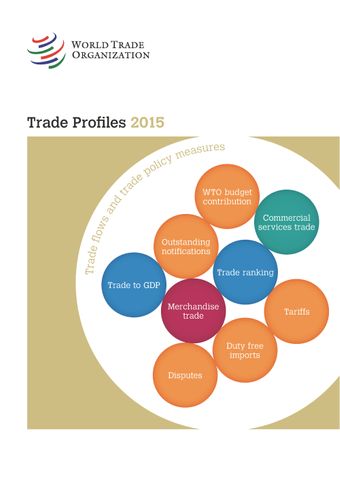
Trade Profiles 2015
More LessTrade Profiles 2015 provides one-page snapshots of the most relevant indicators on growth, trade and trade policy measures for over 200 economies, including all 161 WTO members. The data provided include basic economic indicators (such as gross domestic product), trade policy indicators (such as tariffs, import duties, the number of disputes, notifications outstanding and contingency measures in force), merchandise trade flows (broken down by broad product categories and major origins and destinations), services trade flows (with a breakdown by major components) and industrial property indicators.
-
-
-
Trade in Services
The Most Dynamic Segment of International Trade
More LessOver the past 20 years, trade in services has become the most dynamic segment of world trade, growing more quickly than trade in goods. Developing countries and transition economies have played an increasingly important role in this area, increasing their share in exports of world services from a quarter to one-third over this period. This brochure, produced to mark the WTO’s 20th anniversary, looks into the General Agreement on Trade in Services and WTO members’ commitments.
-
-
-
World Trade Report 2012
Trade and Public Policies: A Closer Look at Non-Tariff Measures in the 21st Century
More LessRegulatory measures for trade in goods and services raise new and pressing challenges for international cooperation in the 21st century. The World Trade Report 2012 examines why governments use these non-tariff measures and to what extent such measures may distort international trade. Non-tariff measures (NTMs) can serve legitimate public policy goals, such as protecting the health of consumers, but they may also be used for protectionist purposes. The Report reveals how the expansion of global production chains, climate change and the growing importance of consumer concerns in richer countries affect the use of NTMs. It also reports that such measures represent the main source of concerns for exporters. The focus of the Report is on technical barriers to trade (TBT) regarding standards for manufactured goods, sanitary and phytosanitary (SPS) measures concerning food safety and animal/plant health, and domestic regulation in services. The Report looks at the availability of information on NTMs and the latest trends concerning usage. It discusses the impact that NTMs have on trade and examines how regulatory harmonization and/or mutual recognition of standards may help to reduce any trade-hindering effects. Finally, the Report looks at international cooperation on NTMs.
-
-
-
Trade Policy Review: OECS-WTO members 2014
More Less“Trade Policy Reviews” analyse the trade policies and practices of each member of the WTO. The reviews consist of three parts: an independent report by the WTO Secretariat, a report by the government, and the concluding remarks by the Chair of the WTO’s Trade Policy Review Body. The opening section - “key trade facts” - provides a visual overview of the WTO member's major exports/imports, main export destinations, origins for its imports and other key data. This edition looks into the trade practices of the OECS.
-
-
-
Trade Policy Review: Oman 2014
More Less“Trade Policy Reviews” analyse the trade policies and practices of each member of the WTO. The reviews consist of three parts: an independent report by the WTO Secretariat, a report by the government, and the concluding remarks by the Chair of the WTO’s Trade Policy Review Body. The opening section - “key trade facts” - provides a visual overview of the WTO member's major exports/imports, main export destinations, origins for its imports and other key data. This edition looks into the trade practices of Oman.
-
-
-
Trade Policy Review: Panama 2014
More Less“Trade Policy Reviews” analyse the trade policies and practices of each member of the WTO. The reviews consist of three parts: an independent report by the WTO Secretariat, a report by the government, and the concluding remarks by the Chair of the WTO’s Trade Policy Review Body. The opening section - “key trade facts” - provides a visual overview of the WTO member's major exports/imports, main export destinations, origins for its imports and other key data. This edition looks into the trade practices of Panama.
-
-
-
Trade Policy Review: Qatar 2014
More Less“Trade Policy Reviews” analyse the trade policies and practices of each member of the WTO. The reviews consist of three parts: an independent report by the WTO Secretariat, a report by the government, and the concluding remarks by the Chair of the WTO’s Trade Policy Review Body. The opening section - “key trade facts” - provides a visual overview of the WTO member's major exports/imports, main export destinations, origins for its imports and other key data. This edition looks into the trade practices of Qatar.
-
-
-
Trade Policy Review: Tonga 2014
More Less“Trade Policy Reviews” analyse the trade policies and practices of each member of the WTO. The reviews consist of three parts: an independent report by the WTO Secretariat, a report by the government, and the concluding remarks by the Chair of the WTO’s Trade Policy Review Body. The opening section - “key trade facts” - provides a visual overview of the WTO member's major exports/imports, main export destinations, origins for its imports and other key data. This edition looks into the trade practices of Tonga.
-
-
-
Trade Policy Review: USA 2014
More Less“Trade Policy Reviews” analyse the trade policies and practices of each member of the WTO. The reviews consist of three parts: an independent report by the WTO Secretariat, a report by the government, and the concluding remarks by the Chair of the WTO’s Trade Policy Review Body. The opening section - “key trade facts” - provides a visual overview of the WTO member's major exports/imports, main export destinations, origins for its imports and other key data. This edition looks into the trade practices of the USA.
-
-
-
Trade Policy Review: Australia 2015
More Less“Trade Policy Reviews” analyse the trade policies and practices of each member of the WTO. The reviews consist of three parts: an independent report by the WTO Secretariat, a report by the government, and the concluding remarks by the Chair of the WTO’s Trade Policy Review Body. The opening section - “key trade facts” - provides a visual overview of the WTO member's major exports/imports, main export destinations, origins for its imports and other key data. This edition looks into the trade practices of Australia.
-
-
-

Trade Policy Review: Barbados 2015
More Less“Trade Policy Reviews” analyse the trade policies and practices of each member of the WTO. The reviews consist of three parts: an independent report by the WTO Secretariat, a report by the government, and the concluding remarks by the Chair of the WTO’s Trade Policy Review Body. The opening section - “key trade facts” - provides a visual overview of the WTO member's major exports/imports, main export destinations, origins for its imports and other key data. This edition looks into the trade practices of Barbados.
-
-
-
Trade Policy Review: Brunei Darussalam 2015
More Less“Trade Policy Reviews” analyse the trade policies and practices of each member of the WTO. The reviews consist of three parts: an independent report by the WTO Secretariat, a report by the government, and the concluding remarks by the Chair of the WTO’s Trade Policy Review Body. The opening section - “key trade facts” - provides a visual overview of the WTO member's major exports/imports, main export destinations, origins for its imports and other key data. This edition looks into the trade practices of Brunei Darussalam.
-
-
-
Trade Policy Review: Canada 2015
More Less“Trade Policy Reviews” analyse the trade policies and practices of each member of the WTO. The reviews consist of three parts: an independent report by the WTO Secretariat, a report by the government, and the concluding remarks by the Chair of the WTO’s Trade Policy Review Body. The opening section - “key trade facts” - provides a visual overview of the WTO member's major exports/imports, main export destinations, origins for its imports and other key data. This edition looks into the trade practices of Canada.
-
-
-
Annual Report 2008
More LessThe 2008 Annual Report of the WTO focuses on the activities of the organization in 2007 and details its current structure, staff and budget. Includes detailed progress reports on various aspects of the Doha negotiations and an overview of some of the main developments within the WTO.
-
-
-
Informe Anual 2008
More LessEl Informe anual de la OMC 2008, centrado en las actividades de la Organización en 2007, trata con detalle su estructura, personal y presupuesto actuales.
-
-
-
Informe sobre el Comercio Mundial 2013
Factores que determinan el futuro del comercio
More LessEl mundo está cambiando con extraordinaria rapidez bajo la influencia de numerosos factores, entre otros, la evolución de las pautas de producción y consumo, la constante innovación tecnológica, las nuevas formas de comerciar y, evidentemente, las políticas. El Informe sobre el Comercio Mundial 2013 se centra en el comercio como causa y efecto del cambio, y examina los factores que configuran el futuro del comercio mundial.
-